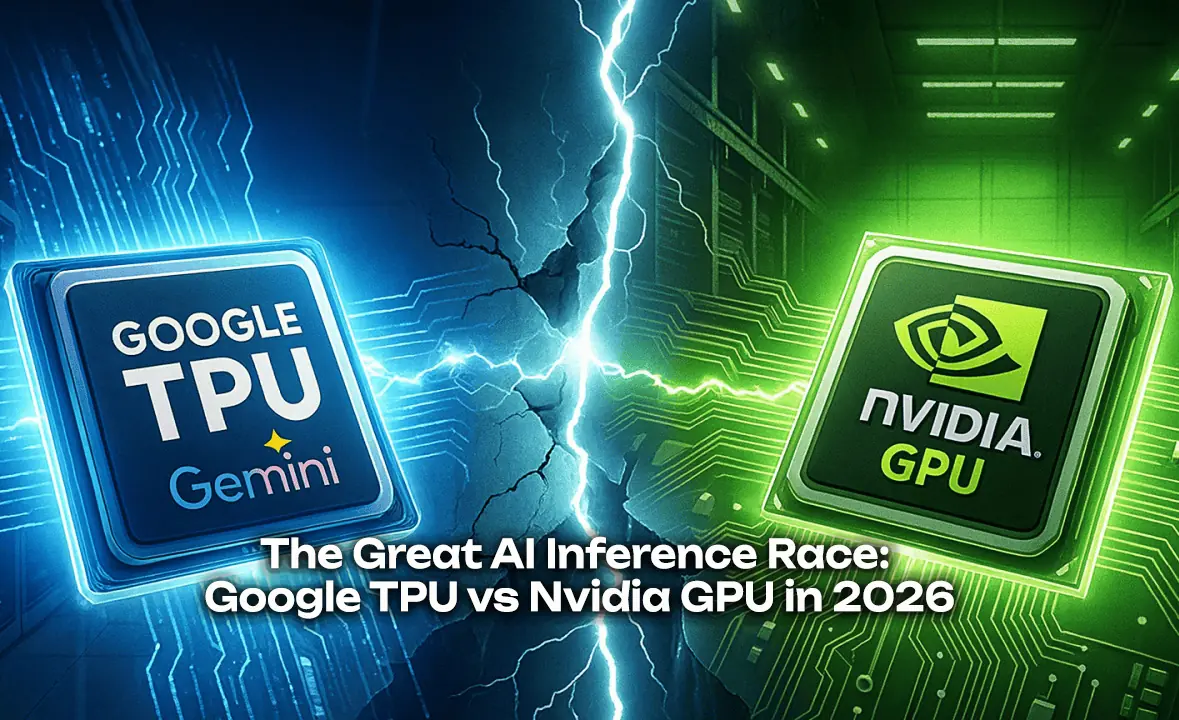

AI Code Editors: How Intelligent IDEs Are Changing Software Development
Explore how AI-powered code editors like Cursor and Windsurf are transforming developer productivity with intelligent autocompletion, refactoring, and debugging features.
I’m a backend engineer who transitioned from building distributed systems to building with large language models. I write about the architecture behind AI products—things like retrieval-augmented generation, model serving, and latency optimization. My focus is on the practical side of making AI work in production.
Explore how AI-powered code editors like Cursor and Windsurf are transforming developer productivity with intelligent autocompletion, refactoring, and debugging features.
Explore how autonomous AI agents are being deployed in enterprise environments for automation, decision support, and workflow orchestration.
The landscape of vision-language models has transformed dramatically in 2026. From OpenAI's GPT-4.1 to open-source contenders like Qwen2.5-VL and Pixtral 12B, we analyze the models defining the new frontier of multimodal AI.
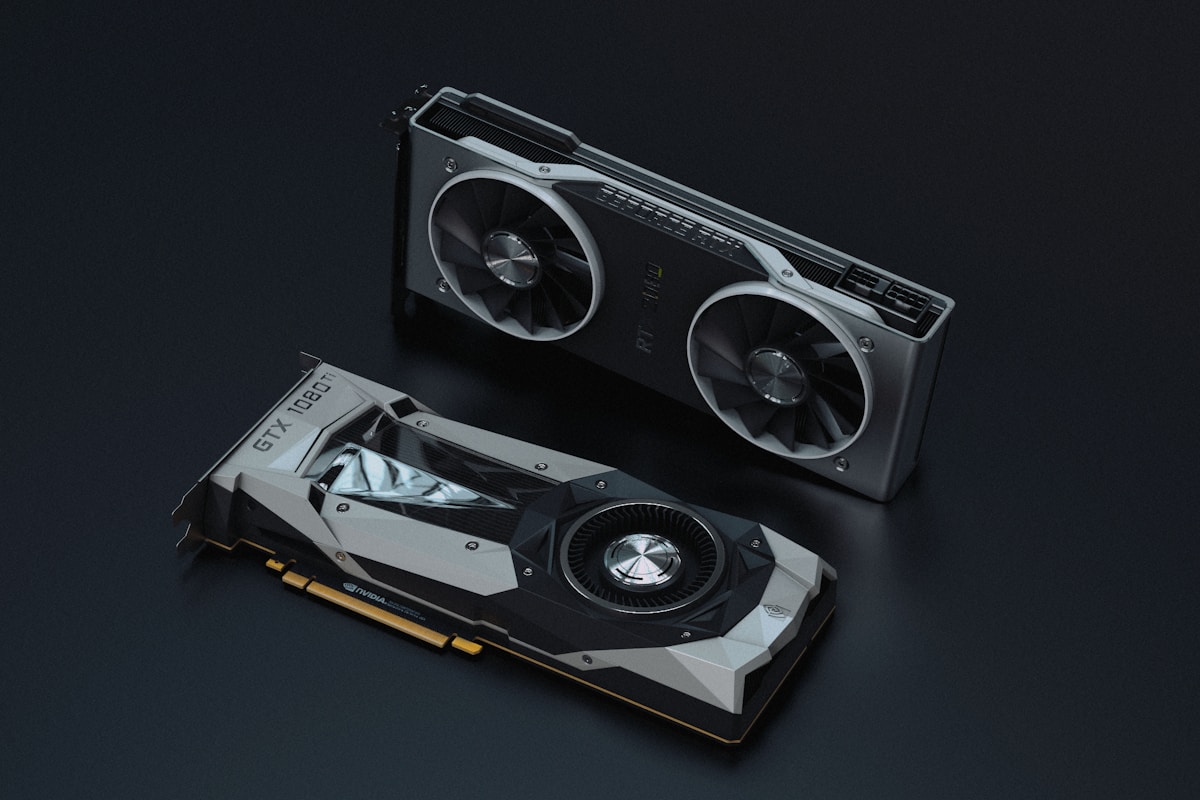
NVIDIA maintains iron grip on AI accelerator market with 80% share while Blackwell architecture powers the AI factory era
How NASA's Perseverance rover completed the first AI-planned drive on Mars using Anthropic's Claude vision-language models
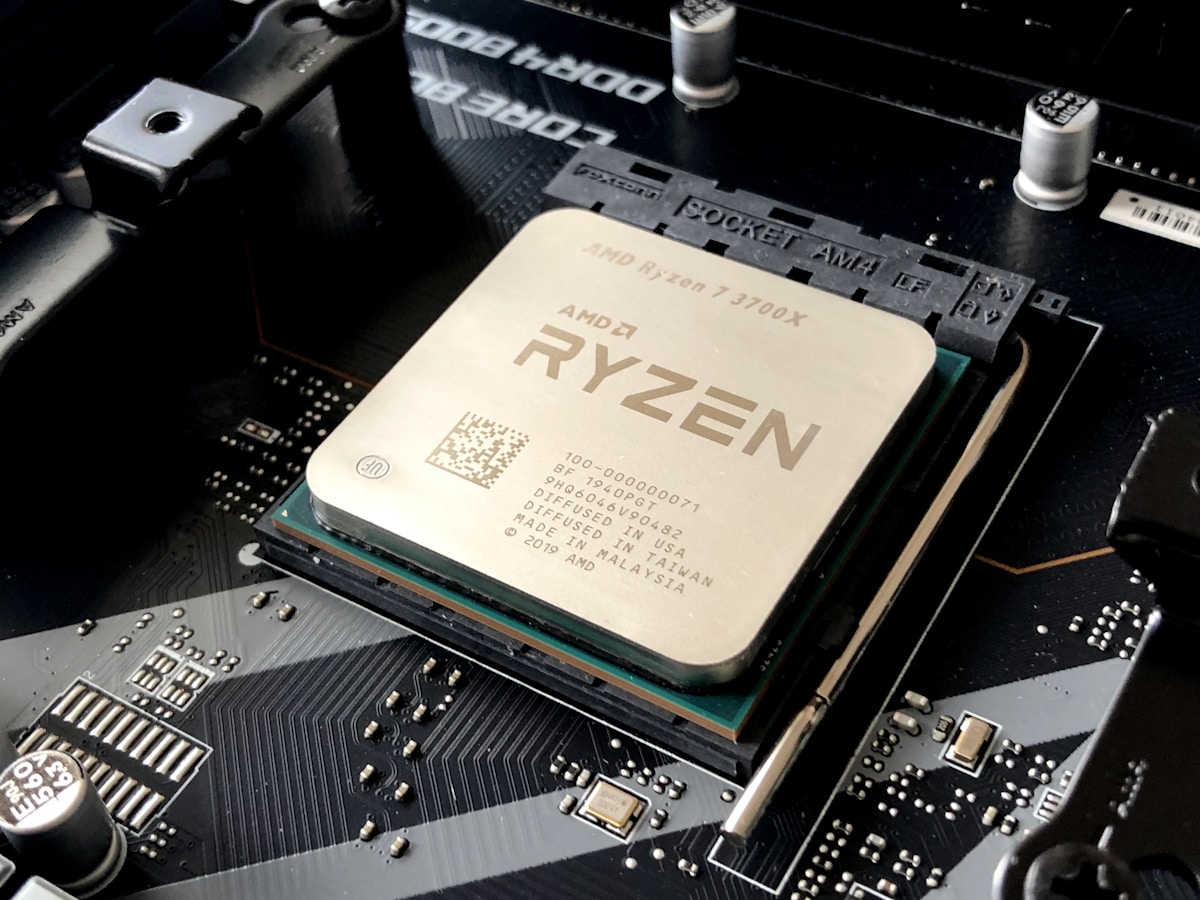
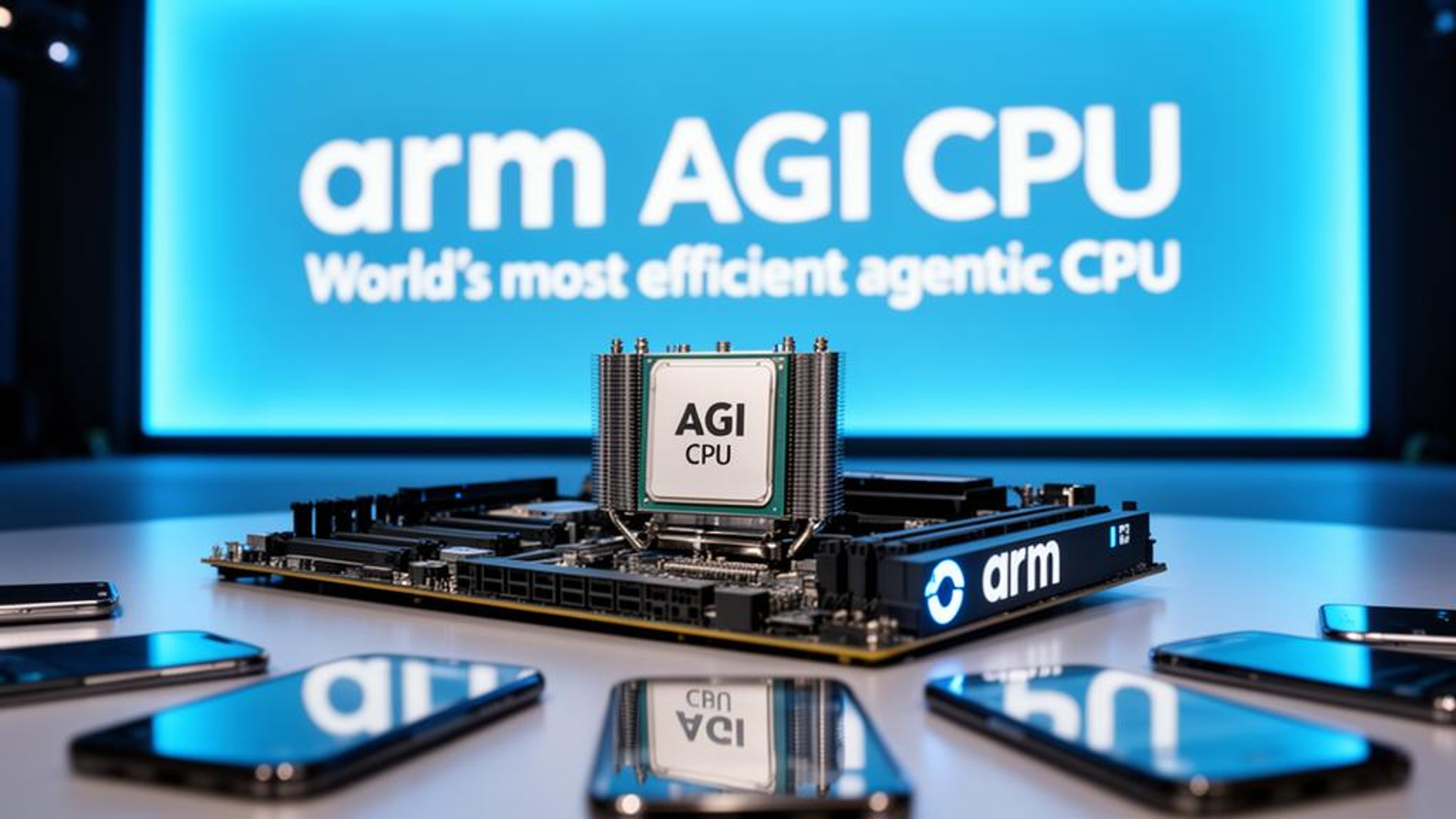
Arm announces a new AGI-focused CPU targeting $15 billion in annual revenue by 2031, with the CPU total addressable market projected to reach $100 billion.
Apple's testing of multiple AI smart glasses prototypes signals a major shift in wearable computing, potentially reshaping how we interact with artificial intelligence in daily life.
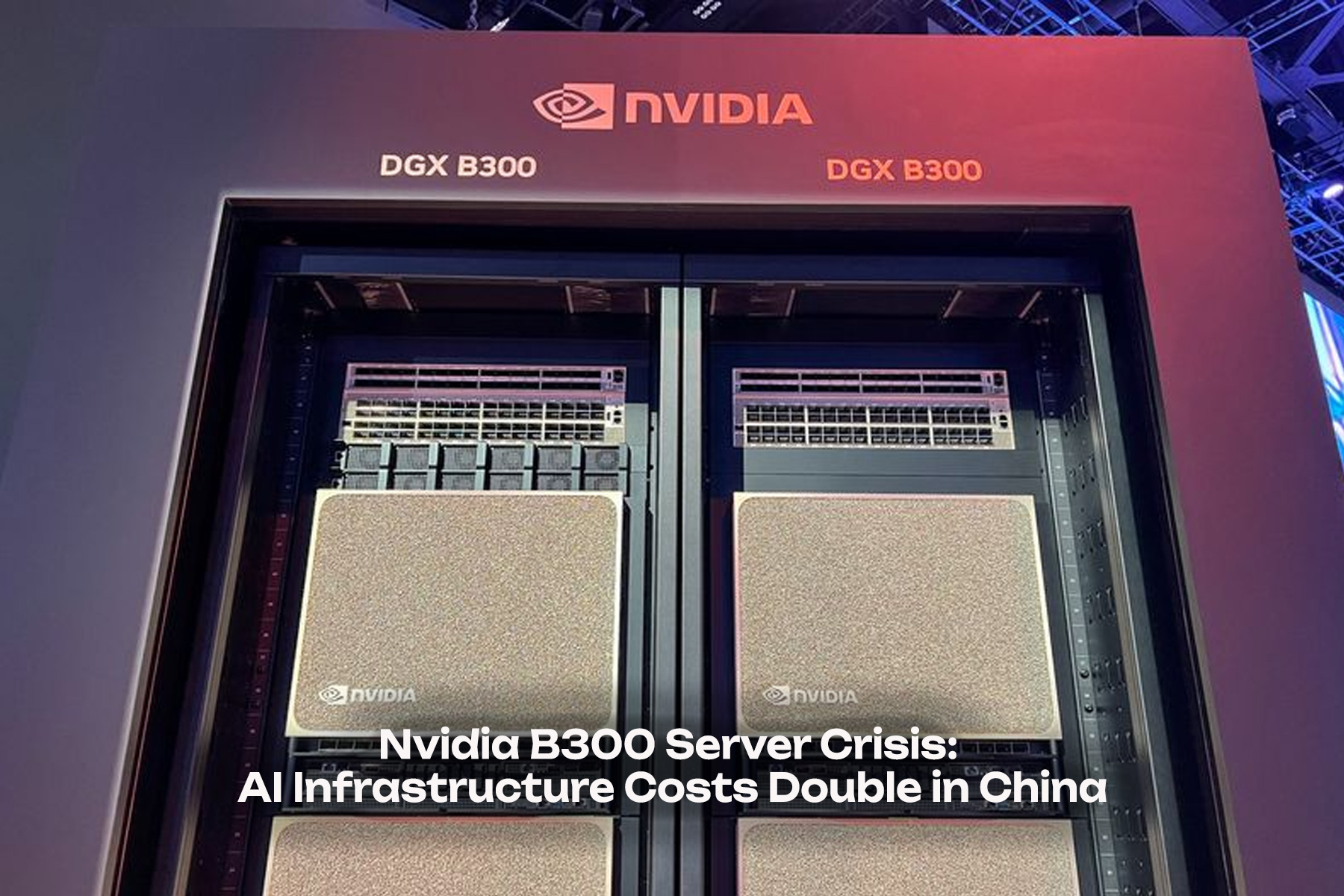
NVIDIA's Blackwell architecture is transforming AI infrastructure with 3x faster training and nearly 2x performance per dollar compared to previous generation. The GB200 NVL72 delivers 30X faster inference for trillion-parameter LLMs.
AI agent marketplaces are emerging as the new frontier in enterprise automation, enabling businesses to discover, deploy, and manage specialized AI agents for every business function.
From Boston Dynamics' production-ready Atlas to Tesla's Optimus and Figure AI's humanoid robots, 2026 marks the transition from laboratory demonstrations to real-world workforce deployment.
Apple prepares to announce overhauled Siri as system-wide AI agent at WWDC 2026, marking major shift in iOS ecosystem
Neuromorphic computers modeled after the human brain can now solve complex physics equations—something previously possible only with energy-hungry supercomputers. This breakthrough could fundamentally reshape AI hardware economics.
OpenAI's aggressive spending meets Anthropic's surprising efficiency as the AI race enters a new phase of sustainable growth and strategic differentiation.
How Linear's adoption of agentic AI is fundamentally reshaping project management and declaring traditional issue tracking dead.
Google's plans to use natural gas plants to power AI data centers in Texas highlights the tension between AI infrastructure demands and corporate climate commitments.
Microsoft announces massive four-year investment in Japanese AI infrastructure, cybersecurity, and workforce development
A comprehensive comparison of AI API pricing in 2026, examining cost efficiency across Grok, Gemini, GPT-5.2, and Claude model families.
Multimodal AI systems that process text, images, audio, and video are transforming human-computer interaction. From Gemini's 1M token context to embodied AI, the multimodal revolution is accelerating.
Microsoft unveils groundbreaking Copilot features allowing users to utilize multiple AI models simultaneously, marking a shift toward model diversity in enterprise AI.
As AI's carbon footprint grows exponentially, the industry faces pressure to balance the technology's climate benefits against its substantial energy consumption, with 2026 marking a critical year for sustainable AI development.
As OpenAI projects $14 billion in losses for 2026, Anthropic quietly closes the revenue gap—revealing two very different business models in the AI race.
Anthropic announces extra charges for Claude Code subscribers using OpenClaw, sparking debate about developer pricing models in the AI tooling space.
Between March 10-16, 2026, six major AI companies launched twelve distinct models in what engineers are calling the 'model avalanche.' OpenAI, Google, xAI, Anthropic, Mistral, and Cursor all shipped within an unprecedented seven-day window. Here's what it means for the industry.
Share 5 lesser-known but super practical Claude Code tips to dramatically improve AI-assisted coding efficiency.
How agentic AI systems capable of complex multi-step workflows are transforming enterprise operations through autonomous problem-solving and decision-making.
How Google's new compression technology could reduce AI memory requirements by 6x and reshape the semiconductor industry.
UnitedHealth Group has launched Avery, an AI companion designed to simplify benefits navigation, appointment scheduling, and claims management for 20.5 million members. It's the biggest healthcare AI rollout yet—but can AI actually fix healthcare?
The emergence of AI Agent Stores as marketplaces for autonomous agents marks a fundamental shift in how businesses automate workflows—creating a new platform economy.
Apple's planned iOS 27 update will let users route Siri queries to any AI assistant, marking a fundamental shift from exclusive partnerships to platform strategy.
OpenAI secures the largest private funding round in tech history, reaching $852 billion valuation with $2 billion monthly revenue. What this means for the AI industry.
A comprehensive guide to evaluating AI models, covering benchmark datasets, evaluation metrics, and frameworks for assessing model performance, fairness, and reliability.
How AI-powered knowledge management and intelligent search systems are transforming enterprise information retrieval through semantic understanding and knowledge graphs.
Artificial intelligence is transforming manufacturing in 2026, with smart factory adoption hitting 47% globally and AI delivering 31% efficiency gains across the industrial sector.
Explore how AI models are being deployed on edge devices—from smartphones to IoT sensors—enabling real-time inference without cloud connectivity.
With GLM-5.1, DeepSeek, Qwen, and Moonshot AI, Chinese open-source models are reshaping where developers look for capable AI—without subscription costs.
Google's new TurboQuant algorithm achieves 6x memory reduction and 8x performance increase in AI inference, sparking 'Pied Piper' comparisons across the tech industry.
An in-depth analysis of Anthropic's accidental leak revealing Claude Mythos 5, the world's first widely-recognized 10-trillion-parameter AI model, and what it means for the AI race.
Samsung Electronics expected to post record quarterly profit as AI boom drives unprecedented chip demand and pricing
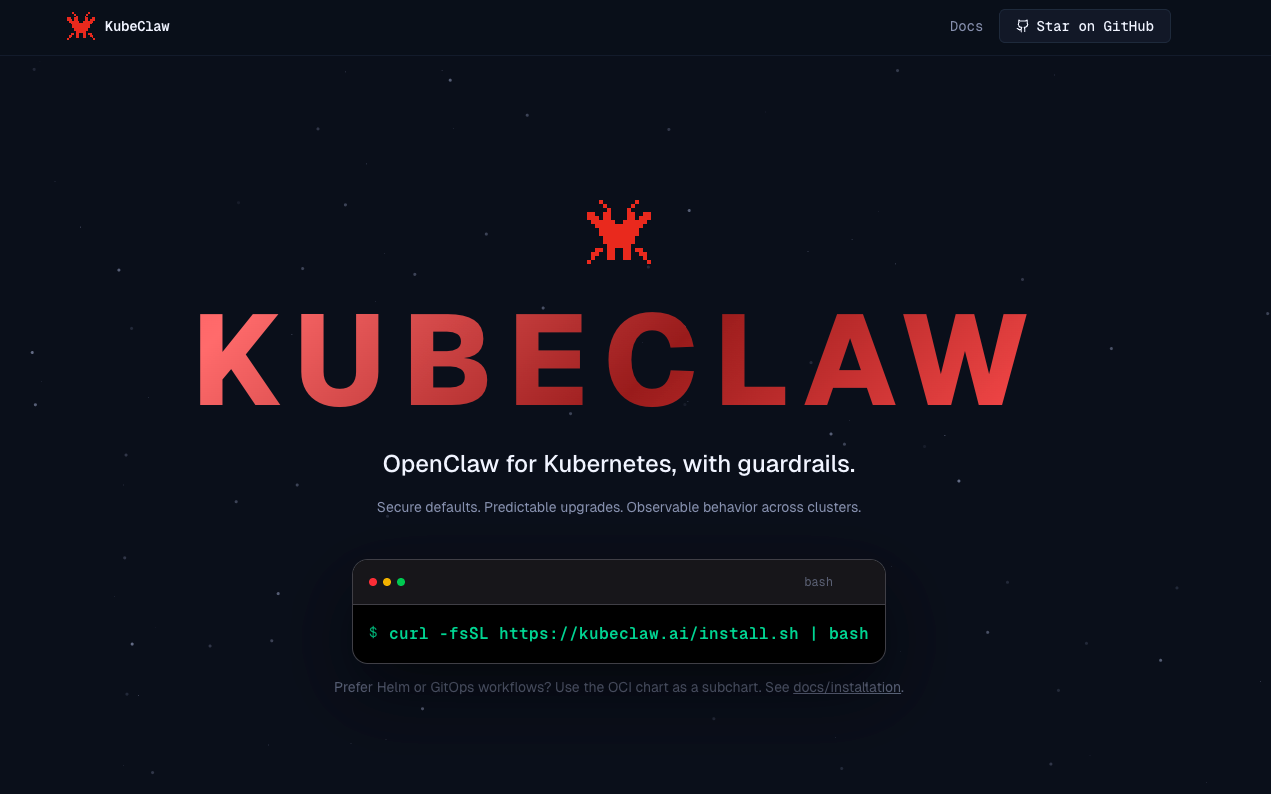
Explore KubeClaw (now sympozium), an open-source framework for orchestrating fleets of AI agents on Kubernetes. Learn how sidecar containers, ephemeral RBAC, and Kubernetes-native isolation enable safe multi-agent workflows for cluster administration.
Inside Apple's unprecedented deal with Google that gives Cupertino 'complete access' to Gemini for building on-device AI models.
How artificial intelligence is transforming diagnosis, treatment, and patient care in modern medicine
New AI systems are enabling doctors to detect lung cancer earlier than ever before, potentially saving millions of lives through improved screening accuracy and early intervention.
Binance expands its AI ecosystem with 13 new Agent Skills, enabling autonomous crypto trading agents to analyze markets, execute trades, and manage portfolios with institutional-grade capabilities.
Professional football teams are leveraging artificial intelligence and machine learning to analyze prospects, predict success, and gain competitive advantages in the NFL Draft.