
AI Code Generation: A Practical Guide to Programming Tools
AI-powered code generation tools are transforming software development. This article compares leading platforms, examines capabilities, and provides practical guidance for integration into development workflows.
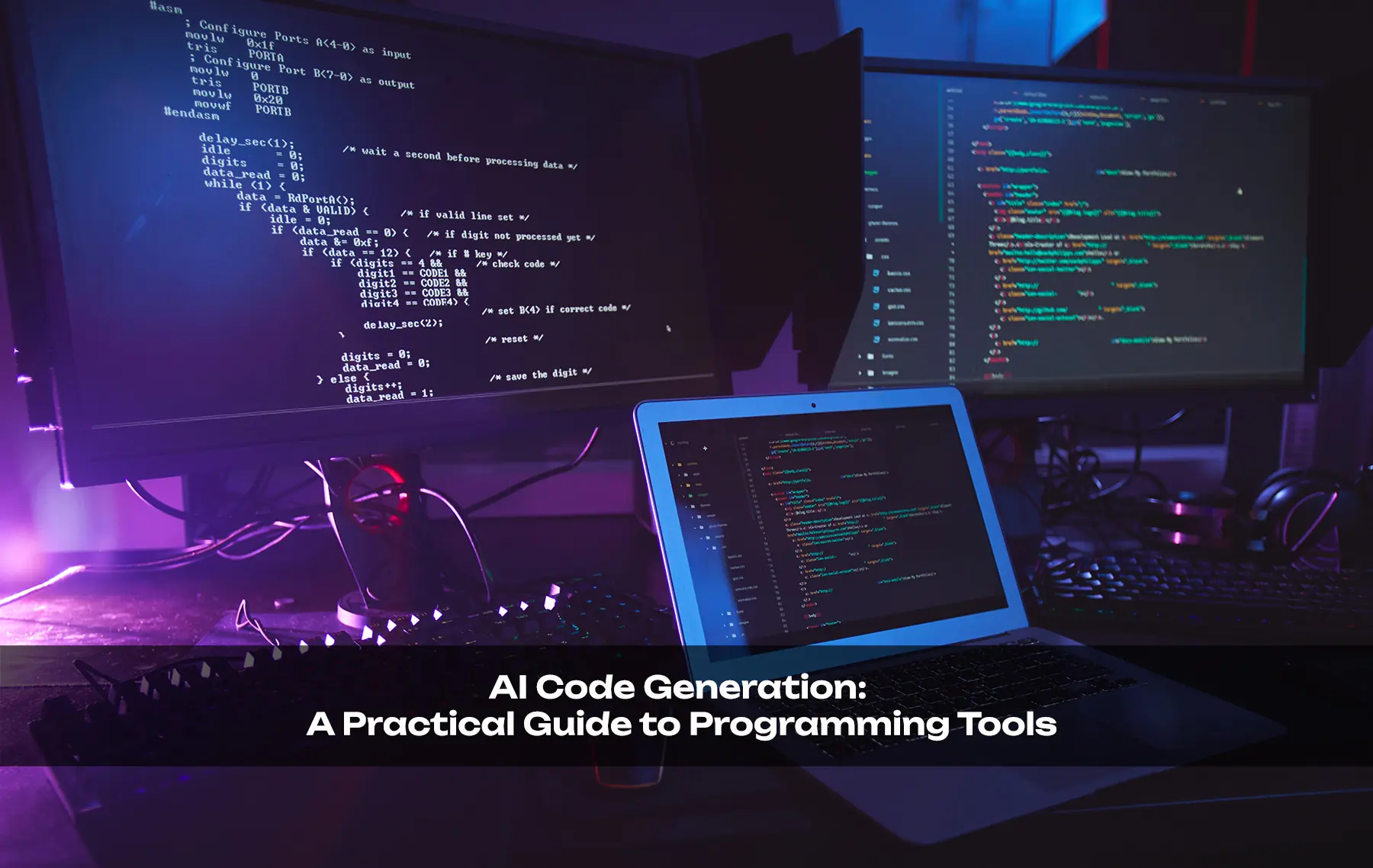
AI-assisted programming has evolved from experimental research to an integral part of daily development practice. The market for AI-powered developer tools is projected to exceed $12 billion by 2028, driven by productivity gains consistently estimated at 30-55% for routine tasks. This article examines the leading code generation platforms, their architectural approaches, practical capabilities, integration patterns, and trade-offs. The tools are not replacements for skilled developers, but they are powerful amplifiers of capability.
Introduction
For most of computing history, programming required manual translation of intent into code. AI code generation tools change this dynamic: describe what you want in natural language, and the tool suggests or generates functional code. A developer who spends 40% of their time on boilerplate and scaffolding can redirect that time toward architectural design and complex logic. The code produced is not always right — but it is often directionally correct, providing a starting point that accelerates iteration.
Leading Platforms Compared
| Platform | Provider | Key Features | Pricing |
|---|---|---|---|
| GitHub Copilot | GitHub/ Microsoft | Inline completions, chat, agent mode | $19/ mo or $39/ user/ mo |
| Cursor | Cursor Inc. | Tab completion, Agent mode, Compose | $20/ mo |
| Amazon Q Developer | AWS | IDE integration, security scanning | $19/ mo developer tier |
| Codeium | Codeium | Free tier, enterprise plans | Free / $14/ user/ mo |
| Tabnine | Tabnine | On-premise options, legal compliance | Free / $16/ user/ mo |
| Replit Agent | Replit | Full project scaffolding | $25/ mo |
| Cody | Sourcegraph | Code base-aware, repository context | Free / $20/ user/ mo |
| Devin | Cognition | Autonomous agent for complex tasks | $150/ mo |
| Bolt. new | StackBlitz | Browser-based full-stack development | Free / $15/ mo |
| JetBrains AI | JetBrains | Native IDE integration | Varies |
Architecture: How Code Generation Works
The most capable code generation systems use retrieval-augmented generation (RAG) to ground their suggestions in actual codebase context. Rather than generating code from general training knowledge, RAG-based systems identify relevant code files, retrieve relevant snippets, incorporate these into the prompt, and generate code consistent with the retrieved context. Without codebase context, a model might suggest an API that does not exist, a variable that has not been defined, or a pattern that conflicts with project conventions.
Practical Capabilities
Inline Code Completion: As the developer types, the tool suggests completions ranging from single-line suggestions to full function bodies. Effective completions reduce keystrokes by 30-50% for routine code patterns. Natural Language to Code: All major tools support converting natural language descriptions into code. Accuracy for well-documented APIs and common patterns is high; accuracy for novel or complex requirements is more variable. Test Generation: AI tools read existing functions and produce test cases covering common inputs, edge cases, and error conditions. Debugging: AI tools analyze error messages and broader context to suggest likely causes and fixes — one of the highest-value use cases. Code Review: AI tools review code for security vulnerabilities, performance problems, and logic errors.
Capabilities Across Languages
Code generation quality varies by language. Python, JavaScript, and TypeScript benefit from extensive training data and produce the highest quality suggestions. Languages like Rust, Go, and Ruby produce good results. Niche languages produce less reliable output.
Productivity Metrics
Organizations consistently report: 30-50% reduction in boilerplate writing time, 25-40% faster debugging, 20-35% improvement in test coverage, and 15-30% overall velocity improvement.
Challenges
Security: AI-generated code can contain vulnerabilities. Security review is essential for code handling authentication or payment processing. Overreliance: Developers who rely too heavily on AI suggestions may lose the ability to recognize when AI-generated code is incorrect. Legal/ IP: The legal status of AI-generated code and licensing liabilities from training on open-source code remains unsettled.
Conclusion
AI code generation tools have crossed the threshold from experimental to essential. The productivity gains are real — 30-50% improvements in routine development tasks documented across multiple organizations. Choosing the right tool depends on team size, budget, security requirements, and existing infrastructure. GitHub Copilot and Cursor lead for general-purpose development. The most effective teams treat AI code generation as one tool in a larger toolbox, always used with appropriate human oversight.
Related Articles

How AI Systems Manage Memory and Context Across Long Conversations
An in-depth exploration of how AI systems handle memory and context management—from context windows and token budgets to memory architectures and retrieval mechanisms used in production deployments.

Model Versioning and Experiment Tracking: Organizing ML Development at Scale
A practical guide to managing ML experiments and model versions using tools like MLflow, Weights & Biases, and DVC. Covers experiment tracking, model registry patterns, and scaling strategies for teams.

AI Model Quantization Techniques: From Research to Edge Deployment
A practical exploration of model quantization methods for edge AI deployment, comparing INT8, FP16, and INT4 approaches with accuracy tradeoffs and tool recommendations.