

How artificial intelligence is transforming human resources from administrative function to strategic partner, enabling smarter recruiting, development, and workforce management.
Practical patterns for integrating AI into developer workflows, from code generation to testing to documentation, with measurable productivity gains.
Cloudflare's Dynamic Workers launch in March 2026 introduces V8 isolate-based runtime that delivers 100x performance improvement over traditional containers. Learn how this technology enables AI agent sandboxes to start in milliseconds.
MCP adoption is accelerating across enterprise and developer platforms, with 97M+ installs, enterprise ad platforms, and IDE integrations making it the de facto AI tool standard.
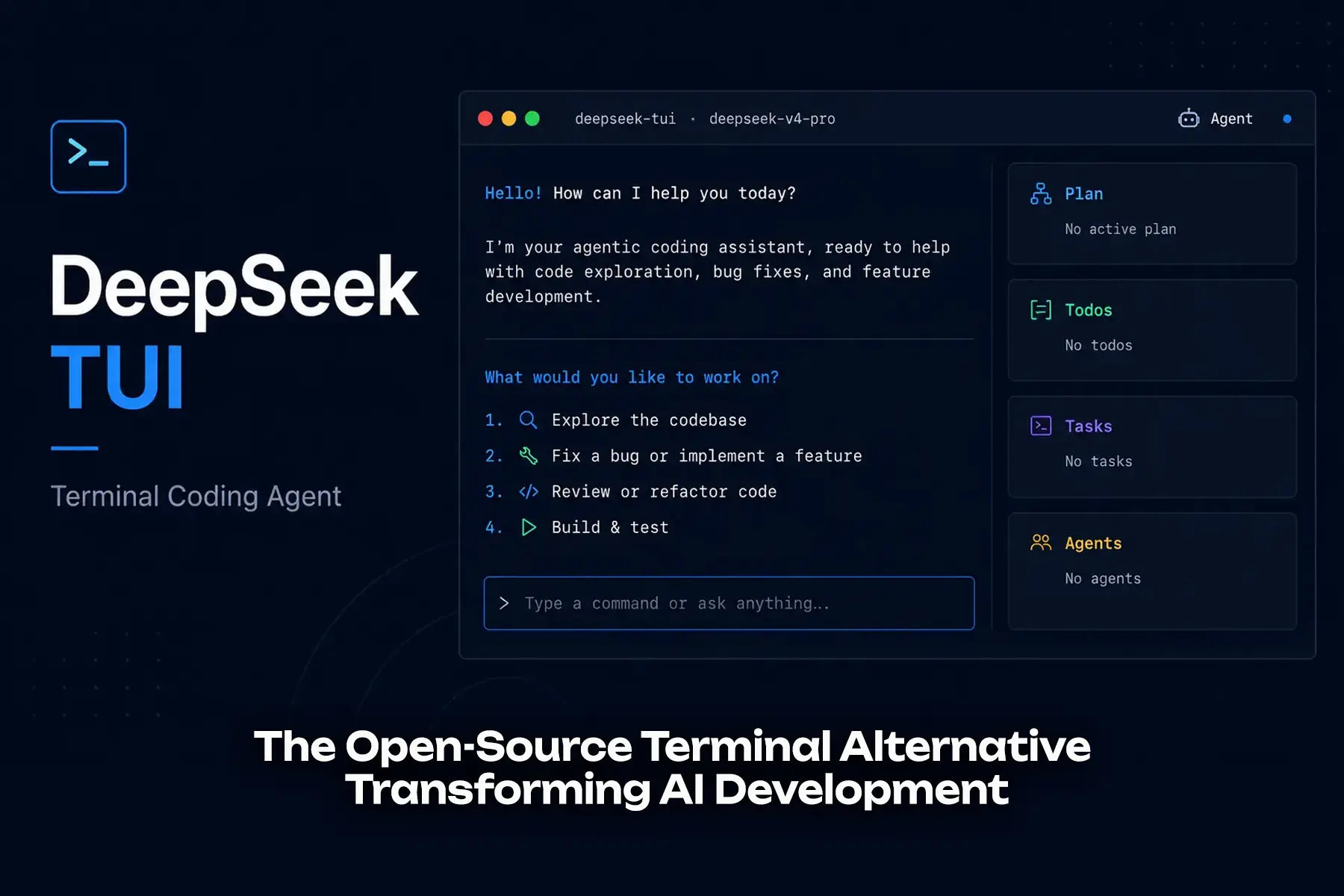
A Chinese open-source terminal AI coding tool built on DeepSeek models is gaining popularity as developers seek cost-effective alternatives to expensive Western AI tools.
Step-by-step guide to installing and configuring OpenClaw. Covers macOS, Windows, Docker installation, Telegram/Discord/Slack integration, and production deployment checklist. Perfect for beginners getting started with OpenClaw.

Master AI content generation — from text-to-image to video synthesis
How AI-powered web agents are transforming from simple chatbots into autonomous browsers capable of navigating, researching, and completing complex multi-step tasks on the internet.
Anthropic's CEO announces potential 80x growth in 2026, signaling a dramatic shift in the AI competitive landscape as Claude AI challenges OpenAI's market dominance.
A comprehensive comparison of the leading AI-powered code editors for developers in 2026, examining features, pricing, and which tool best suits different workflows.
EvoArt is a dedicated hub for creativity in the age of AI. We provide curated, high-quality coverage of everything happening at the intersection of artificial intelligence and the creative industries. Our content spans several key areas:
We operate on a principle of curated relevance. The AI landscape is massive and often noisy. Our editorial approach is to filter that noise and highlight what truly matters for creative people. Our selection criteria include:
Absolutely. In fact, we see guiding beginners as one of our core missions. We understand that getting started with AI can feel daunting. Here’s how we help:
OpenClaw—affectionately nicknamed the "lobster" or "小龙虾" (xiaolongxia) due to its red logo—is a revolutionary open-source AI agent that has taken the creative and tech world by storm . Unlike traditional AI chatbots that simply answer questions, OpenClaw is an action-taking AI. It can autonomously operate your computer 24/7, executing complex, multi-step tasks without your constant supervision . Think of it as a digital intern that can be deployed locally or in the cloud to handle everything from organizing files and writing code to scraping web data and generating reports . Its power lies in its ability to plan, use tools, and self-correct, making it a true "digital worker" rather than just a conversationalist . At EvoArt, we track tools like OpenClaw because they represent the next frontier: AI that doesn't just generate content, but actively helps you manage and process the overwhelming amount of creative work you face daily.
Great question! Think of it as a creative toolbox with different specialized instruments:
Which to use? If you're writing, ChatGPT or Claude are your go-to. If you're building a presentation, Copilot is ideal. If you need highly specific product imagery or instructional diagrams, Nano Banana is the specialist. And if you need an AI to execute a complex, multi-step task across your computer, OpenClaw is your answer.
You've hit on a critical point. OpenClaw's power comes with a cost: it consumes massive amounts of Tokens (the units of data processed by AI models) . A single complex task can burn through millions of Tokens, leading to unexpectedly high bills if you're not careful . Some users have reported daily costs exceeding $100 or burning through 50 million Tokens in half a day . This "Token anxiety" is a real challenge in the AI agent era.
This is where EvoArt provides crucial value. We don't just tell you about the tool; we guide you on how to use it smartly. We cover strategies to manage these costs, such as: