
NanoClaw vs OpenClaw: A Comprehensive Comparison Guide for AI Agent Selection
An in-depth comparison between NanoClaw and OpenClaw across architectural design, security isolation, ease of use, and ecosystem integration to help developers make informed decisions.
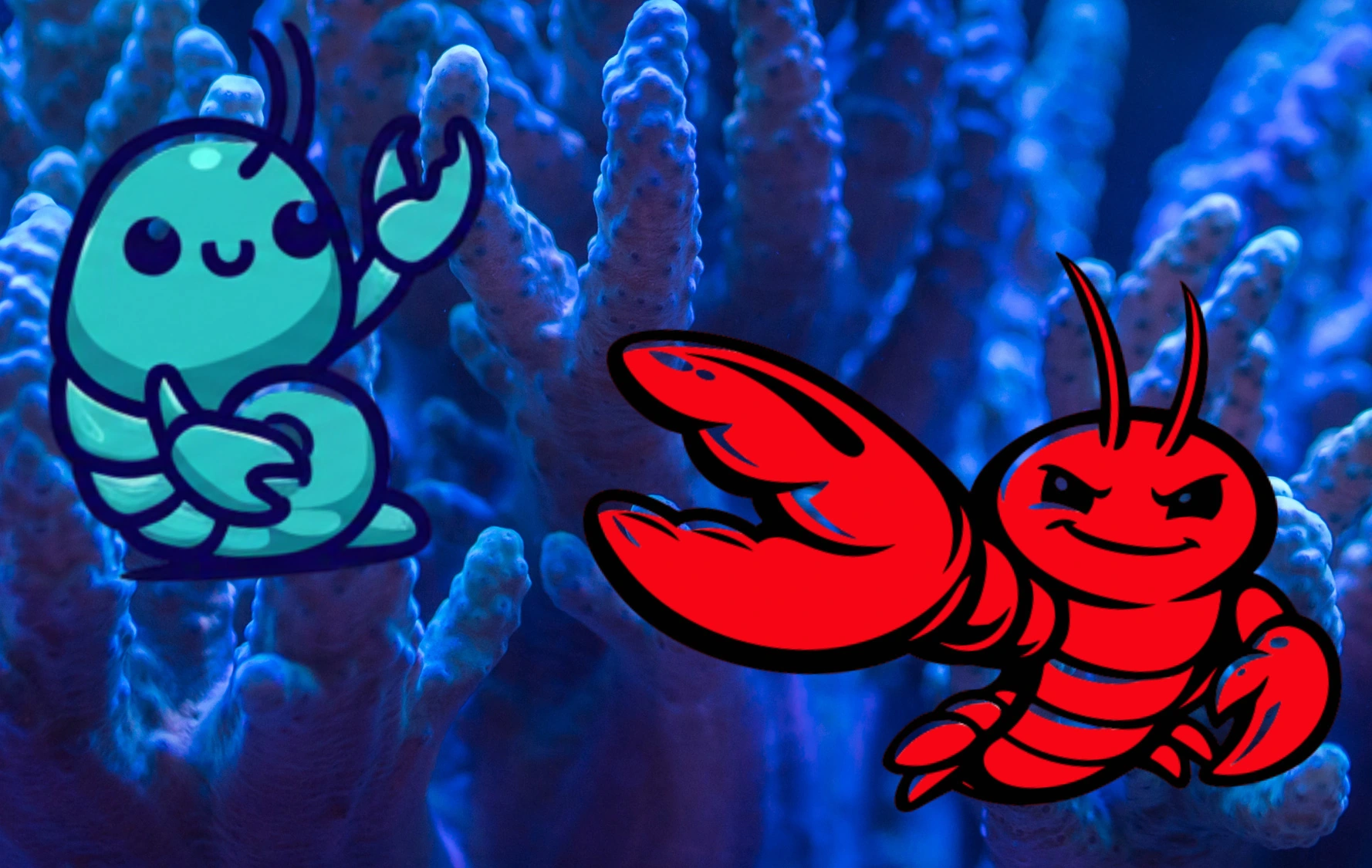
The choice between NanoClaw and OpenClaw represents one of the most significant decisions facing developers building personal AI assistants in 2026. These two open-source projects have emerged as the leading solutions in the AI agent space, yet they embody fundamentally different design philosophies and use cases. This comprehensive guide examines both platforms across six critical dimensions: architectural design, security isolation mechanisms, feature coverage, ease of use, ecosystem integration, and future development trajectories. By understanding the strengths and trade-offs of each solution, developers and organizations can make informed decisions aligned with their specific requirements, whether those prioritize security and simplicity or comprehensive feature sets and extensibility.
Introduction
The landscape of personal AI assistants has undergone a remarkable transformation in recent years. What began as simple rule-based bots has evolved into sophisticated autonomous agents capable of executing complex tasks, reasoning through problems, and interacting seamlessly across multiple platforms. At the forefront of this evolution stand two open-source projects that have captured the attention of developers worldwide: NanoClaw and OpenClaw.
OpenClaw, originally launched by Austrian developer Peter Steinberger in November 2025 under the name "Clawdbot," has become one of the most rapidly adopted open-source projects in GitHub's history. Following trademark considerations, the project underwent renaming to "Moltbot" and subsequently to "OpenClaw" in January 2026. By March 2026, the project had accumulated over 246,000 GitHub stars, ranking behind only React, Python, Linux, and Vue in popularity. Notably, in February 2026, Steinberger announced his joining of OpenAI, with the OpenClaw project transitioning to an independent foundation for ongoing operation and development.
NanoClaw, developed by the Qwibit.ai team, represents a contrasting approach to personal AI assistants. Positioned as a lightweight alternative to OpenClaw, NanoClaw runs atop the Anthropic Agent SDK and emphasizes containerized security isolation alongside a minimalist code architecture. While its star count remains significantly lower than OpenClaw's, NanoClaw has garnered substantial recognition among developers prioritizing security, simplicity, and rapid deployment.
This article provides a comprehensive comparison across multiple dimensions to help readers understand which solution best fits their use case.
Project Background and Overview
OpenClaw: The Full-Featured Standard
OpenClaw emerged from the vision of creating a универсальный personal AI assistant capable of integrating with virtually any service or platform. The project's architecture reflects this ambition, with support for over 50 messaging platforms, multiple LLM backends, and an extensive plugin ecosystem. The codebase has grown to approximately 500,000 lines of code, supported by 53 configuration files and more than 70 dependencies.
The project's governance transition in February 2026 marked a significant milestone. Following Steinberger's departure to join OpenAI, the project was transferred to an independent foundation with OpenAI serving as a sponsor. This structure ensures continued community-driven development while maintaining financial stability for long-term maintenance.
NanoClaw: The Security-First Alternative
NanoClaw was developed in response to growing concerns about AI agent security and the complexity of deploying full-featured solutions. The Qwibit.ai team identified a market segment seeking minimal configuration requirements combined with robust security isolation—requirements not adequately addressed by existing solutions.
Built directly on the Anthropic Agent SDK, NanoClaw implements operating system-level container isolation as a core architectural principle. Each agent instance runs within an independent Linux container (using Apple Container on macOS and Docker on Linux), creating a security boundary enforced by the operating system rather than application code.
The project's minimalist philosophy extends to its codebase. NanoClaw's developers assert that the entire codebase can be comprehended in approximately eight minutes, dramatically lowering the barrier to entry for developers seeking to understand, modify, or contribute to the project.
| Basic Information | OpenClaw | NanoClaw |
|---|---|---|
| First Release | November 2025 | Early 2026 |
| Development Team | Peter Steinberger → Independent Foundation | Qwibit.ai |
| GitHub Stars | 246,000+ | Rapidly growing |
| Underlying SDK | Multiple LLM backends supported | Anthropic Agent SDK |
| Codebase Size | ~500,000 lines of code | Readable in 8 minutes |
| API Calls | Integrable via platforms like APIYI | Invokable via unified API on APIYI |
Architectural Design Comparison
The architectural philosophies underlying NanoClaw and OpenClaw represent fundamentally different approaches to solving the same core problem: creating a capable, reliable personal AI assistant.
OpenClaw's Modular Architecture
OpenClaw employs a modular, full-featured architecture designed to address virtually every conceivable use case for personal AI assistants. This approach offers comprehensive functionality out of the box but introduces corresponding complexity. The 500,000-line codebase encompasses extensive integrations, configuration options, and extension mechanisms.
The plugin ecosystem forms a central component of OpenClaw's extensibility. Developers can create plugins to add new integrations, modify existing behaviors, or implement entirely new capabilities. This architecture has fostered a vibrant community contributing hundreds of plugins extending the platform's functionality.
Configuration in OpenClaw occurs through its 53 configuration files, covering aspects from platform-specific settings to LLM provider selection and behavioral parameters. While this granularity enables extensive customization, it also requires significant upfront configuration before the system becomes operational.
NanoClaw's Minimalist Approach
NanoClaw takes a fundamentally different approach, prioritizing simplicity and security above all else. The absence of configuration files represents a deliberate design choice—customization occurs entirely through conversations with Claude Code using natural language commands.
The skill file system (located in .claude/skills/) provides the primary extension mechanism. Contributors create skill files that define new capabilities, integrations, or behavioral modifications. This approach maintains code simplicity while allowing the community to expand functionality organically.
The minimalist philosophy extends to dependencies. NanoClaw's very small dependency footprint reduces potential security vulnerabilities, simplifies deployment, and minimizes the attack surface of the overall system.
| Architectural Comparison | OpenClaw | NanoClaw |
|---|---|---|
| Code Size | ~500,000 lines | Minimalist (readable in 8 mins) |
| Config Files | 53 config files | Zero config files |
| Dependencies | 70+ dependencies | Very few dependencies |
| Extension Method | Plugin ecosystem | Claude Code skill files |
| Customization Method | Editing config files | Conversational customization (/customize) |
| Learning Curve | Higher | Lower |
Security Isolation Mechanisms
Security represents one of the most significant differentiating factors between these two platforms, with implications for both individual users and enterprise deployments.
OpenClaw's Application-Layer Security
OpenClaw implements security mechanisms primarily at the application layer. Access control operates through whitelist configurations and pairing codes, with the security boundary maintained by application code itself. This approach provides reasonable protection for typical use cases but relies on the correctness and completeness of the application-level security implementation.
The application-layer approach offers flexibility in defining security policies but places significant responsibility on administrators to configure policies correctly. Misconfigurations can potentially expose the system to unauthorized access or data leakage.
NanoClaw's Operating System-Level Isolation
NanoClaw's security architecture represents a fundamentally different approach to agent isolation. Each agent instance runs within an independent Linux container, with file system isolation enforced by the operating system itself. This approach creates a hardware-enforced security boundary that remains intact regardless of application-level vulnerabilities or misconfigurations.
The containerization approach provides several key security benefits. Even if an AI agent exhibits abnormal behavior or is compromised, the sandboxing limits potential damage to the container environment. The host system remains protected from unauthorized file access, command execution, or network communications originating from the agent container.
This architectural choice makes NanoClaw particularly suitable for applications involving sensitive data processing, enterprise deployments with strict security requirements, or scenarios where robust isolation is paramount.
Security Recommendation: For applications involving sensitive data processing or enterprise deployment, NanoClaw's OS-level isolation provides substantially stronger security guarantees. Implementing unified API key management and call monitoring through platforms like APIYI (apiyi.com) can further enhance security posture for personal AI assistant API invocation management.
Feature Coverage Analysis
Understanding each platform's feature coverage is essential for selecting the appropriate solution based on specific use case requirements.
Messaging Platform Integrations
OpenClaw supports over 50 messaging platform integrations, representing one of the most comprehensive coverage available in the personal AI assistant space. This extensive integration support makes OpenClaw suitable for complex multi-platform deployment scenarios.
NanoClaw supports core platforms including WhatsApp, Telegram, Discord, Slack, and Signal—representing the most widely used communication channels while maintaining architectural simplicity.
Large Language Model Support
OpenClaw's multi-backend support enables flexible deployment across different LLM providers, including Anthropic, OpenAI, and local models. This flexibility allows users to select providers based on cost, capability, or privacy requirements.
NanoClaw primarily leverages Claude (Anthropic) as its LLM backend, reflecting its foundation on the Anthropic Agent SDK. This specialization enables deeper integration and optimization for Claude-based workflows.
Core Capabilities
Both platforms provide essential AI assistant capabilities:
- Persistent Memory: OpenClaw offers cross-session memory persistence; NanoClaw implements independent CLAUDE.md memory per group conversation
- Shell Commands: Both support command execution, with OpenClaw executing on the host and NanoClaw using containerized execution
- Web Access: Both provide browser automation and search/content retrieval capabilities
- Scheduled Tasks: Both support scheduled task execution with proactive messaging capabilities
| Feature Dimension | OpenClaw | NanoClaw |
|---|---|---|
| Messaging Platforms | 50+ integrations | WhatsApp/Telegram/Discord/Slack/Signal |
| LLM Backends | Anthropic/OpenAI/Local models | Primarily Claude (Anthropic) |
| Persistent Memory | ✅ Cross-session memory | ✅ Independent CLAUDE.md memory per group |
| Shell Commands | ✅ Host execution | ✅ Containerized execution |
| Web Access | ✅ Browser automation | ✅ Search and content retrieval |
| Scheduled Tasks | ✅ Supported | ✅ Supported, with proactive messaging |
| Agent Swarm | Partially supported | ✅ Multi-Agent collaboration |
| File I/O | ✅ Host filesystem | ✅ Isolated container filesystem |
OpenClaw demonstrates clear advantages in integration breadth, particularly for users requiring extensive third-party service connections. However, NanoClaw leads in multi-agent collaboration (Agent Swarm), representing one of the earliest implementations of this capability in personal AI assistants.
Installation and Configuration
OpenClaw Installation Process
Installing OpenClaw requires handling 70+ dependencies, configuring multiple service components, and establishing message platform connections. While experienced developers will find this process straightforward, newcomers may need to invest considerable time resolving configuration issues.
# Typical OpenClaw installation steps (simplified)
git clone https://github.com/openclaw/openclaw.git
cd openclaw
# Requires configuring multiple environment variables and config files
cp .env.example .env
# Edit key items in 53 config files...
npm install  # 70+ dependencies
npm run build
npm start
NanoClaw Installation Process
NanoClaw's installation exemplifies its minimalist philosophy. After cloning the repository, users simply invoke Claude Code and execute the /setup command. Claude Code automatically handles dependency installation, authentication configuration, container setup, and service startup.
# Complete NanoClaw installation process
git clone https://github.com/qwibitai/nanoclaw.git
cd nanoclaw
claude        # Start Claude Code
# In Claude Code, execute:
/setup        # Automatically completes all configurations
NanoClaw Custom Configuration Example:
# NanoClaw doesn't use config files
# All customizations are done via conversation

# In Claude Code, just say:
# "Add Telegram connection"
# "Set daily weather summary at 9 AM"
# "Enable Agent Swarm mode"

# Or use guided customization:
/customize

# Contributors can create skill files to extend functionality
# Location: .claude/skills/
Quick Start Recommendation: For developers new to AI Agent projects, NanoClaw's zero-configuration experience offers significantly lower barriers to entry. Obtaining API keys through platforms like APIYI (apiiyi.com) enables rapid testing of various Large Language Model invocation effects.
Recommended Use Cases
Scenarios Favoring OpenClaw
Extensive Integration Requirements: When workflows demand connection to numerous third-party services, OpenClaw's plugin ecosystem provides unparalleled flexibility.
Multi-LLM Backend Flexibility: Scenarios requiring fluid switching between Anthropic, OpenAI, and local models benefit from OpenClaw's comprehensive backend support.
Mature Community Support: The 246,000+ star community ensures extensive tutorials, active issue resolution, and abundant learning resources.
Heavy Customization Needs: Deep modifications to underlying logic benefit from OpenClaw's modular architecture offering numerous extension points.
Team Collaboration Deployment: Enterprise teams requiring standardized deployment and unified management will find OpenClaw's ecosystem mature and well-supported.
Scenarios Favoring NanoClaw
Security-First Applications: Handling sensitive data requiring OS-level container isolation protection makes NanoClaw the clear choice.
Rapid Prototype Validation: The ability to deploy a functional AI assistant within five minutes enables accelerated idea validation.
Personal Lightweight Use: Scenarios requiring only core messaging interaction without the overhead of a complex system benefit from NanoClaw's simplicity.
Deep Claude Ecosystem Integration: Users already embedded in the Anthropic toolchain seeking deeper Claude integration will find NanoClaw optimized for their workflow.
Learning and Research Purposes: The compact codebase enables comprehensive study of AI Agent architecture design—suitable for educational contexts and research projects.
| User Type | Recommended Solution | Reason |
|---|---|---|
| Zero-Experience Newcomers | NanoClaw | Zero config, 5-minute setup |
| Full-Stack Developers | OpenClaw | Full-featured, extensive customization space |
| Security Engineers | NanoClaw | OS-level isolation, security audit-friendly |
| AI Product Managers | OpenClaw | Rich integrations, quick business system integration |
| Independent Developers | Depends on needs | NanoClaw for lightweight, OpenClaw for full features |
| Enterprise Teams | OpenClaw | Mature ecosystem, ample community support |
Technical Ecosystem and Future Directions
OpenClaw Ecosystem
The OpenClaw ecosystem has achieved considerable maturity:
- Community Scale: 246,000+ GitHub stars, 47,000+ forks
- Integrations: 50+ third-party service integrations
- LLM Support: Multiple backends including Anthropic, OpenAI, and local models
- Foundation Operation: Transitioned to independent foundation in February 2026 with OpenAI as sponsor
- Derivative Projects: Has inspired lightweight alternatives including NanoClaw, PicoClaw, ZeroClaw, and TinyClaw
NanoClaw Ecosystem Development
Despite its younger status, NanoClaw's development trajectory is clear:
- Underlying Dependencies: Built directly on the Anthropic Agent SDK
- Security Innovation: First AI Agent featuring OS-level container isolation as a core characteristic
- Agent Swarm: Among the earliest personal AI assistants implementing multi-agent collaboration
- Contribution Model: Community expansion via
.claude/skills/files - Development Direction: Deep integration with the Claude ecosystem
Ecosystem Competition Dynamics
A notable industry trend emerges from observing these two projects: OpenClaw's founder has joined OpenAI while NanoClaw operates on the Anthropic SDK. The two most prominent open-source personal AI assistant projects now align with opposing major AI providers.
This alignment carries implications for users—it extends beyond tool selection to encompass commitment to a broader technical ecosystem. Maintaining flexibility in API calls through unified interface platforms like APIYI (apiiyi.com) enables connection with both OpenAI and Anthropic models simultaneously, preserving the ability to pivot between technical routes as requirements evolve.
Decision-Making Framework
Quick Decision Flowchart
Answer these three questions to determine the optimal choice:
Question 1: Do you require OS-level security isolation?
- Yes → NanoClaw
- No → Proceed to Question 2
Question 2: Do you need more than 10 third-party integrations?
- Yes → OpenClaw
- No → Proceed to Question 3
Question 3: Do you prioritize ease of getting started or depth of features?
- Ease of getting started → NanoClaw
- Depth of features → OpenClaw
Hybrid Usage Strategy
In practice, NanoClaw and OpenClaw are not mutually exclusive. Some developers employ both:
- Use NanoClaw for sensitive tasks involving financial data or personal information
- Use OpenClaw as an everyday, full-featured AI assistant
- Coordinate LLM invocations through unified API management platforms
Cost Optimization Note: Running multiple AI Agents increases API invocation volumes. APIYI's (apiiyi.com) flexible billing model effectively controls costs, particularly beneficial for scenarios involving simultaneous multi-Agent usage.
Frequently Asked Questions
Q1: Can NanoClaw completely replace OpenClaw?
NanoClaw covers core functionalities including messaging, memory, scheduled tasks, and web access. However, it lacks OpenClaw's 50+ integration ecosystem and multi-LLM backend support. For users relying on five to six core features, NanoClaw proves perfectly adequate. Users requiring extensive third-party integrations will find OpenClaw more suitable. The APIYI platform (apiiyi.com) can bridge NanoClaw's multi-model support gaps by unifying API calls from different vendors.
Q2: Which platform should beginners learn first?
Starting with NanoClaw is recommended. The small codebase enables complete comprehension of the project's architectural design—a foundation that proves valuable when eventually working with OpenClaw. Additionally, NanoClaw's /setup one-click installation delivers visible results within five minutes, providing rapid positive feedback to maintain learning momentum.
Q3: Is there significant cost difference between the two projects?
For core functionalities, differences are minimal—the primary cost derives from LLM API calls rather than framework overhead. However, OpenClaw supports local models (such as Ollama), enabling cost savings through local inference. NanoClaw primarily relies on Claude API, with the APIYI platform (apiiyi.com) offering more favorable invocation pricing.
Q4: Will OpenClaw's foundation transition affect usage?
Short-term impact is minimal. Foundation transition actually ensures project sustainability by removing dependence on a single developer. OpenAI's sponsorship provides resource support without direct control over project direction. Community contributors maintain ability to freely submit code and features.
Q5: Does container isolation affect NanoClaw's performance?
Modern container technologies (Docker / Apple Container) introduce minimal performance overhead, typically within 1-3%. For I/O-intensive applications like AI Agents, bottlenecks typically arise from LLM API response times rather than local computation. Security benefits of container isolation substantially outweigh negligible performance impacts.
Conclusion
NanoClaw and OpenClaw represent two distinct philosophies in AI Agent development: ultra-secure simplicity versus a full-featured ecosystem.
OpenClaw stands as the undisputed feature leader—with 246,000+ stars, 50+ integrations, multi-LLM support, and a mature community. Users requiring comprehensive personal AI assistant capabilities will find OpenClaw the definitive standard choice.
NanoClaw emerges as the intelligent challenger—offering container isolation, zero configuration requirements, and a codebase readable in eight minutes. Users prioritizing security and rapid deployment will find NanoClaw the superior fit.
For most beginners, the recommendation is straightforward: begin with NanoClaw to grasp core AI Agent concepts, then determine whether migration to OpenClaw aligns with evolving requirements.
Utilizing the APIYI platform (apiiyi.com) for unified API call management ensures consistent interface experience and flexible billing regardless of the chosen Agent framework.
Related Articles
AI Coding Agent Ecosystem: A Practical Comparison of OpenClaw, Claude Code, Cursor, and Alternatives
A practical comparison of the leading AI coding agents in 2026, covering architecture, SWE-bench scores, pricing, and ideal use cases for each platform.

OpenClaw, Manus AI, and Claude Code – A Technical Decision Maker‘s Guide
In early 2026, AI agents have become core to enterprise digital transformation. But with options like OpenClaw (GUI automation), Manus AI (cloud orchestration), and Claude Code (developer copilot), how do you choose? This guide provides a systematic comparison and recommendations for eight key business scenarios, helping technical leaders avoid costly mistakes.
Claude vs GPT in 2026 - The AI Coding Assistant Battle Intensifies
As Anthropic's Claude Opus 4.6 challenges OpenAI's GPT-5.4 in coding benchmarks, the AI coding assistant market has become the most competitive segment in the AI industry. We analyze the technical and strategic differences.