
Meta AI Employee Concerns: The Human Cost of Rapid AI Deployment
An examination of employee sentiment at Meta regarding AI implementation and the broader implications for tech workforce wellbeing in the age of rapid AI deployment.
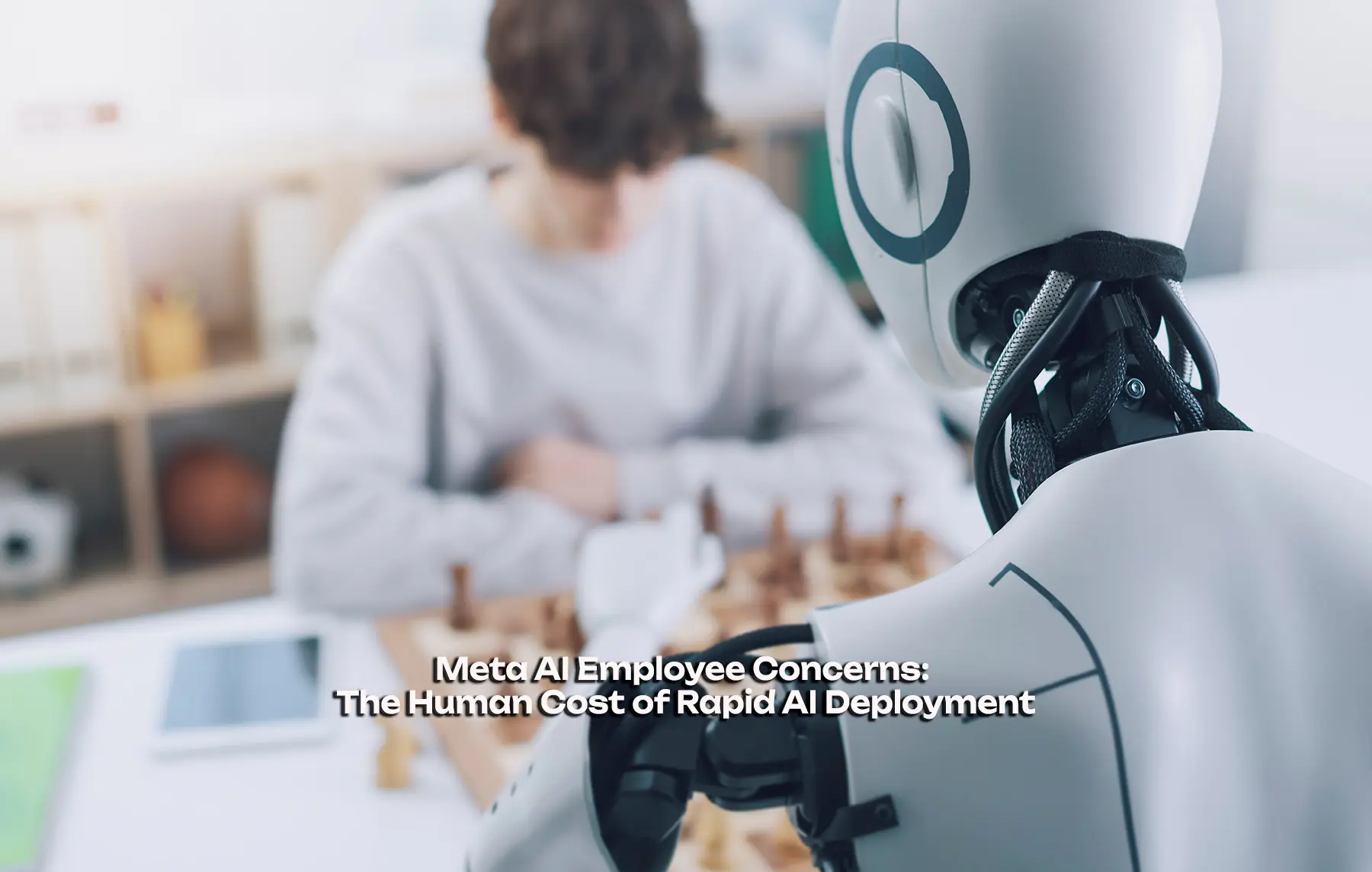
Reports emerging from Meta indicate significant employee concerns regarding the company's aggressive AI implementation strategy. This analysis examines the underlying dynamics, broader industry patterns, and implications for technology workforce wellbeing in an era of rapid AI deployment.
Introduction
Meta's embrace of artificial intelligence, while generating significant technological advancement, has created substantial employee concerns. Reports from within the company highlight anxiety about job security, workload increases, and the pace of technological change.
This situation reflects broader patterns across the technology industry, where rapid AI deployment creates both opportunities and challenges for existing workforces.

The Meta Context
Company Strategy
Meta's AI strategy encompasses multiple dimensions:
| Area | Investment | Implementation Timeline |
|---|---|---|
| AI Assistants | $18 billion | 2025-2027 |
| Content Moderation | $8 billion | Ongoing |
| Advertising AI | $12 billion | Continuous |
| Infrastructure | $25 billion | 2025-2029 |
| Research | $5 billion | Long-term |
Employee Perspectives
Internal feedback reveals several key concerns:
- Job Security: Uncertainty about long-term role viability
- Workload: Increased expectations without additional resources
- Skills Gap: Pressure to learn AI collaboration quickly
- Support: Inadequate guidance on AI integration
- Recognition: Questioning value of human contributions
Industry Patterns
Technology Sector Trends
Meta's experience reflects broader industry dynamics:
| Factor | 2024 | 2025 | 2026 |
|---|---|---|---|
| AI Investment as % of Revenue | 12% | 18% | 27% |
| Workforce Reduction Notice | 8% | 15% | 24% |
| Employee Satisfaction | 72 | 68 | 61 |
| Workload per Employee | +15% | +28% | +42% |
Comparative Analysis
Other major technology companies experience similar patterns:
Google:
- Significant AI integration pressure
- Internal debates about workforce planning
- Employee advocacy for transition support
Microsoft:
- Enterprise-focused AI deployment
- More gradual implementation approach
- Investment in reskilling programs
Amazon:
- Warehouse automation acceleration
- Customer service AI expansion
- Mixed employee feedback
Root Cause Analysis
Organizational Factors
Several factors contribute to employee concerns:
Strategic Pressures:
- Competitive urgency drives rapid deployment
- Market expectations for AI features
- Shareholder pressure for efficiency gains
Implementation Challenges:
- Insufficient change management
- Inadequate training resources
- Poor communication of vision
Individual Impacts
Personal effects on employees include:
| Impact Category | Percentage Reporting | Severity |
|---|---|---|
| Anxiety about Job Security | 78% | High |
| Workload Increase | 71% | Moderate-High |
| Skills Pressure | 65% | Moderate |
| Reduced Job Satisfaction | 58% | Moderate |
| Consider Leaving | 45% | High |
Solutions and Approaches
Company Responses
Leading organizations implement several strategies:
Successful Approaches:
- Transparent communication about AI strategy
- Investment in reskilling programs
- Gradual implementation timelines
- Human-AI collaboration emphasis
- Clear career pathways
Less Successful Approaches:
- Minimal communication
- Sudden changes without support
- Focus only on efficiency gains
- Limited workforce investment
Policy Recommendations
Organizations should consider:
- Communication: Regular updates on AI strategy and impacts
- Support: Meaningful reskilling investment
- Timeline: Consider gradual implementation
- Feedback: Create channels for employee input
- Recognition: Value human contributions alongside AI
Broader Implications
Workforce Future
The situation highlights broader workforce concerns:
Short-term:
- Continued pressure on tech workers
- Skill evolution requirements
- Job security uncertainty
Long-term:
- New role categories emerge
- Value shift toward human-AI collaboration
- Changed workforce composition
Industry Health
Concerns about workforce wellbeing have implications:
- Innovation capacity
- Talent attraction and retention
- Corporate reputation
- Sustainable growth
Looking Forward
Industry Evolution
The sector is undergoing fundamental transformation:
- AI capabilities continue expanding
- Workforce requirements evolve
- New categories emerge
- Collaboration models develop
Individual Adaptation
Workers can consider several strategies:
- Embrace AI Collaboration: Learn to work alongside AI systems
- Develop Unique Skills: Emphasize human-specific capabilities
- Continuous Learning: Stay current with industry changes
- Network: Build professional relationships
- Consider Alternatives: Explore emerging role categories
Conclusion
Meta's experience highlights the human cost of rapid AI deployment in the technology sector. While AI implementation brings genuine benefits, organizations must consider the wellbeing of their workforces in implementation strategies.
Success in the AI era requires balancing technological advancement with human considerations. Organizations that successfully navigate this balance will be better positioned for sustainable growth and innovation.
The challenge for the industry is to capture AI's benefits while maintaining workforce engagement, satisfaction, and development. This balance represents one of the defining management challenges of the current era.
Related Articles
Anthropic's Explosive Growth: How Claude AI Surpassed OpenAI Revenue
Anthropic's CEO announces potential 80x growth in 2026, signaling a dramatic shift in the AI competitive landscape as Claude AI challenges OpenAI's market dominance.
AI Trends 2026: The Technologies Shaping Tomorrow
An in-depth analysis of the most significant AI trends driving innovation and transformation in 2026 and beyond.
Global AI Adoption Reaches 17.8%: Microsoft's 2026 Report Analysis
Microsoft's latest report reveals global AI adoption increased to 17.8% of working-age population in Q1 2026, marking a 1.5 percentage point rise from 16.3%.