Autonomous Research Agents: AI That Designs Its Own Experiments
How autonomous AI research agents are moving beyond answering questions to actively designing, executing, and iterating on scientific experiments without human intervention.
Cutting-edge AI models that appeared to mimic human thinking may actually be memorizing answers instead of truly understanding. New tests expose a major gap in today's AI systems.
Explore how modern AI systems process and generate multiple modalities—images, audio, video, and combinations thereof—enabling richer AI applications.
How artificial intelligence is transforming diagnosis, treatment, and patient care in modern medicine
New AI systems are enabling doctors to detect lung cancer earlier than ever before, potentially saving millions of lives through improved screening accuracy and early intervention.
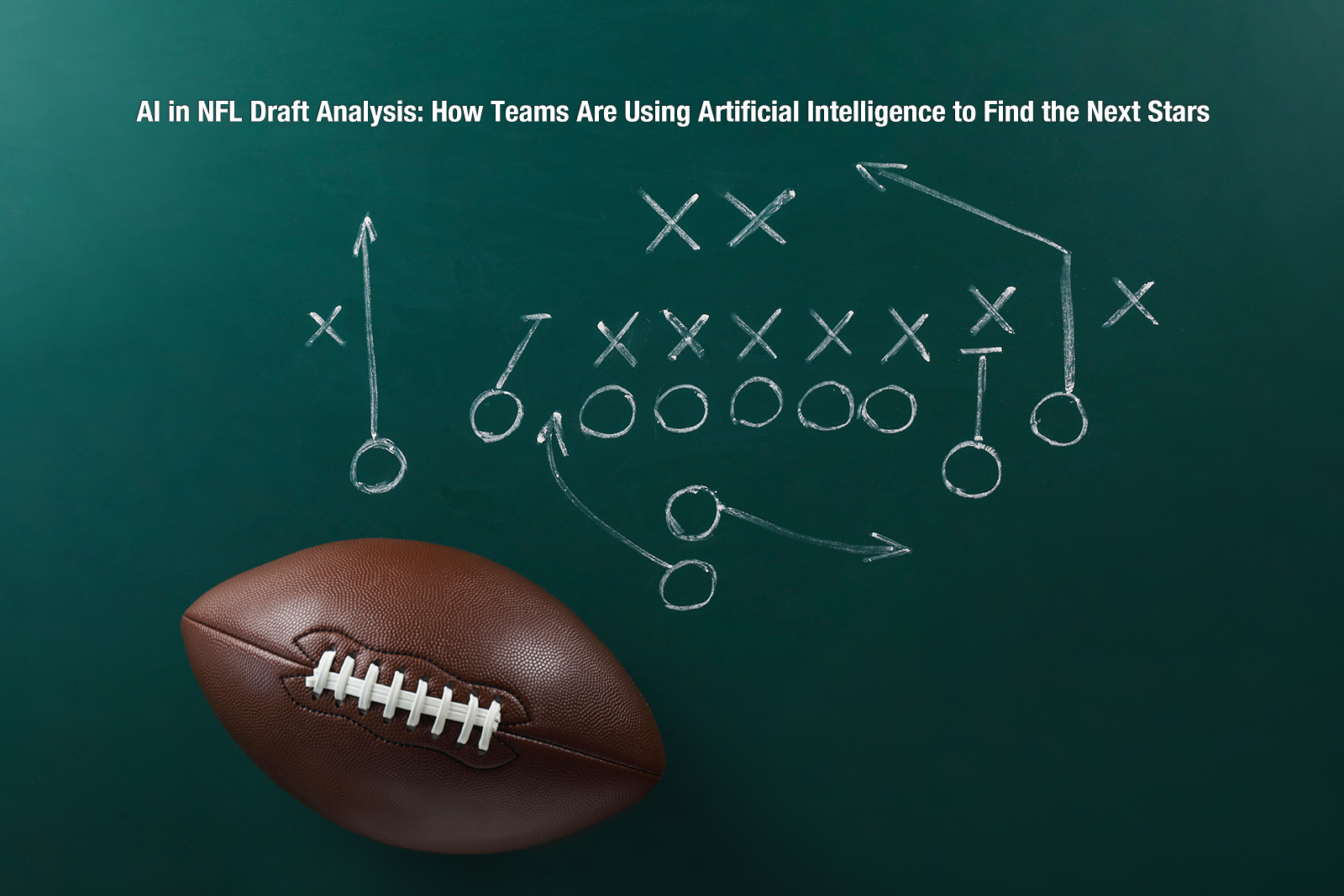
Professional football teams are leveraging artificial intelligence and machine learning to analyze prospects, predict success, and gain competitive advantages in the NFL Draft.
How speech-to-speech translation and voice synthesis technologies are reaching near-human quality, transforming communication across languages and accessibility boundaries.
Exploring how affective computing advances are enabling AI systems to recognize and respond to human emotions, transforming healthcare, education, and customer service.
How AI is transforming scientific research through advanced simulation capabilities in climate modeling, particle physics, and molecular dynamics.
Anthropic's Claude Opus 4.6 achieves unprecedented AI coding milestone, writing a dependency-free C compiler in Rust capable of compiling a booting Linux kernel.
Sakana AI's autonomous research system has published in Nature, demonstrating the first AI capable of completing full scientific research cycles from hypothesis to publication.
DeepSeek's Manifold-Constrained Hyper-Connections (mHC) method promises to fundamentally change how AI models are trained and scaled, potentially reducing computational requirements while improving performance.