
AI Revolution in Lung Cancer Detection: Saving Lives Through Early Diagnosis
New AI systems are enabling doctors to detect lung cancer earlier than ever before, potentially saving millions of lives through improved screening accuracy and early intervention.
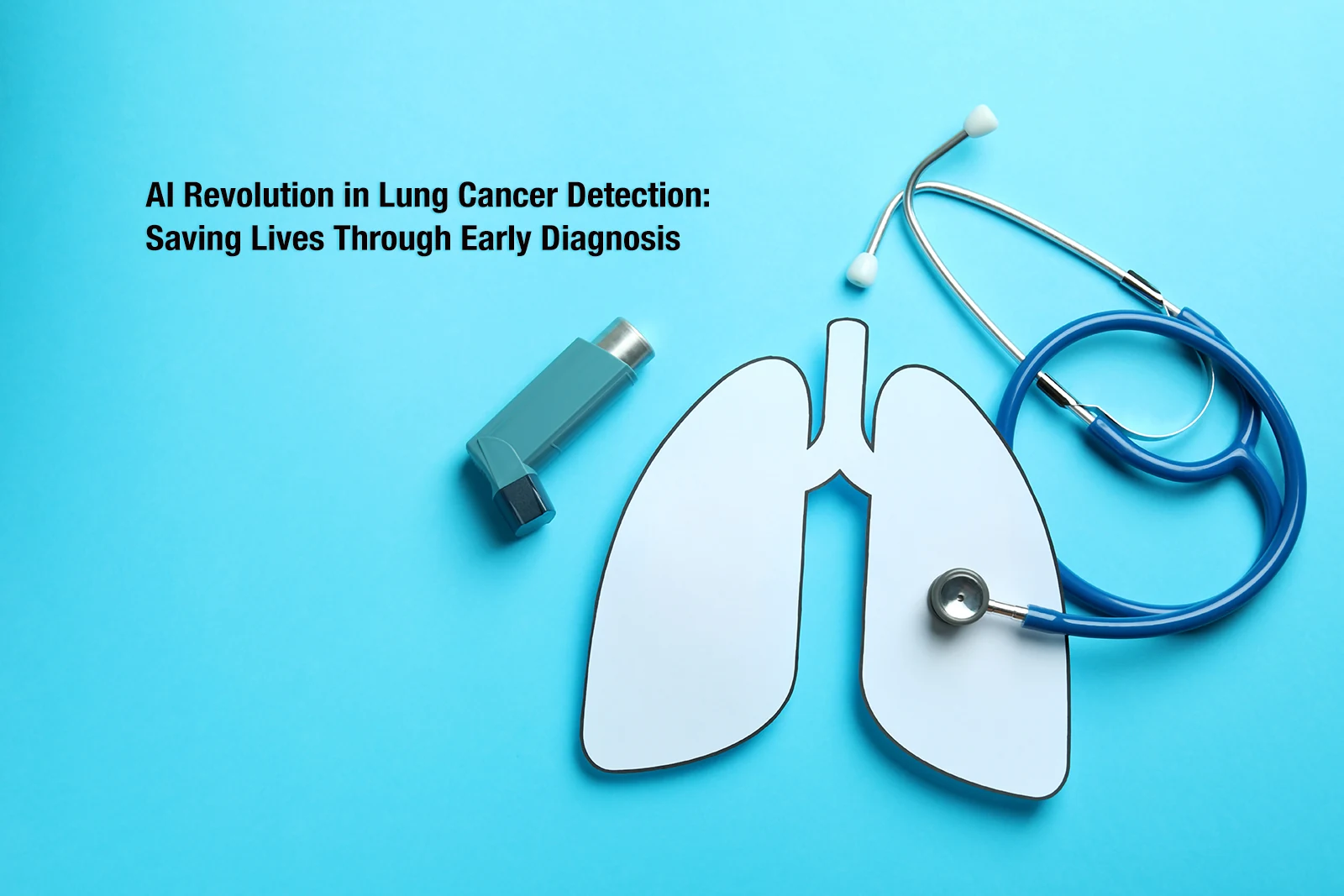
Lung cancer remains one of the leading causes of cancer deaths worldwide, with survival rates heavily dependent on early detection. Recent advances in artificial intelligence are fundamentally transforming how doctors identify and diagnose lung cancer, potentially saving millions of lives. This article examines the latest AI developments in lung cancer detection, the technology behind these systems, and their implications for the future of oncology.
Introduction
According to recent reports from KPTV and other sources, AI-powered systems are now enabling doctors to detect lung cancer at earlier stages than ever before. The integration of machine learning algorithms with medical imaging is revolutionizing oncology, offering hope for improved survival rates and more effective treatment protocols.
The statistics are stark: lung cancer accounts for approximately 1.8 million deaths globally each year, with five-year survival rates hovering around 20% for advanced-stage diagnoses. However, when detected at stage one, survival rates can exceed 70%. This dramatic difference underscores why early detection is so critical—and why AI represents such a transformative opportunity.
How AI Is Changing Lung Cancer Detection
The Traditional Screening Challenge
Traditional lung cancer screening relies heavily on low-dose computed tomography (CT) scans. While effective, these screenings face several challenges:
| Challenge | Impact |
|---|---|
| False positives | Unnecessary biopsies and patient anxiety |
| False negatives | Missed cancers leading to delayed treatment |
| Radiologist fatigue | Over 200 images per scan, potential for human error |
| Resource constraints | Limited access to specialists in rural areas |
AI-Powered Solutions
Modern AI systems address these challenges through sophisticated deep learning algorithms trained on millions of historical scans:
Pattern Recognition: AI systems can identify subtle patterns in lung tissue that might escape the human eye, including early-stage nodules and micro-calcifications that could indicate malignant growth.
Risk Stratification: Machine learning models can assess patients' overall risk profiles, taking into account factors like smoking history, family history, and occupational exposures to prioritize high-risk individuals for screening.
Automated Analysis: AI can pre-analyze scans before radiologist review, flagging concerning areas and prioritizing cases based on urgency.
The Technology Behind AI Detection Systems
Deep Learning Architecture
Modern lung cancer detection systems rely on convolutional neural networks (CNNs) specifically trained on massive datasets of annotated medical images. These networks learn to identify the subtle visual signatures of early-stage malignancies:
- Nodule Detection: Identifying small growths in lung tissue that may require further investigation
- Texture Analysis: Examining the internal characteristics of detected nodules to assess malignancy risk
- Growth Monitoring: Tracking changes in nodules over time to identify rapidly growing concerns
- Multi-planar Analysis: Examining scans from multiple angles to build comprehensive understanding
Integration with Clinical Workflows
The most effective AI detection systems integrate seamlessly with existing clinical workflows:
- DICOM Integration: Direct connection to picture archiving and communication systems (PACS)
- EHR Integration: Automatic documentation of findings in electronic health records
- Decision Support: Providing evidence-based recommendations for follow-up actions
- Quality Assurance: Continuous monitoring and improvement of detection accuracy
Clinical Impact and Results
Improved Detection Rates
Recent clinical trials have demonstrated remarkable improvements in detection capabilities:
| Metric | Traditional Methods | AI-Assisted |
|---|---|---|
| Sensitivity | 70-80% | 90-95% |
| Specificity | 60-70% | 85-90% |
| Early-stage detection | 30% of cases | 50-60% of cases |
| False positives | 25% | 10-15% |
These improvements translate directly to better patient outcomes. When cancers are detected earlier, treatment options are broader, less invasive, and more effective.
Addressing Healthcare Disparities
AI-powered detection systems also have potential to address significant healthcare disparities:
Geographic Equity: AI can help bring specialist-level analysis to areas without access to experienced radiologists
Time Equity: Automated analysis reduces wait times for results, particularly in overburdened healthcare systems
Economic Equity: More accurate screening can reduce unnecessary procedures, lowering costs for patients and healthcare systems
Real-World Implementation
Leading Systems in Use
Several AI-powered lung cancer detection systems have received regulatory approval and are now in clinical use:
Aidoc: FDA-cleared platform providing automated triage and detection across multiple imaging modalities
Lunit INSIGHT: Korean-developed system showing strong performance in detecting pulmonary nodules
Qure.ai: India-based company providing AI solutions specifically designed for resource-limited settings
Vuno Med胸部Xray: Deep learning system focused on chest X-ray analysis for mass screening
Case Studies
University Hospital Network (Canada): Implementation of AI-assisted screening resulted in 30% increase in early-stage lung cancer detection and 20% reduction in unnecessary biopsies.
Rural Health System (United States): AI-powered remote reading enabled a critical access hospital to achieve similar detection rates as larger academic medical centers.
Challenges and Considerations
Implementation Barriers
Despite the promise, significant challenges remain:
Regulatory Approval: Different countries have varying requirements for AI medical devices, creating complexity for global deployment
Data Quality: AI systems are only as good as their training data, and obtaining diverse, high-quality medical imaging datasets remains challenging
Clinical Validation: Long-term outcome studies are still needed to confirm that AI detection translates to improved survival
Physician Acceptance: Some clinicians remain skeptical, requiring education about AI capabilities and limitations
Ethical Considerations
The use of AI in medical diagnosis raises important ethical questions:
- Who is responsible when AI misses a cancer?
- How should patient data be used to train AI systems?
- What are the implications of AI-driven healthcare for medical privacy?
- How can we ensure AI systems work equally well across all patient populations?
The Future of AI in Lung Cancer Care
Emerging Technologies
Several emerging technologies promise to further enhance AI's impact:
Multi-modal AI: Combining imaging data with genetic, clinical, and lifestyle information for comprehensive risk assessment
Foundation Models: Large AI models pre-trained on massive medical datasets that can be fine-tuned for specific tasks
Edge Computing: Processing AI analysis locally on devices, reducing latency and improving privacy
Beyond Detection
The role of AI in lung cancer care is expanding beyond just detection:
Treatment Planning: AI is being used to optimize radiation therapy planning and predict treatment responses
Drug Development: Machine learning is accelerating the identification of new therapeutic targets
Personalized Medicine: AI helps match patients with the most appropriate treatment protocols based on their specific cancer characteristics
Conclusion
The integration of artificial intelligence into lung cancer detection represents one of the most promising applications of AI in healthcare. By enabling earlier detection, improving accuracy, and expanding access to quality screening, these systems have the potential to save millions of lives.
While challenges remain—including regulatory frameworks, clinical validation, and physician adoption—the trajectory is clear: AI-assisted lung cancer detection is moving from experimental to standard of care. Healthcare systems that embrace these technologies will be better positioned to improve outcomes for their patients.
The ultimate measure of success will be lives saved—a metric that makes the continued investment in AI medical technology not just commercially sensible, but morally imperative.
Related Articles
The AI Scientist Achieves Peer Review Publication in Nature
Sakana AI's autonomous research system has published in Nature, demonstrating the first AI capable of completing full scientific research cycles from hypothesis to publication.
Autonomous Research Agents: AI That Designs Its Own Experiments
How autonomous AI research agents are moving beyond answering questions to actively designing, executing, and iterating on scientific experiments without human intervention.
AI in NFL Draft Analysis: How Teams Are Using Artificial Intelligence to Find the Next Stars
Professional football teams are leveraging artificial intelligence and machine learning to analyze prospects, predict success, and gain competitive advantages in the NFL Draft.