
Autonomous Research Agents: AI That Designs Its Own Experiments
How autonomous AI research agents are moving beyond answering questions to actively designing, executing, and iterating on scientific experiments without human intervention.
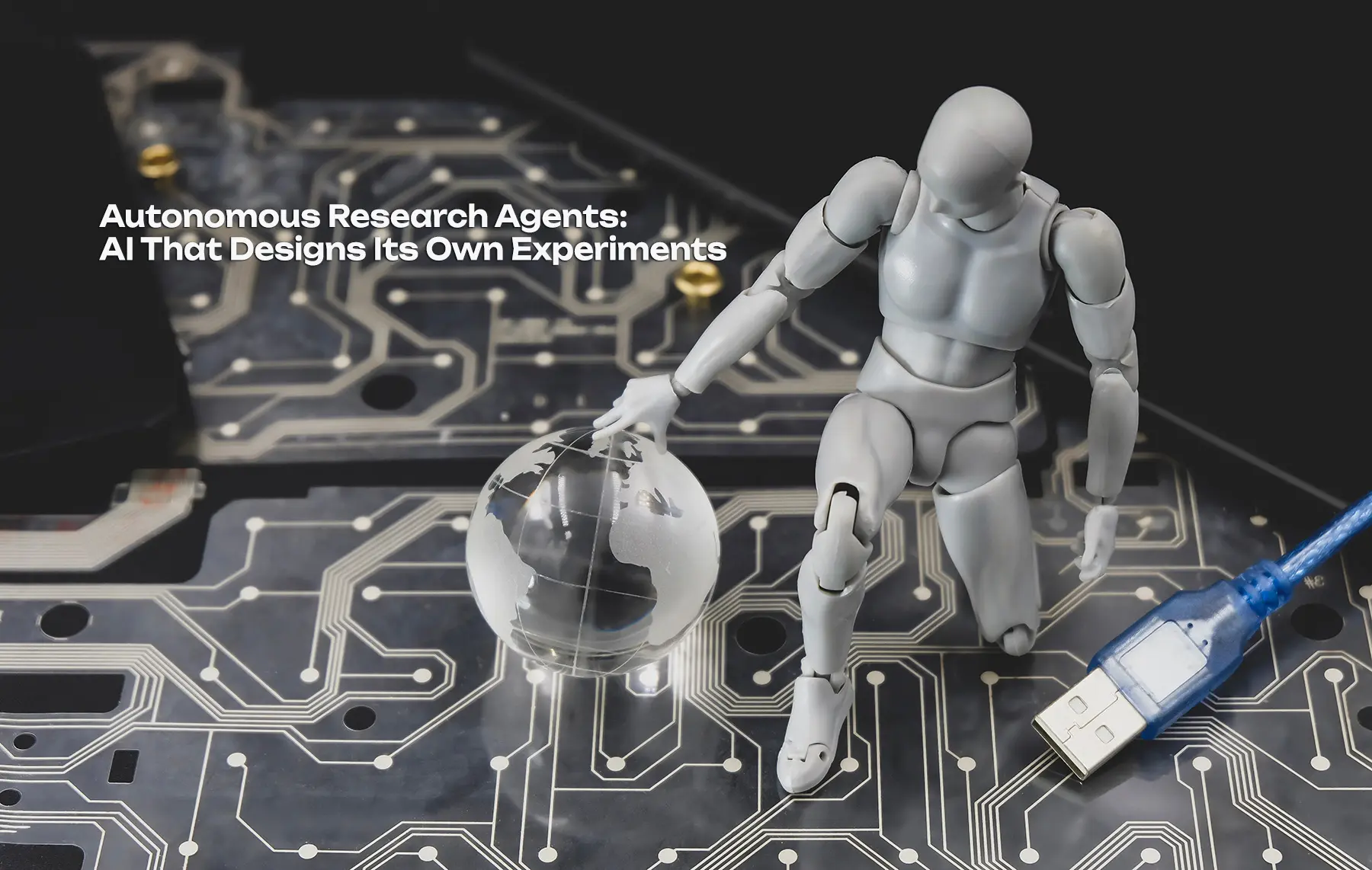
The traditional scientific method relies on human researchers to formulate hypotheses, design experiments, analyze results, and refine their theories. A new generation of AI systems is challenging this assumption. Autonomous research agents — AI systems capable of independently formulating research questions, designing experimental protocols, executing tests, analyzing data, and iterating on their findings — are emerging as a transformative force in scientific discovery. This article explores the architecture of autonomous research agents, their current capabilities, the challenges they face, and their implications for the future of science.
Introduction
Science has always been an exercise in structured curiosity. Researchers observe phenomena, form hypotheses, design experiments to test those hypotheses, analyze the results, and refine their understanding. This cycle — observe, hypothesize, test, learn — has driven human knowledge forward for centuries.
AI research agents are now capable of executing this cycle autonomously. Given a research question and access to the right tools, these agents can formulate sub-hypotheses, design experimental protocols, execute tests, analyze results, and determine whether to iterate or reach conclusions — all without human intervention.
This is not merely about automating individual steps in the research process. It is about creating AI systems that can reason about entire research programs — understanding not just what experiment to run next, but why, what the results mean, and what they suggest about the broader theory.
The implications are profound. Autonomous research agents could accelerate scientific discovery by orders of magnitude, democratize access to scientific expertise, and tackle problems too complex or time-consuming for human researchers to address. They also raise profound questions about the nature of scientific discovery and the role of human scientists.
What Are Autonomous Research Agents?
Defining Autonomy Levels in Research
Not all AI research systems are equally autonomous. Researchers distinguish between several levels of autonomy in AI-assisted research:
| Autonomy Level | Description | Human Role | Examples |
|---|---|---|---|
| Level 1: Tool Use | AI assists with specific tasks | Fully engaged | Literature search, data analysis |
| Level 2: Automation | AI automates well-defined workflows | Oversight and review | High-throughput screening, automated assays |
| Level 3: Guided Autonomy | AI executes multi-step plans within constraints | Goal setting, approval | Automated experiment design |
| Level 4: Strategic Autonomy | AI sets research goals and plans campaigns | High-level objectives only | Autonomous drug discovery programs |
| Level 5: Full Autonomy | AI independently conducts entire research programs | Minimal — curiosity and values only | Theoretical science AI |
Current systems are primarily operating at Levels 2 and 3, with the most advanced research agents approaching Level 4 in specific domains.
Architecture of an Autonomous Research Agent
A fully capable autonomous research agent requires several interconnected components:
Planning and Reasoning Engine: The core of the agent — typically a large language model — that can formulate hypotheses, design experimental protocols, and reason about results. This component must handle uncertainty, weigh competing hypotheses, and adapt plans based on intermediate results.
Tool Access Layer: The agent needs access to a diverse toolkit to execute research:
- Literature search: Accessing and understanding scientific papers, patents, and databases
- Code execution: Running simulations, statistical analyses, and data processing
- External APIs: Accessing scientific databases, chemical property calculators, protein structure predictors
- Physical lab access: For systems integrated with automated laboratory equipment
- Internet search: Finding relevant information, comparing with existing knowledge
- Data management: Reading, writing, and organizing experimental data
Memory and State Tracking: Research generates enormous amounts of intermediate data and decisions. The agent must track what has been tried, what worked, what didn't, and why — maintaining a coherent model of the research state across potentially hundreds of experimental iterations.
Reflection and Self-Correction: Perhaps the most critical component — the ability to recognize when a hypothesis is failing, understand why, and pivot to a more promising approach. This requires metacognitive capabilities: reasoning about the agent's own reasoning.
Current Applications and Capabilities
Drug Discovery: The Leading Frontier
Drug discovery is the most mature application of autonomous research agents. The process of finding a new drug — identifying a biological target, finding molecules that interact with it, optimizing those molecules for efficacy and safety — is complex but highly structured, making it ideal for automation.
Companies like Insilico Medicine, Exscientia, and Relay Therapeutics have demonstrated AI systems that can:
- Identify novel drug targets by analyzing large-scale biological data
- Generate candidate molecules using generative models
- Predict molecular properties using physics-based and ML models
- Design synthesis routes for promising candidates
- Iterate on molecular design based on predicted and experimental results
Insilico Medicine's paper on AI-discovered drug candidates — published in Nature Biotechnology — demonstrated a system that went from initial target identification to preclinical candidate nomination in 18 months, compared to the typical 3-5 years for traditional approaches. The system's autonomous research capabilities enabled rapid iteration through thousands of candidate molecules.
Materials Science
The discovery of new materials — for batteries, solar cells, superconductors, and structural applications — has historically been slow, relying on intuition, serendipity, and exhaustive experimental search. AI is changing this fundamentally.
Autonomous research agents in materials science can:
- Search vast chemical spaces that would be impossible to explore manually
- Predict material properties from crystal structure using ML models trained on quantum mechanical simulations
- Design experiments to synthesize and characterize promising candidates
- Iterate on synthesis conditions based on experimental results
Google DeepMind's GNoME (Graph Networks for Materials Exploration) demonstrated this approach, predicting the stability of 2.2 million new crystal structures — equivalent to 800 years of human knowledge. The most promising of these are now being synthesized and tested by autonomous laboratory systems.
Computational Biology
Autonomous agents are making significant contributions in computational biology, particularly in areas where the search space is enormous and the evaluation function is computable:
Protein structure prediction: AlphaFold and its successors can predict protein structures from sequence with remarkable accuracy, but the next frontier is designing proteins with specific properties. Autonomous agents can iterate on protein sequences, predict their structures and functions, and identify candidates for experimental validation.
Genetic variant interpretation: Understanding the functional impact of genetic variants is critical for personalized medicine. Autonomous research agents can analyze patient genomic data, compare against databases of known variants, and generate hypotheses about variant significance — accelerating the interpretation pipeline.
Systems biology modeling: Autonomous agents can build and refine computational models of biological systems — metabolic networks, signaling pathways, gene regulatory networks — by iterating between model simulation and experimental validation.
The Role of AI in Experiment Design
From Hypothesis to Protocol
One of the most impressive capabilities of advanced research agents is their ability to design coherent experimental protocols. Given a research question, these systems can:
- Break down the question into testable sub-hypotheses
- Identify the data and tools needed to test each sub-hypothesis
- Design specific experiments with appropriate controls
- Specify success criteria and decision rules for each experiment
- Plan the analysis that will be applied to each result
This goes far beyond simple task automation. The agent must understand the logical structure of scientific reasoning — what makes an experiment valid, how to control for confounding variables, when a result supports or refutes a hypothesis.
Bayesian Reasoning and Active Learning
Advanced research agents use Bayesian reasoning to update their beliefs based on experimental results and active learning to decide which experiments to run next.
Rather than running experiments in a predetermined order, active learning agents select experiments based on which one is most likely to provide the most valuable information given current knowledge. This maximizes the information gained per experiment — a critical consideration when experiments are expensive or time-consuming.
This approach has proven particularly powerful in:
- Drug optimization: Finding the best molecule from a vast chemical space with minimum experiments
- Materials discovery: Identifying promising new materials with minimum synthesis and testing
- Parameter tuning: Finding optimal conditions for complex processes
Handling Uncertainty
Scientific research is fundamentally about dealing with uncertainty. Autonomous research agents must be equipped to:
- Quantify uncertainty in predictions using probabilistic models and ensemble methods
- Design experiments that maximally reduce uncertainty about key hypotheses
- Communicate uncertainty clearly to human collaborators
- Recognize the limits of their knowledge and know when to ask for human guidance
This last point is particularly important. The most useful research agents are not those that never seek human input, but those that know when human judgment is essential.
Challenges and Limitations
The Replication Crisis in AI Research
Scientific progress depends on replicability — the ability to reproduce findings independently. The AI research community has faced significant challenges with replication, as many published results fail to hold up under scrutiny.
Autonomous research agents face a heightened version of this challenge. If the agent's reasoning is opaque — if it cannot clearly explain why it chose a particular experimental path — then validating its conclusions becomes extremely difficult. Explainability and interpretability are not just nice-to-have features for research agents — they are essential for scientific credibility.
Overfitting to the Evaluation Function
An autonomous agent optimizing for a specific metric may find ways to maximize that metric without actually solving the underlying problem. This is a well-known issue in machine learning (overfitting) but takes on new dimensions in research contexts.
For example, an autonomous drug discovery agent might find molecules that score well on a computational proxy for drug-likeness but are actually toxic or impractical to synthesize. The agent optimizes the proxy metric without achieving the real goal.
Combatting this requires careful evaluation function design, diverse validation approaches, and ongoing human oversight of the agent's progress.
Physical Experimentation Constraints
Much of science requires physical experiments — synthesizing chemicals, running biological assays, building and testing devices. While some domains have highly automated laboratories, many do not.
Integrating autonomous research agents with physical laboratory equipment is a significant engineering challenge. The agent must not only design experiments but also interface with robotic systems, interpret physical measurements, and handle the messy reality of laboratory work — equipment failures, contaminated samples, unexpected results.
Progress is being made on this front. Companies like Emerald Cloud Lab and Synthace offer fully automated laboratories where experiments can be specified programmatically, enabling AI agents to execute physical experiments remotely. But this infrastructure is not yet widely available.
The Role of Scientific Intuition
Some of the most important scientific breakthroughs have come from intuitive leaps — connections that scientists sense before they can be rigorously justified. Human researchers bring deep domain knowledge, tacit understanding of what is likely to work, and creative thinking that goes beyond pattern matching on known data.
Current AI research agents excel at exploring large search spaces and optimizing well-defined objectives, but they struggle with the kind of creative, intuitive leaps that have historically driven scientific revolutions. Whether this limitation is fundamental or temporary remains an open question.
Ethical Considerations
Dual-Use Concerns
Autonomous research agents designed for beneficial purposes — discovering new medicines, developing clean energy materials — could potentially be redirected toward harmful applications. An agent designed to discover new pharmaceuticals could, in principle, be asked to design toxic molecules.
This dual-use problem is not unique to autonomous research agents, but the scale and speed of these systems amplifies the risk. Responsible development requires thoughtful safeguards:
- Access controls that prevent misuse
- Ethical guidelines embedded in the agent's reasoning
- International norms and regulations around autonomous research systems
- Robust review processes for high-risk applications
Attribution and Accountability
When an autonomous research agent makes a significant discovery, who gets credit? The agent itself? The humans who designed and trained it? The organization that deployed it? The researchers who formulated the original question?
These questions have no easy answers, but they become increasingly pressing as autonomous agents contribute more substantively to scientific knowledge. Scientific credit has real consequences — for funding, career advancement, and professional recognition — and the attribution problem could create significant tensions.
Concentration of Research Capability
The most advanced autonomous research agents require enormous computational resources, vast datasets, and sophisticated engineering teams. This creates a risk of concentrating research capability in a small number of well-resourced organizations — potentially limiting the diversity of perspectives and the equitable distribution of benefits.
Addressing this concern requires investment in open-source tools, accessible infrastructure, and international collaboration that ensures the benefits of autonomous research are broadly shared.
The Future of Autonomous Research
Toward Fully Automated Laboratories
The vision of a fully automated laboratory — where a research question is submitted and a complete scientific study is returned — is becoming increasingly plausible. Companies like Synthesis AI, Emerald Cloud Lab, and Automata are building the robotic infrastructure needed to make this a reality.
In this future, autonomous research agents would not just design experiments — they would execute them, observe the results, and iterate, all without human involvement. The bottleneck would shift from experimental capacity to the quality of research questions and the sophistication of the AI's scientific reasoning.
Accelerating the Rate of Discovery
Perhaps the most exciting implication of autonomous research agents is the potential to dramatically accelerate the rate of scientific discovery. The traditional pace of science is limited by human time, attention, and bandwidth. Researchers can only run a limited number of experiments, read a limited number of papers, and pursue a limited number of hypotheses simultaneously.
Autonomous agents can work around the clock, exploring multiple hypotheses in parallel, and iterating faster than any human team. If these systems can maintain scientific rigor — avoiding false positives, replicable findings, and meaningful hypotheses — they could compress decades of scientific progress into years.
A New Partnership Between Humans and AI
The most likely future is not one where AI replaces human scientists, but one where they work together in new ways. Autonomous research agents handle the tedious, time-consuming work of exploration, iteration, and analysis — freeing human scientists to focus on the creative, strategic, and interpersonal aspects of research.
In this partnership, humans set the direction, formulate the big questions, and provide judgment on matters of values and significance. AI agents execute the research program, exploring the details at a scale and speed that would be impossible for humans alone.
This is not science fiction. It is the direction the field is already heading. The question is not whether this partnership will happen, but how we will shape it to maximize its benefits while managing its risks.
Conclusion
Autonomous research agents represent a fundamental shift in how science is conducted. By moving beyond AI as a tool that assists human researchers to AI as an autonomous participant in the research process, these systems have the potential to dramatically accelerate scientific discovery while raising profound questions about the nature and attribution of scientific knowledge.
The challenges are significant: ensuring replicability, avoiding overfitting, integrating with physical laboratories, and navigating ethical concerns around dual-use and accountability. But the progress in the past few years has been remarkable, and the trajectory points toward increasingly capable systems.
For scientists and researchers, now is the time to engage with these tools — not as replacements for human creativity and judgment, but as powerful amplifiers of the scientific method. For policymakers and ethicists, the development of autonomous research agents demands careful attention to governance and safeguards. And for all of us, the prospect of AI that can independently expand human knowledge is one of the most exciting and consequential technological possibilities of our time.
Related Articles
The AI Scientist Achieves Peer Review Publication in Nature
Sakana AI's autonomous research system has published in Nature, demonstrating the first AI capable of completing full scientific research cycles from hypothesis to publication.
AI in NFL Draft Analysis: How Teams Are Using Artificial Intelligence to Find the Next Stars
Professional football teams are leveraging artificial intelligence and machine learning to analyze prospects, predict success, and gain competitive advantages in the NFL Draft.
AI Emotional Intelligence & Affective Computing: The Rise of Empathetic Machines
Exploring how affective computing advances are enabling AI systems to recognize and respond to human emotions, transforming healthcare, education, and customer service.