
AI Trends 2026: The Technologies Shaping Tomorrow
An in-depth analysis of the most significant AI trends driving innovation and transformation in 2026 and beyond.
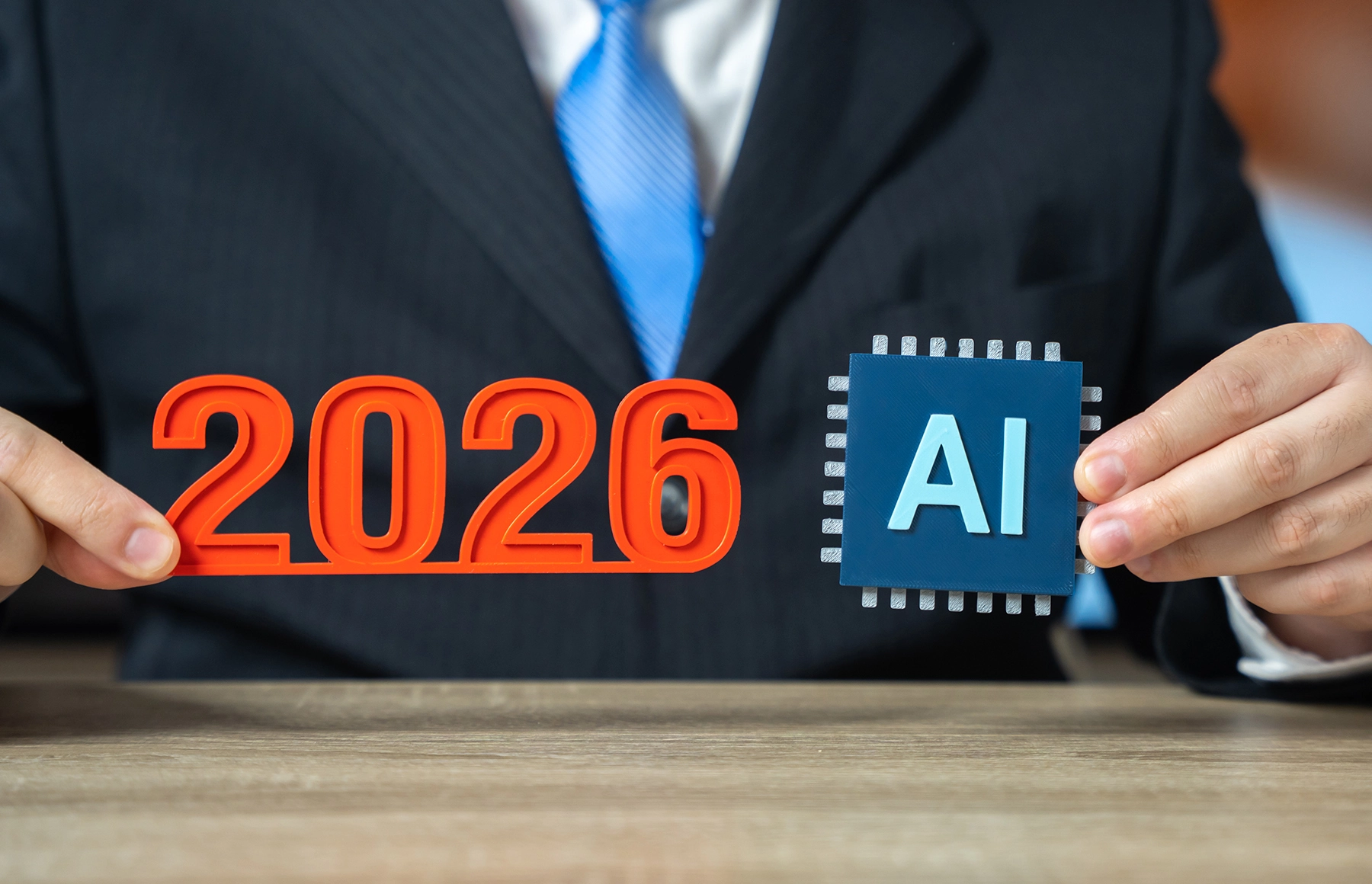
The artificial intelligence landscape continues to evolve at an unprecedented pace, with new breakthroughs and applications emerging constantly. This article examines the most significant AI trends of 2026, analyzing the technological advances, business implications, and societal impacts. From multimodal systems to autonomous agents, from edge computing to responsible AI, understanding these trends is essential for anyone seeking to navigate the AI-driven future.
Introduction
Artificial Intelligence has entered a period of extraordinary acceleration. What once seemed like distant futures—machines that could hold conversations, create photorealistic images, or reason about complex problems—are now present realities. And the pace of change continues to quicken.
Understanding AI trends is no longer just for technologists and business strategists. Everyone is affected—from the content creators whose work is being transformed to the workers whose jobs are evolving to the citizens whose lives are increasingly shaped by AI systems. The decisions made about AI development and deployment in the coming years will shape society for decades.
This article provides a comprehensive analysis of the key AI trends defining 2026. We examine the technological advances driving progress, the applications gaining traction, and the implications for business and society. Whether you're a business leader planning strategy, a professional preparing for the future, or simply an observer trying to understand the world changing around you, this analysis provides essential context for understanding where AI is headed.
Multimodal AI: Beyond Single Modalities
The Rise of Unified Intelligence
The most transformative trend in AI may be the move toward multimodal systems—AI that can process, understand, and generate multiple types of data simultaneously. Rather than separate systems for text, images, audio, and video, emerging systems integrate these modalities seamlessly.
This integration represents a fundamental shift toward more human-like intelligence. Humans don't experience the world as separate modalities—we see, hear, read, and speak as integrated experiences. Multimodal AI brings machines closer to this integrated perception.
The implications are profound. Multimodal AI can understand context across modalities—comprehending a video while analyzing its audio track, or describing an image while understanding its emotional tone. This enables more natural human-AI interaction and unlocks applications impossible for single-modality systems.
Practical Applications
Multimodal AI is enabling new applications across industries. In healthcare, systems can analyze medical images alongside clinical notes and lab results, providing more comprehensive diagnostic support. In education, multimodal AI can engage with students through text, images, and voice, adapting to different learning styles.
Content creation has been transformed. Users can create sophisticated content by combining modalities—generating images from text, video from descriptions, or interactive experiences that blend multiple media types. This democratizes creative capabilities previously requiring specialized skills.
Agentic AI: From Tools to Autonomous Systems
The Shift to Agency
Perhaps no trend is more significant than the emergence of agentic AI—systems that can autonomously plan and execute multi-step tasks. Where traditional AI responds to individual prompts, agents can work toward complex objectives with minimal human direction.
This shift transforms the human-AI relationship. Rather than issuing commands and receiving responses, humans can delegate tasks and let AI work toward completion. This reduces cognitive load and enables more natural interaction.
Agentic AI is already transforming software development, research, and business operations. Agents can handle complex workflows that previously required significant human coordination. They can work continuously, handling exceptions and edge cases without intervention.
Implications for Work and Automation
The rise of agentic AI accelerates automation of knowledge work. Tasks that required human judgment and coordination can now be handled autonomously. This promises significant productivity gains while also raising questions about the future of work.
The implications vary by profession. Some roles will be largely automated. Others will be transformed, with humans focusing on higher-value activities while agents handle routine aspects. New roles focused on agent development, oversight, and governance will emerge.
Large Language Models: Continuing Evolution
Beyond Scale
Large language models continue to evolve, but the focus is shifting from pure scale to capability optimization. While model size matters, new techniques for reasoning, retrieval, and tool use are proving equally important.
Reasoning capabilities have improved dramatically. Models can now engage in multi-step reasoning, breaking complex problems into manageable components and working toward solutions. This enables more sophisticated problem-solving and reduces errors.
Retrieval-augmented generation has become standard, enabling models to access and use external information. This improves accuracy, enables up-to-date responses, and allows models to handle specialized domains without retraining.
Specialized Models
The trend toward specialized models continues. Rather than general-purpose models trying to be optimal for all tasks, organizations are deploying models optimized for specific use cases. This includes models fine-tuned for code, medical text, legal documents, and countless other domains.
The ecosystem is fragmenting and specializing in ways that enable more effective solutions for specific needs while also creating integration challenges. Organizations must navigate this landscape to select appropriate models.
Edge AI: Intelligence at the Device
Processing at the Source
Edge AI—the deployment of AI processing on local devices rather than cloud servers—continues to accelerate. This trend is driven by requirements for privacy, latency, reliability, and cost reduction.
Mobile devices now run sophisticated AI models locally. This enables features like real-time translation, on-device image processing, and offline AI assistance. The capabilities of edge devices continue to expand.
IoT applications benefit significantly from edge AI. Sensors and devices can process data locally, making real-time decisions without network connectivity. This enables applications from industrial automation to smart cities to autonomous vehicles.
Privacy and Security Benefits
Edge AI offers significant privacy advantages. Sensitive data can be processed locally rather than transmitted to cloud servers. This reduces exposure and enables applications that would be impractical with cloud-only processing.
Security benefits follow similarly. Local processing reduces attack surface and enables operation in sensitive environments. Critical AI applications can continue functioning even when network connectivity is compromised.
Responsible AI: Ethics and Governance
Growing Focus on AI Ethics
As AI becomes more capable and pervasive, attention to ethics and responsible development has intensified. This includes both recognition of AI's potential harms and efforts to mitigate them.
Bias in AI systems remains a significant concern. Systems trained on historical data can perpetuate and amplify existing biases. Addressing this requires technical approaches, diverse teams, and organizational practices that prioritize fairness.
Transparency and explainability are increasingly expected. Users want to understand how AI systems make decisions that affect them. While complete explainability may be technically impossible for some systems, progress continues in making AI decision-making more interpretable.
Regulatory Landscape
The regulatory environment for AI is evolving rapidly. The European Union's AI Act establishes comprehensive rules for AI development and deployment. Other jurisdictions are developing similar frameworks.
Organizations must navigate this evolving landscape. Compliance requirements affect product development, data practices, and organizational governance. The trend is toward more regulation, requiring organizations to build compliance into AI practices from the start.
Industry-Specific AI Transformation
Healthcare and Life Sciences
AI in healthcare continues to advance dramatically. Diagnostic systems achieve or exceed human performance for many conditions. Drug discovery is accelerated by AI's ability to predict molecular behavior and identify promising candidates.
Personalized medicine is becoming practical. AI can analyze individual patient data to recommend tailored treatments. This promises more effective care with fewer side effects.
Challenges remain. Regulatory approval processes are evolving. Integration with clinical workflows requires careful design. Privacy concerns are significant given the sensitivity of health data.
Financial Services
Financial services continue to leverage AI for fraud detection, risk assessment, and customer service. Algorithmic trading has become standard. Credit decisions increasingly rely on machine learning.
New applications are emerging. AI is enabling new forms of insurance, personalized financial advice, and automated wealth management. Regulatory fintech is using AI to improve compliance efficiency.
The sector faces specific challenges around model risk management, explainability requirements, and fairness considerations in credit and insurance decisions.
Manufacturing and Industrial
AI is transforming manufacturing through predictive maintenance, quality control, and process optimization. Smart factories use AI to optimize production, reduce waste, and improve safety.
Digital twins—virtual replicas of physical systems—are increasingly AI-powered. These enable simulation, optimization, and predictive capabilities that improve real-world operations.
Supply chain applications leverage AI for demand forecasting, inventory optimization, and logistics planning. The disruptions of recent years have accelerated adoption.
Emerging Applications and Possibilities
Scientific Discovery
AI is accelerating scientific research across disciplines. In physics, AI analyzes experimental data and identifies new phenomena. In chemistry, AI designs new molecules and materials. In biology, AI predicts protein structures and helps understand cellular processes.
The "AI for science" paradigm is proving transformative. AI can explore hypothesis spaces that would take humans lifetimes to examine. It can identify patterns in data that humans might miss. It can generate hypotheses for experimental testing.
Creative Industries
AI in creative industries continues to evolve. Tools for image generation, video creation, music composition, and writing assistance have become sophisticated and widely adopted.
The nature of creative work is shifting. Rather than creating from scratch, creators increasingly direct and curate AI-generated content. This changes the skills required and the economics of creative production.
Education and Learning
AI-powered educational tools are becoming more capable. Intelligent tutoring systems adapt to individual learners. Language learning apps provide personalized practice. Automated grading systems free teacher time.
Personalization at scale becomes possible. AI can adapt content, pacing, and approach to individual learner needs. This promises to improve educational outcomes while reducing costs.
Challenges and Considerations
Technical Challenges
Despite progress, significant technical challenges remain. AI systems can be brittle, failing in unexpected ways when inputs diverge from training data. They can be opaque, making decisions that are difficult to explain. They can be unreliable, producing confident but incorrect outputs.
Addressing these challenges requires continued research and development. Techniques for improving robustness, interpretability, and reliability are active areas of investigation.
Societal Challenges
Beyond technical challenges, AI raises significant societal questions. How should AI be governed? Who is responsible for AI decisions? How should the benefits and costs of AI be distributed? How do we prepare for AI's impacts on employment?
These questions don't have simple answers. They require engagement from stakeholders across society—researchers, companies, governments, and citizens. The decisions made will shape the AI future.
Looking Ahead
The Trajectory of Progress
The trajectory of AI progress shows no signs of slowing. Capabilities will continue to expand. Applications will continue to multiply. Integration will continue to deepen.
Yet progress is not inevitable. It depends on research investment, responsible development practices, appropriate governance, and societal engagement. The future is not predetermined.
Preparing for the AI Future
Preparing for the AI future requires action at multiple levels. Organizations must develop AI strategies, build capabilities, and manage risks. Individuals must develop AI literacy and adapt skills. Governments must establish appropriate governance frameworks.
The AI future will be shaped by the choices made today. Engaging with these choices—whatever your role—is essential for navigating the transformation ahead.
Conclusion
The AI trends of 2026 reflect a field in rapid evolution. Multimodal systems, agentic AI, specialized models, edge deployment, and responsible AI practices are defining the current moment. These trends will shape the coming years, transforming industries, occupations, and daily life.
Understanding these trends is not just about staying current with technology. It's about preparing for a future being shaped by AI. Whether you're planning strategy, making career decisions, or simply seeking to understand the world, these trends provide essential context.
The AI future is being written now. The trends identified here offer a window into where the field is headed. Engaging with them thoughtfully is the first step toward navigating the transformation ahead.
Related Articles
Anthropic's Explosive Growth: How Claude AI Surpassed OpenAI Revenue
Anthropic's CEO announces potential 80x growth in 2026, signaling a dramatic shift in the AI competitive landscape as Claude AI challenges OpenAI's market dominance.
Meta AI Employee Concerns: The Human Cost of Rapid AI Deployment
An examination of employee sentiment at Meta regarding AI implementation and the broader implications for tech workforce wellbeing in the age of rapid AI deployment.
Global AI Adoption Reaches 17.8%: Microsoft's 2026 Report Analysis
Microsoft's latest report reveals global AI adoption increased to 17.8% of working-age population in Q1 2026, marking a 1.5 percentage point rise from 16.3%.