
Agentic AI: How Autonomous Systems Are Building Self-Directed Workflows
Agentic AI represents a shift from reactive tools to proactive systems that plan, execute, and adapt. This article explores how autonomous AI agents are reshaping workflows across industries.
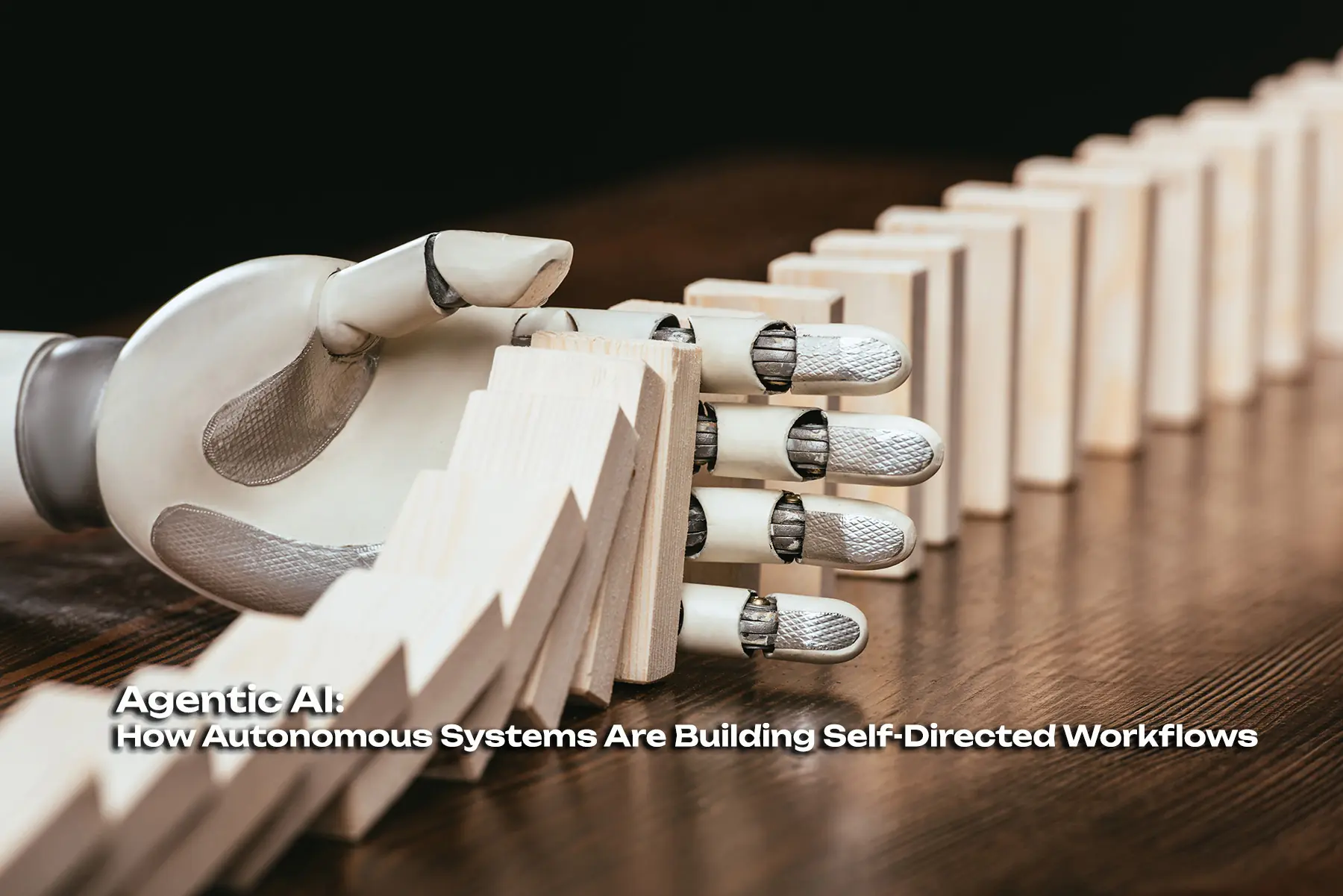
Agentic AI marks a fundamental transition in artificial intelligence — from systems that respond to commands to systems that plan, execute, and refine their own actions. Unlike traditional automation or reactive AI models, agentic systems operate with a degree of autonomy that allows them to pursue goals across extended time horizons, handle exceptions dynamically, and learn from outcomes. This article examines the architectural foundations of agentic AI, compares major frameworks for building autonomous agents, and outlines the practical implications for enterprise workflows.
Introduction
The first wave of enterprise AI brought predictive models and chatbots — systems that answered questions or classified data on demand. They were powerful, but fundamentally reactive. Ask a question, get an answer. Submit data, receive a prediction.
Agentic AI changes this equation. These systems don't wait for instructions. They observe their environment, form plans, execute actions, monitor results, and iterate — much like a skilled human employee managing a complex project. The shift has profound implications for how organizations design workflows, allocate human effort, and scale operations.
The concept draws from classical AI planning research, but recent advances in large language models have made it practical at scale. LLMs provide the reasoning engine that allows agents to decompose goals, handle ambiguity, and adapt to novel situations. Combined with tools for tool use, memory, and multi-agent collaboration, they form the building blocks of autonomous workflows.
This article explores the architecture, frameworks, applications, and trade-offs of agentic AI in depth.
What Is Agentic AI?
Agentic AI refers to AI systems that can independently plan and execute sequences of actions to achieve defined goals. The key properties that distinguish agentic AI from conventional AI include:
Proactivity: The system initiates actions rather than waiting for user prompts. An agentic sales AI might identify a at-risk customer account and automatically draft a retention offer — without being asked.
Persistence: The system maintains state across multiple interaction cycles, tracking progress toward goals over hours, days, or weeks rather than single-turn exchanges.
Tool Use: Agentic systems can call external APIs, read and write files, query databases, send messages, and interact with software interfaces to accomplish their objectives.
Adaptation: When obstacles arise, agentic systems can reformulate plans, seek additional information, or escalate to humans — rather than failing silently.
Multi-step Reasoning: Complex goals are decomposed into sub-goals, executed in sequence, with outcomes feeding back into subsequent decisions.
This stands in contrast to reactive AI, which processes a single input and produces an output without memory, planning, or self-correction.
Architectural Foundations
The Perception-Reasoning-Act Loop
Agentic systems typically implement some variant of the classic sense-reason-act loop:
- Perception: The agent gathers information about its environment — user messages, API responses, file states, sensor data, or notifications.
- Reasoning: The agent analyzes the situation, considers available actions, and selects the next step. Modern agents use LLMs as reasoning engines, often with structured prompting or chain-of-thought techniques.
- Action: The agent executes an action — calling a tool, updating a record, sending a message, or querying a database.
- Evaluation: The agent assesses the outcome of its action and determines whether to continue, adjust, or complete the task.
Core Components of an Agentic System
A fully realized agentic system includes several key components:
| Component | Function |
|---|---|
| Orchestration Engine | Coordinates perception, reasoning, and action cycles |
| Memory Module | Stores conversation history, accumulated facts, and learned preferences |
| Tool Registry | Provides access to external capabilities (search, code execution, APIs) |
| Planning Module | Decomposes goals into executable sub-tasks |
| Reflection/Feedback | Evaluates action outcomes and adjusts future behavior |
| Guardrails | Enforces safety, budget, and compliance constraints |
The orchestration engine is typically an LLM or a smaller orchestrator model. Memory can be implemented as a vector store, a structured database, or a combination. Tools are exposed through well-defined interfaces — often as JSON schemas that describe inputs, outputs, and permissions.
Planning Paradigms
How agents plan their actions varies across implementations:
Single-Step Planning: The agent generates a complete action plan upfront, then executes it. Simple but brittle when conditions change.
Chain-of-Thought Planning: The agent thinks through steps incrementally, updating its plan as it goes. More robust to surprises.
Tree-of-Thought Planning: The agent explores multiple alternative plans in parallel, pruning inferior paths. Computationally expensive but better for complex decisions.
Hierarchical Task Planning: The agent decomposes high-level goals into sub-goals organized hierarchically, solving each level in turn. Particularly effective for multi-domain tasks.
Major Frameworks and Platforms
Several frameworks and platforms have emerged for building agentic AI systems:
| Framework | Publisher | Key Strength |
|---|---|---|
| AutoGen | Microsoft | Multi-agent collaboration, open-source |
| LangGraph | LangChain | Graph-based orchestration, production-ready |
| CrewAI | CrewAI Inc. | Role-based agents, developer-friendly |
| Semantic Kernel | Microsoft | Enterprise integration, C#/Python |
| BeeAI | Meta | Open-source agent framework |
| IBM Granite Agent | IBM | Enterprise-grade, watsonx integration |
| Cohere Agent | Cohere | Command models, coral API |
| Salesforce Agentforce | Salesforce | CRM-integrated agents |
| Azure AI Agent Service | Microsoft | Azure-native, enterprise security |
| Google Agent Development Kit | Gemini-powered, Vertex integration |
Open-Source vs. Commercial Platforms
Open-source frameworks offer flexibility and transparency — valuable for organizations building custom agentic workflows or conducting research. AutoGen and LangGraph have large communities and extensive documentation.
Commercial platforms prioritize enterprise requirements: single sign-on, audit logs, data residency, compliance certifications, and SLAs. Azure AI Agent Service and IBM Granite Agent integrate with broader cloud and enterprise software ecosystems.
The choice depends on the use case. Customer-facing agents handling sensitive data benefit from commercial platforms with established compliance frameworks. Internal automation agents may be well-served by open-source tools running on private infrastructure.
Practical Applications
Software Development
Agentic AI is making its earliest and deepest impact in software development. Agents like Devin (Cognition), GitHub Copilot Workspace, and Cursor have moved beyond autocomplete to autonomous coding tasks:
- Writing and submitting pull requests
- Investigating and fixing bugs
- Running test suites and interpreting results
- Updating documentation
- Refactoring legacy code
A developer can describe a feature in natural language, and an agentic coding system will create a plan, implement the code, write tests, and open a pull request — with the human serving as reviewer rather than author.
Customer Operations
In customer service, agentic systems manage complex support cases end-to-end:
- Investigating order issues by querying logistics databases
- Processing refunds with appropriate approvals
- Coordinating across departments for escalated cases
- Following up after resolution to ensure satisfaction
These agents don't just answer FAQs — they take action on the customer's behalf, within defined authority limits.
Sales and Business Development
Agentic sales systems prospect, nurture, and convert leads autonomously:
- Identifying target accounts from CRM data
- Crafting personalized outreach sequences
- Scheduling meetings based on recipient behavior
- Updating CRM records from email and call transcripts
- Flagging deals for human review at key stages
The result is a scalable, always-on business development operation that frees salespeople to focus on relationships and complex negotiations.
Research and Analysis
Knowledge work — the kind that involves finding, synthesizing, and presenting information — is particularly well-suited to agentic AI. Systems can:
- Monitor competitor websites and regulatory filings
- Compile findings into structured reports
- Maintain and update knowledge bases
- Generate draft analyses for human review
A research agent might track a portfolio of companies, flagging material developments as they occur and drafting initial analyses for analyst review.
Finance and Operations
Agentic systems are increasingly managing routine financial and operational workflows:
- Invoice processing and reconciliation
- Vendor relationship management
- Compliance monitoring and reporting
- Inventory management and reorder triggering
- Financial close procedures
These tasks require multiple steps, access to various systems, and judgment about exceptions — exactly the kind of work agentic AI handles well.
Tool Use: The Agent's Toolkit
A defining capability of agentic AI is tool use — the ability to call external functions and services. Common tool categories include:
Web Search and Browsing: Agents search the web, retrieve pages, and extract relevant information. Critical for keeping knowledge current.
Code Execution: Running Python, JavaScript, or other code to perform calculations, manipulate data, or generate outputs.
File Operations: Reading and writing files, parsing documents, updating records.
API Calls: Interacting with external services — CRMs, ERPs, communication platforms, weather services, and more.
Database Queries: Reading from and writing to structured databases.
Communication: Sending emails, Slack messages, or SMS to notify humans or external parties.
Tools are described to agents through schemas that specify the function name, parameters, expected types, and return format. The agent decides which tool to call based on its current goal and the situation.
This tool-use capability is what transforms an LLM from a text generator into a real-world actor — one that can actually accomplish tasks rather than merely describing how tasks might be accomplished.
Multi-Agent Architectures
Single agents have limits. For complex, multi-domain tasks, multiple specialized agents working in concert often outperform a single generalist.
Multi-agent architectures assign different agents distinct roles:
| Role | Responsibility |
|---|---|
| Orchestrator | Coordinates the overall workflow, delegates to specialists |
| Research Agent | Gathers and verifies information |
| Analysis Agent | Processes data and generates insights |
| Writing Agent | Drafts content in appropriate formats |
| Review Agent | Checks outputs for accuracy, completeness, style |
| Compliance Agent | Validates actions against policies |
| Delivery Agent | Sends outputs to appropriate channels |
Communication between agents can be sequential (waterfall), parallel (ensemble), or hierarchical (tree). The orchestration pattern depends on task complexity and dependencies.
Microsoft's AutoGen and LangChain's LangGraph are two of the most mature frameworks for multi-agent orchestration.
Challenges and Limitations
Despite rapid progress, agentic AI faces significant challenges:
Reliability and Error Accumulation
Each step in an agentic workflow introduces a chance of error. With long chains of actions, errors compound. An agent might misinterpret an instruction, call a wrong tool, or produce a flawed analysis — and then build on that error in subsequent steps. Mitigations include human-in-the-loop checkpoints, output validation, and conservative confidence thresholds.
Cost and Latency
Agentic workflows can be expensive. Each LLM call costs money, and complex multi-step tasks can involve dozens of calls. Latency accumulates across steps, making some real-time applications impractical. Optimization strategies include caching, hierarchical routing (cheap models for simple tasks, expensive ones for complex), and parallel execution.
Hallucination and Confidence
LLM-based agents sometimes generate plausible but incorrect information. In agentic workflows, this can lead to cascading errors. Techniques like retrieval-augmented generation (RAG), tool-grounded responses, and fact-checking agents help, but none eliminates the problem entirely.
Safety and Guardrails
An autonomous agent with access to external tools presents safety risks. A misconfigured agent might delete data, send unauthorized messages, or make incorrect decisions with real-world consequences. Robust guardrail systems — which limit what agents can do, validate outputs, require human approval for sensitive actions, and enforce budget limits — are essential.
Context Windows and Memory
Agents operating over long time horizons accumulate state that can exceed context window limits. Memory systems — vector stores, structured databases, or summarization — are necessary but introduce their own complexity. What to remember, what to forget, and how to retrieve relevant context are unsolved problems.
Evaluation and Testing
Testing agentic systems is harder than testing conventional software. The space of possible interactions is vast, and many failures are subtle — a slightly off tone in a customer message, an incomplete analysis, a missed escalation. Automated evaluation frameworks are an active area of research.
Vendor Lock-in and Portability
Current agentic frameworks are closely tied to specific LLM providers. Switching models or platforms can require significant rewriting. Evaluating portability and avoiding deep vendor lock-in is an important consideration for long-term deployments.
Enterprise Considerations
For organizations adopting agentic AI, several factors deserve careful attention:
Governance: Define clear policies for what agentic systems can and cannot do independently. Identify approval thresholds, escalation paths, and human oversight requirements.
Auditability: Agentic systems should maintain comprehensive logs — every decision, every tool call, every output. These logs are essential for compliance, debugging, and accountability.
Testing and Rollout: Start with limited scope, monitor closely, and expand gradually. The behavior of agentic systems can be unpredictable in edge cases. Phased rollouts with canary deployments reduce risk.
Human Oversight: Maintain meaningful human involvement, especially for consequential decisions. Agentic AI augments human capability — it doesn't replace human judgment in high-stakes situations.
Cost Management: Monitor token usage and tool calls carefully. Agentic workflows can generate significant costs, and cost overruns can surprise organizations that haven't established clear budgets and alerts.
Conclusion
Agentic AI represents a genuine shift in what AI systems can do — from answering questions to taking action, from reactive responses to proactive workflows, from one-turn exchanges to sustained, multi-step reasoning.
The practical applications are already substantial: software development, customer operations, sales automation, research, and financial operations are all being transformed by agentic systems that can plan, execute, and adapt independently.
But the technology is not yet mature. Reliability challenges, error accumulation, cost, safety, and evaluation remain open problems. Organizations that adopt agentic AI thoughtfully — starting with well-scoped use cases, maintaining human oversight, and building robust guardrails — will capture significant value while managing the risks.
The trajectory is clear: AI is moving from a tool that humans use to a collaborator that works alongside humans. Understanding the architecture, capabilities, and limitations of agentic systems is becoming as important as understanding data models or cloud infrastructure. The future belongs to organizations that master both.
Related Articles
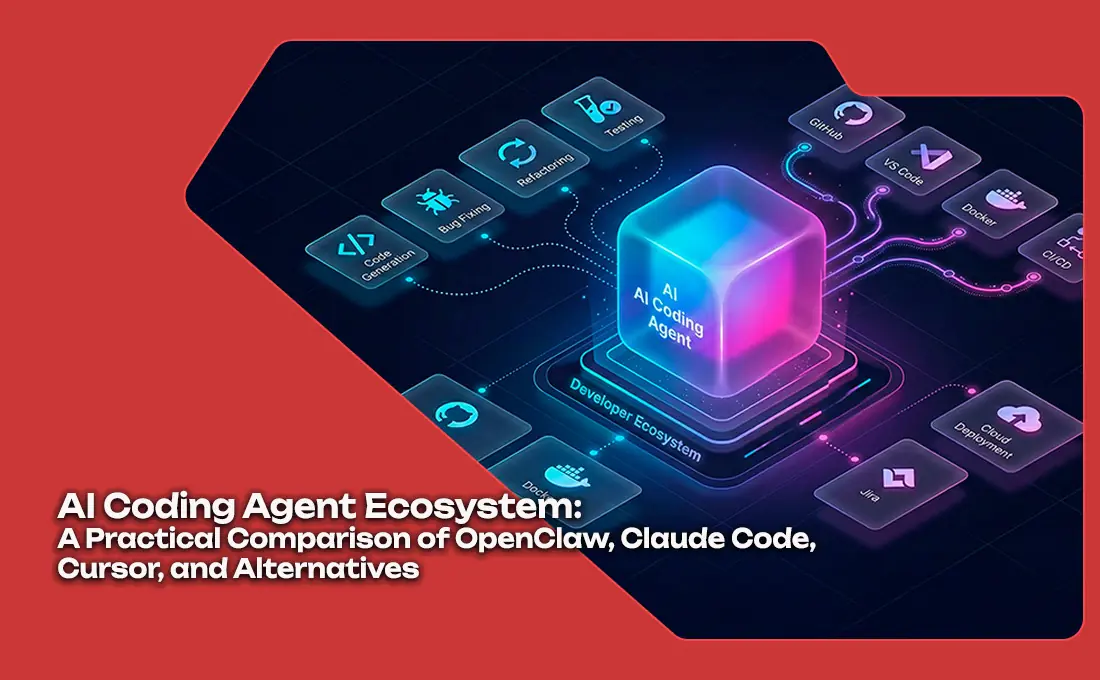
AI Coding Agent Ecosystem: A Practical Comparison of OpenClaw, Claude Code, Cursor, and Alternatives
A practical comparison of the leading AI coding agents in 2026, covering architecture, SWE-bench scores, pricing, and ideal use cases for each platform.
OpenClaw, Manus AI, and Claude Code – A Technical Decision Maker‘s Guide
In early 2026, AI agents have become core to enterprise digital transformation. But with options like OpenClaw (GUI automation), Manus AI (cloud orchestration), and Claude Code (developer copilot), how do you choose? This guide provides a systematic comparison and recommendations for eight key business scenarios, helping technical leaders avoid costly mistakes.
Claude vs GPT in 2026 - The AI Coding Assistant Battle Intensifies
As Anthropic's Claude Opus 4.6 challenges OpenAI's GPT-5.4 in coding benchmarks, the AI coding assistant market has become the most competitive segment in the AI industry. We analyze the technical and strategic differences.