
AI Agent Store Revolution: The Rise of the Autonomous Marketplace
The emergence of AI Agent Stores as marketplaces for autonomous agents marks a fundamental shift in how businesses automate workflows—creating a new platform economy.
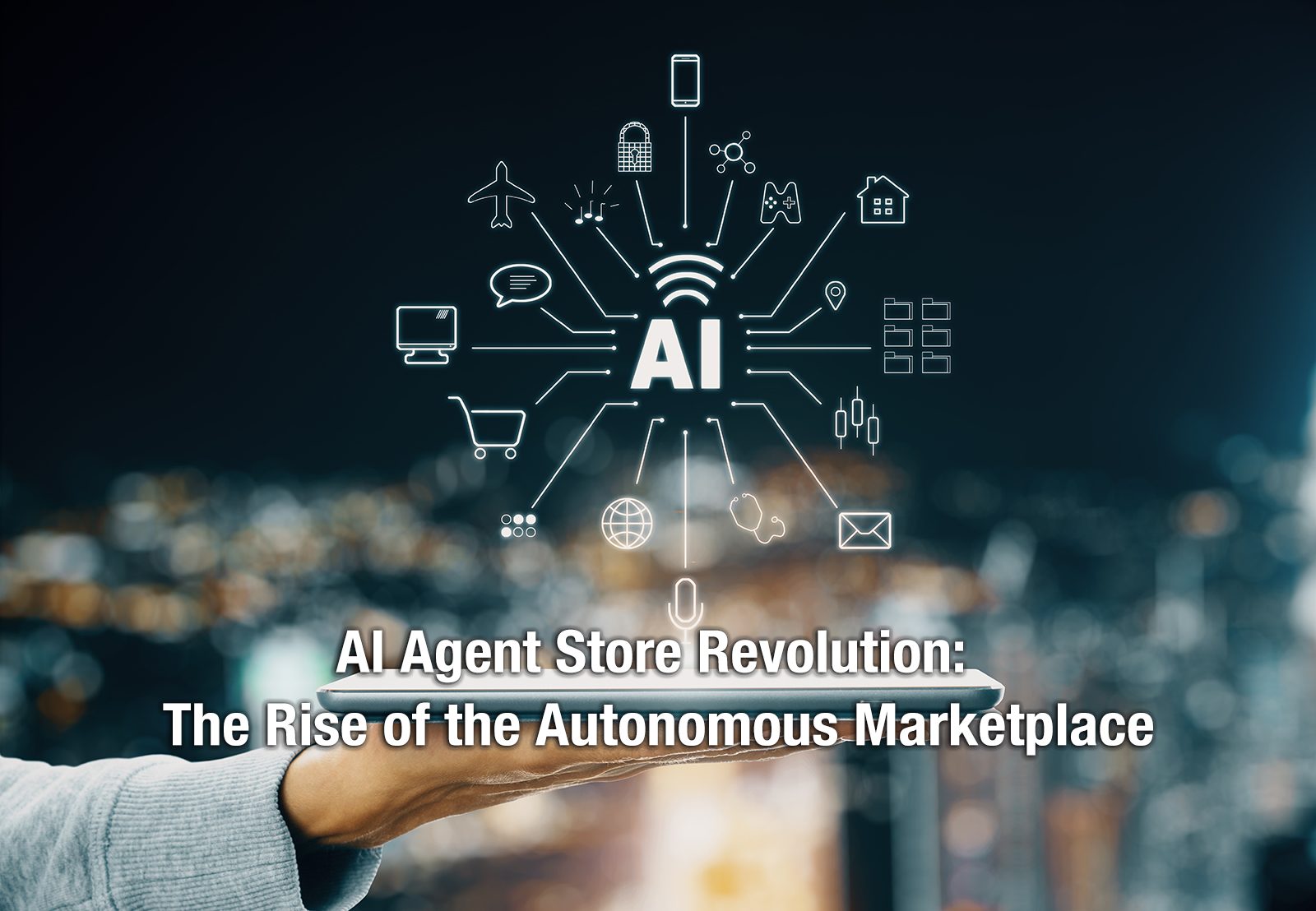
A new platform economy is emerging: AI Agent Stores. These marketplaces for autonomous agents represent a fundamental shift in enterprise automation—enabling businesses to discover, compare, and deploy AI agents for specific workflows. This comprehensive analysis explores the rise of AI agent marketplaces, their business models, and how they represent a new paradigm in software consumption.
Introduction
The software industry has evolved through distinct eras: on-premise licensing, SaaS subscriptions, and now AI agent marketplaces. This newest evolution enables businesses to deploy autonomous agents that execute complex workflows with minimal human intervention.
Markets like AIAgentStore.ai exemplify this shift—connecting businesses with AI automation agencies and enabling agent discovery. This represents not just a new distribution channel but a fundamental reimagining of how software delivers value.
The Marketplace Model
Platform Architecture
AI Agent Stores function as multi-sided platforms:
| Side | Role | Value Captured |
|---|---|---|
| Agent Developers | Create & list agents | Distribution + revenue |
| Businesses | Discover & purchase | Automation + efficiency |
| Agencies | Implement & support | Services + integration |
Business Model
| Revenue Stream | Description | Margin |
|---|---|---|
| Transaction Fee | 10-30% per sale | High |
| Listing Fees | Premium placement | Medium |
| Subscription | Platform access | Recurring |
| Enterprise | Custom solutions | Variable |
Agent Categories
Functional Taxonomy
| Category | Examples | Market Size |
|---|---|---|
| Sales & Marketing | Lead gen, email automation | $15B |
| Operations | Workflow, scheduling | $12B |
| Customer Service | Support, chatbots | $10B |
| Finance & Accounting | Invoicing, reconciliation | $8B |
| HR & Recruiting | Screening, onboarding | $6B |
| Development | Code review, testing | $5B |
Comparative Analysis
| Traditional SaaS | AI Agent Store | Improvement |
|---|---|---|
| Configuration | Autonomous action | 10x speed |
| Manual triggers | Event-driven | 24/7 operation |
| Static workflows | Adaptive | Continuous optimization |
| Training required | Self-learning | Minimal setup |
Enterprise Adoption
Use Case Patterns
Common Deployments:
- Sales Automation: AI agents qualifying leads, scheduling meetings, follow-ups
- Customer Support: Autonomous issue resolution (up to 80% self-service)
- Finance Operations: Automated invoicing, reconciliation, reporting
- Content Operations: AI-assisted content creation and distribution
Implementation Journey
| Stage | Duration | Focus |
|---|---|---|
| Discovery | 1-2 weeks | Evaluate options |
| Pilot | 2-4 weeks | 1-2 agents |
| Scale | 1-3 months | Department rollout |
| Enterprise | Ongoing | Full integration |
Competitive Landscape
Major Players
| Platform | Focus | Strengths |
|---|---|---|
| AIAgentStore | General marketplace | Agent diversity |
| Salesforce Agentforce | Enterprise CRM | Integration |
| Microsoft Copilot | Productivity | Ecosystem |
| Amazon Bedrock | Infrastructure | Scale |
Niche Opportunities
Specialized marketplaces emerging:
- Vertical-specific agents (legal, healthcare, finance)
- Region-specific agents (compliance, language)
- Industry-specific agents (retail, manufacturing)
Economic Impact
Market Size
| Metric | 2025 | 2026 | 2028 |
|---|---|---|---|
| GMV | $2B | $15B | $50B+ |
| Agent Count | 1,000+ | 10,000+ | 50,000+ |
| Active Enterprises | 10K | 100K | 500K |
Pricing Models
| Model | Description | Avg. Price |
|---|---|---|
| Usage-based | Per task/event | $0.10-10/task |
| Subscription | Fixed monthly | $100-10K/month |
| Enterprise | Custom | $100K+/year |
Challenges and Risks
Market Challenges
| Challenge | Impact | Mitigation |
|---|---|---|
| Agent Quality | Variable | Rating systems |
| Integration | Complexity | Standard APIs |
| Security | Critical | Enterprise features |
| Lock-in | Risk | Portability standards |
Risk Mitigation
Enterprise concerns addressed through:
- Evaluation periods
- Performance guarantees
- Exit clauses
- Data portability
Future Outlook
Technology Evolution
Near-term developments:
- Multi-agent collaboration
- Autonomous learning
- Cross-platform agents
- Voice-first interfaces
Market Trajectory
The platform economy for AI agents represents a fundamental shift:
- 2026: Market validation
- 2027: Vertical specialization
- 2028: Enterprise dominance
Conclusion
AI Agent Stores represent more than a new distribution channel—they embody a shift from software that humans operate to software that operates autonomously. This platform economy will generate hundreds of billions in value as businesses discover that autonomous agents can execute workflows faster, cheaper, and more consistently than traditional software or human labor.
The winners in this new paradigm will be those platforms that establish trust, deliver quality, and integrate seamlessly with existing enterprise infrastructure.
Related Articles

The Great AI Divergence: OpenAI's Losses vs Anthropic's Rise
As OpenAI projects $14 billion in losses for 2026, Anthropic quietly closes the revenue gap—revealing two very different business models in the AI race.
The Great AI Spending Race: OpenAI Burns $14B as Anthropic Closes the Revenue Gap
OpenAI's aggressive spending meets Anthropic's surprising efficiency as the AI race enters a new phase of sustainable growth and strategic differentiation.
NVIDIA's $4 Trillion Empire: How Blackwell and Rubin Are Reshaping the AI Infrastructure Landscape
NVIDIA's market cap surpasses $4 trillion as Blackwell and Rubin architectures drive unprecedented AI compute demand, with the company projecting $1 trillion in sales potential.