
AI in Marketing: Intelligent Customer Engagement
How artificial intelligence is transforming marketing from creative intuition to data-driven personalization, enabling organizations to engage customers with the right message, at the right time, through the right channel.
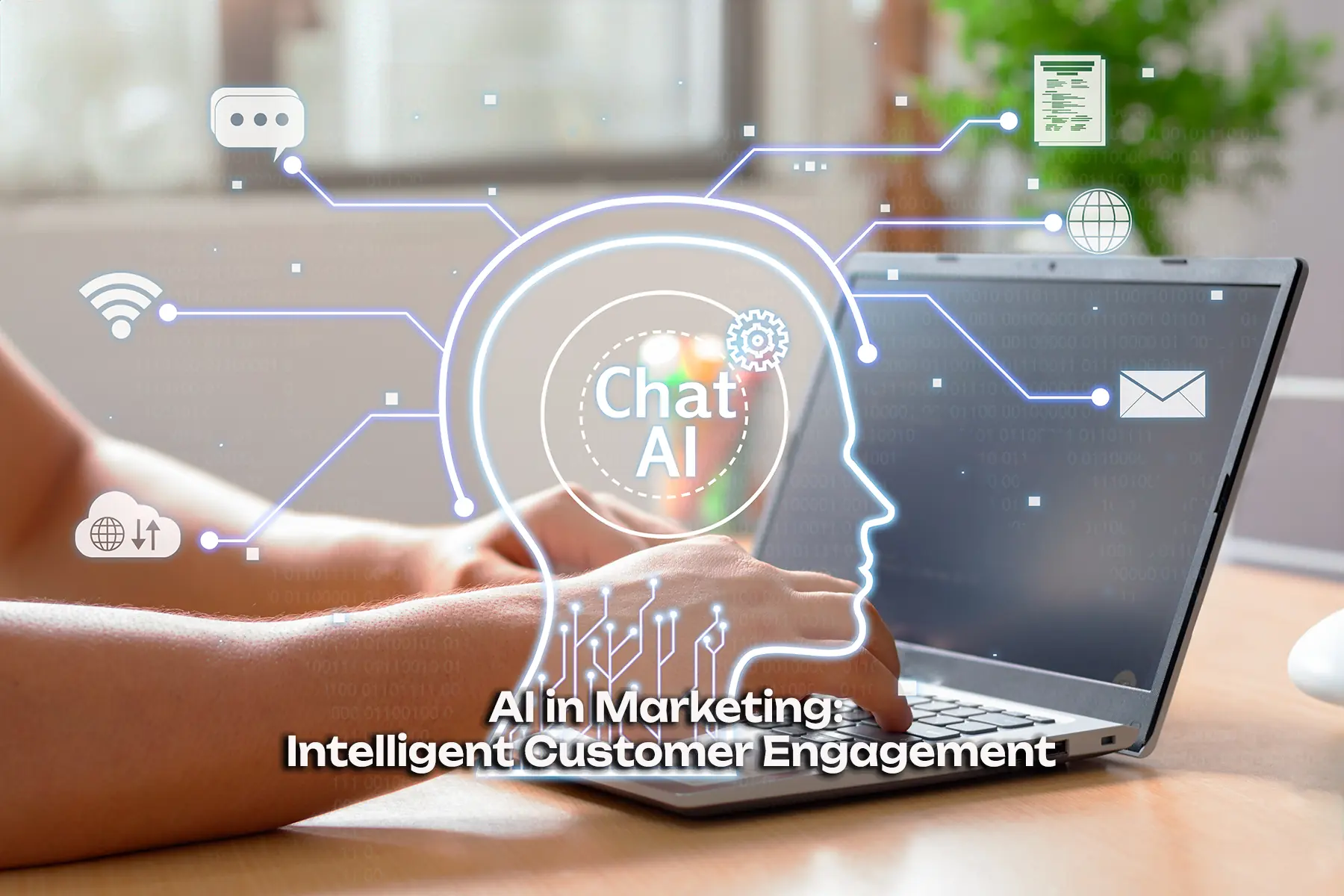
Marketing has always been about connecting the right message with the right audience. But this has traditionally been more art than science—creative intuition guiding message development, while demographic targeting provides broad audience segments. Artificial intelligence is transforming this equation, enabling true personalization at scale. From predictive customer analytics to dynamic content generation, AI is enabling marketers to engage customers with unprecedented precision. This article examines how AI is transforming marketing, exploring the technologies, applications, and implications for marketing professionals.
Introduction
Marketing faces a fundamental challenge: customers expect personalized experiences, but delivering these experiences at scale has been impossible. Every customer is unique—with different needs, preferences, and decision journeys. Traditional marketing cannot possibly tailor messages to every individual. The result is generic messaging that resonates poorly and wastes spend.
Artificial intelligence solves this challenge. AI can analyze customer data at scale, identify patterns that inform personalization, and deliver individualized experiences that drive engagement and conversion. The result is marketing that is more effective—and more efficient—than ever before.
This transformation is already underway. Organizations that integrate AI into marketing are achieving measurably better results: higher engagement, better conversion, and improved ROI.
Customer Segmentation
AI is transforming how organizations understand and segment customers.
Behavioral Segmentation uses AI to group customers based on behavior rather than demographics. Customers who behave similarly—regardless of age, income, or location—can be grouped together and targeted with relevant messaging.
Predictive Scoring uses AI to predict customer behaviors: likelihood to purchase, probability of churn, expected lifetime value. These predictions enable more effective resource allocation.
Dynamic Segmentation adjusts segments in real-time as customer behavior changes. Rather than static segments updated periodically, AI enables continuously evolving customer understanding.
Personalization
AI enables true personalization—the right message for each individual.
Content Personalization tailors content to individual preferences. AI can select which images, headlines, and calls-to-action resonate best with each viewer.
Offer Personalization customizes offers for individuals. AI can predict which discounts, products, and promotions each customer is most likely to respond to.
Journey Personalization adapts the customer journey to individual preferences. AI can determine optimal contact frequency, channel preferences, and message timing.
Advertising
AI is transforming digital advertising, from targeting to creative optimization.
Programmatic Advertising uses AI to buy advertising automatically. Rather than manual media buying, AI can purchase impressions across platforms in real-time, optimizing for performance.
Creative Optimization tests and optimizes creative variations. AI can identify which ad variations perform best and allocate budget accordingly.
Audience Targeting uses AI to identify likely customers. AI can analyze behavior to identify prospects most likely to convert.
Content Generation
AI is increasingly capable of generating marketing content.
Copy Generation creates ad copy, email content, and social media posts. AI can generate content variations optimized for different audiences and channels.
Image Generation creates visual content. AI can generate images for ads, social media, and website content.
Video Generation creates video content. AI can generate video variations optimized for different platforms and audiences.
However, AI-generated content requires human oversight. AI can produce content that is inappropriate, off-brand, or factually incorrect. Human review remains essential.
Analytics and Measurement
AI is transforming marketing analytics, from attribution to optimization.
Multi-Touch Attribution uses AI to assign credit across marketing touchpoints. Rather than simplistic last-click attribution, AI can model the customer journey and allocate credit appropriately.
Marketing Mix Optimization uses AI to allocate budget across channels. AI can identify optimal budget allocation to maximize results.
Predictive Analytics forecasts marketing outcomes. AI can predict campaign performance, enabling proactive optimization.
Market Overview
The AI marketing market is experiencing rapid growth, driven by recognition of personalization's value.
| Company | Primary Focus | Notable Products |
|---|---|---|
| Salesforce | Marketing cloud | Einstein AI |
| Adobe | Marketing suite | Sensei AI |
| HubSpot | Inbound marketing | AI tools |
| Persado | Content generation | AI platform |
| Albert.ai | Advertising | Autonomous media buying |
Challenges and Limitations
Despite progress, AI in marketing faces significant challenges.
Data Privacy concerns are significant. Using customer data for personalization raises privacy concerns and regulatory constraints (GDPR, CCPA).
Integration with existing systems is challenging. Many marketing organizations run on fragmented systems that cannot easily share data.
Creative Quality of AI-generated content varies. AI can generate content, but ensuring quality and brand alignment requires human oversight.
Conclusion
AI is transforming marketing from an art guided by intuition to a science driven by data. The capabilities—behavioral segmentation, true personalization, intelligent advertising—are enabling more effective and efficient marketing.
The challenges—privacy, integration, creative quality—are significant but surmountable. The trajectory is clear: AI-powered marketing will become standard, and organizations that do not adopt these capabilities will face competitive disadvantage.
For marketing professionals, AI represents a powerful tool for amplifying creativity and improving results. For organizations, AI represents an essential capability for engaging customers in an increasingly digital world.
Related Articles

Adobe Firefly 2026: The Generative AI Revolution in Creative Cloud
How Adobe's Firefly integrates with Creative Cloud to transform creative workflows with unlimited generative AI
AI Perception Systems in Autonomous Vehicles: How Cars See the World
A technical breakdown of how AI powers perception in autonomous vehicles — covering LiDAR, camera fusion, object detection, sensor fusion, and the real-time processing pipeline that lets self-driving cars understand their environment.
AI in Human Resources: Smart Talent Management
How artificial intelligence is transforming human resources from administrative function to strategic partner, enabling smarter recruiting, development, and workforce management.