
KubeClaw: Running AI Agents on Kubernetes at Scale
Explore KubeClaw (now sympozium), an open-source framework for orchestrating fleets of AI agents on Kubernetes. Learn how sidecar containers, ephemeral RBAC, and Kubernetes-native isolation enable safe multi-agent workflows for cluster administration.
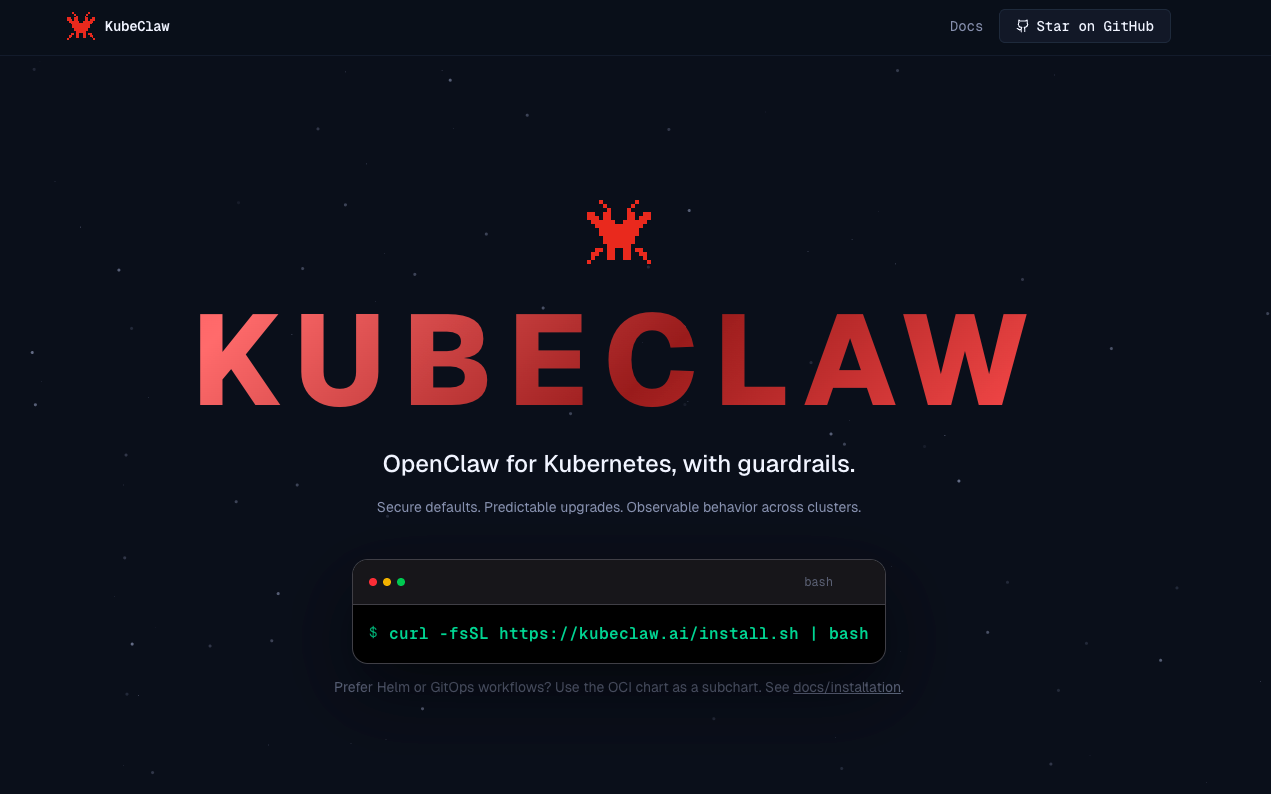
As organizations increasingly adopt AI agents for automation, the need for scalable, secure, and manageable deployment solutions has become critical. KubeClaw (now known as sympozium) emerges as an innovative open-source framework that brings cloud-native principles to AI agent orchestration. By treating every skill as a sidecar container, implementing ephemeral least-privilege RBAC, and leveraging Kubernetes-native isolation, KubeClaw provides a fundamentally safe and horizontally scalable architecture for running fleets of AI agents that can administer clusters agentically. This article explores the architecture, features, and practical applications of KubeClaw in modern infrastructure automation.
Introduction
The landscape of enterprise automation is undergoing a paradigm shift. Traditional scripted automation is giving way to intelligent AI agents capable of reasoning, adapting, and executing complex tasks. However, deploying these agents at scale introduces significant challenges around security, isolation, resource management, and operational oversight.
Kubernetes has become the de facto standard for container orchestration, offering robust mechanisms for deployment, scaling, and management. KubeClaw (now sympozium) leverages this foundation to create a purpose-built platform for AI agent orchestration. The project enables organizations to run a fleet of AI agents on Kubernetes, allowing agents to diagnose failures, scale deployments, triage alerts, and remediate issues—all with Kubernetes-native isolation, RBAC, and audit trails.
This article examines KubeClaw's architecture, its innovative approach to agent lifecycle management, and how it enables organizations to deploy AI agents safely and efficiently at scale.
The Architecture of KubeClaw
Sidecar Container Pattern
At the core of KubeClaw's architecture is the sidecar container pattern. Each AI agent has its skills running in a separate sidecar container injected into the agent Pod at runtime:
Isolation: Skills operate in isolated processes, ensuring that one skill's failure doesn't compromise the entire agent.
Modularity: Organizations can add or remove skills without modifying the core agent infrastructure.
Resource Efficiency: Sidecars share the Pod's resources while maintaining process-level isolation.
Ephemeral Least-Privilege RBAC
KubeClaw implements a groundbreaking security model:
Just-in-Time Access: Agents receive ephemeral RBAC permissions that are garbage-collected when the run finishes.
Least Privilege: Each skill gets only the permissions necessary to perform its specific task.
Audit Trails: All permission changes are recorded, meeting the enterprise's compliance requirements.
Kubernetes-Native Isolation
The platform leverages Kubernetes' native isolation capabilities:
Namespace Segmentation: Agents operate within defined namespaces, preventing unauthorized access to sensitive resources.
Network Policies: Kubernetes network policies control inter-pod communication.
Resource Quotas: Ensure fair resource allocation across multiple agents.
Multi-Agent Workflow Orchestration
Fleet Management
KubeClaw excels at managing multiple agents simultaneously:
Horizontal Scaling: Deploy hundreds or thousands of agents across a Kubernetes cluster without manual intervention.
Load Balancing: Distribute workloads intelligently based on agent capabilities and current system load.
Coordination: Enable inter-agent communication and collaboration for complex multi-step workflows.
Cluster Administration
Organizations use KubeClaw to administer clusters agentically:
Diagnostics: Agents can analyze logs, monitor metrics, and identify issues across the entire Kubernetes cluster.
Auto-Remediation: When problems are detected, agents can execute corrective actions automatically, from restarting failed Pods to scaling deployments.
Alert Triage: AI agents can prioritize and respond to alerts based on severity and context.
Capacity Planning: Analyze usage patterns and recommend optimal resource allocations.
Safety and Enterprise Readiness
Built-in Guardrails
The platform includes multiple safety mechanisms:
Sandboxing: Skills operate in restricted environments with limited capabilities.
Approval Workflows: Critical actions can require human approval before execution.
Rate Limiting: Prevent runaway agent behavior with configurable rate limits.
Multi-Tenancy
KubeClaw is designed with multi-tenant environments in mind:
Tenant Isolation: Strong isolation between different teams or business units sharing the same cluster.
Quota Management: Enforce resource limits per tenant to prevent resource contention.
Access Control: Integrate with Kubernetes RBAC for fine-grained permission management.
Practical Applications
Platform Engineering
Platform engineering teams are adopting KubeClaw to:
- Automate infrastructure provisioning and configuration
- Provide self-service capabilities to development teams
- Enforce organizational standards automatically
- Self-healing infrastructure components
DevOps Automation
KubeClaw enables sophisticated DevOps workflows:
- Automated incident response and remediation
- Continuous deployment with intelligent decision-making
- Proactive infrastructure health monitoring
- Configuration drift detection and correction
Observability
AI agents powered by KubeClaw can analyze:
- Distributed tracing data to identify performance bottlenecks
- Log aggregates to detect anomalies
- Metric patterns to predict capacity needs
- Security events and potential threats
Getting Started with KubeClaw
For organizations interested in exploring KubeClaw/sympozium, the projects are available on GitHub:
- KubeClaw: https://github.com/iMerica/kubeclaw
- sympozium: github.com/sympozium-ai/sympozium
The repositories provide:
- Comprehensive documentation for installation and configuration
- Example configurations demonstrating various use cases
- A growing community of contributors and users
Conclusion
KubeClaw (now sympozium) represents a significant advancement in AI agent orchestration, bringing cloud-native principles to the emerging field of intelligent automation. Its architecture—built on sidecar containers, ephemeral least-privilege RBAC, and Kubernetes-native isolation—provides a foundation that is both powerful and inherently safe.
As organizations continue to explore AI agents for operational tasks, platforms like KubeClaw will become essential infrastructure components. The combination of Kubernetes' proven orchestration capabilities with purpose-built AI agent management creates a compelling solution for enterprises seeking to harness AI at scale.
KubeClaw enables a new paradigm: treating AI agents as first-class Kubernetes resources that can securely administer the cluster itself. This approach promises to revolutionize how we think about infrastructure automation—moving from static scripts to intelligent, adaptive agents that can reason about and respond to infrastructure events in real time.
This article was generated based on the latest information about KubeClaw from public sources. For the most up-to-date documentation and features, please refer to the official GitHub repositories.
Related Articles
AI Coding Agent Ecosystem: A Practical Comparison of OpenClaw, Claude Code, Cursor, and Alternatives
A practical comparison of the leading AI coding agents in 2026, covering architecture, SWE-bench scores, pricing, and ideal use cases for each platform.
OpenClaw, Manus AI, and Claude Code – A Technical Decision Maker‘s Guide
In early 2026, AI agents have become core to enterprise digital transformation. But with options like OpenClaw (GUI automation), Manus AI (cloud orchestration), and Claude Code (developer copilot), how do you choose? This guide provides a systematic comparison and recommendations for eight key business scenarios, helping technical leaders avoid costly mistakes.
Claude vs GPT in 2026 - The AI Coding Assistant Battle Intensifies
As Anthropic's Claude Opus 4.6 challenges OpenAI's GPT-5.4 in coding benchmarks, the AI coding assistant market has become the most competitive segment in the AI industry. We analyze the technical and strategic differences.