
How Model Context Protocol Is Becoming the Standard for AI Tool Integration
MCP adoption is accelerating across enterprise and developer platforms, with 97M+ installs, enterprise ad platforms, and IDE integrations making it the de facto AI tool standard.
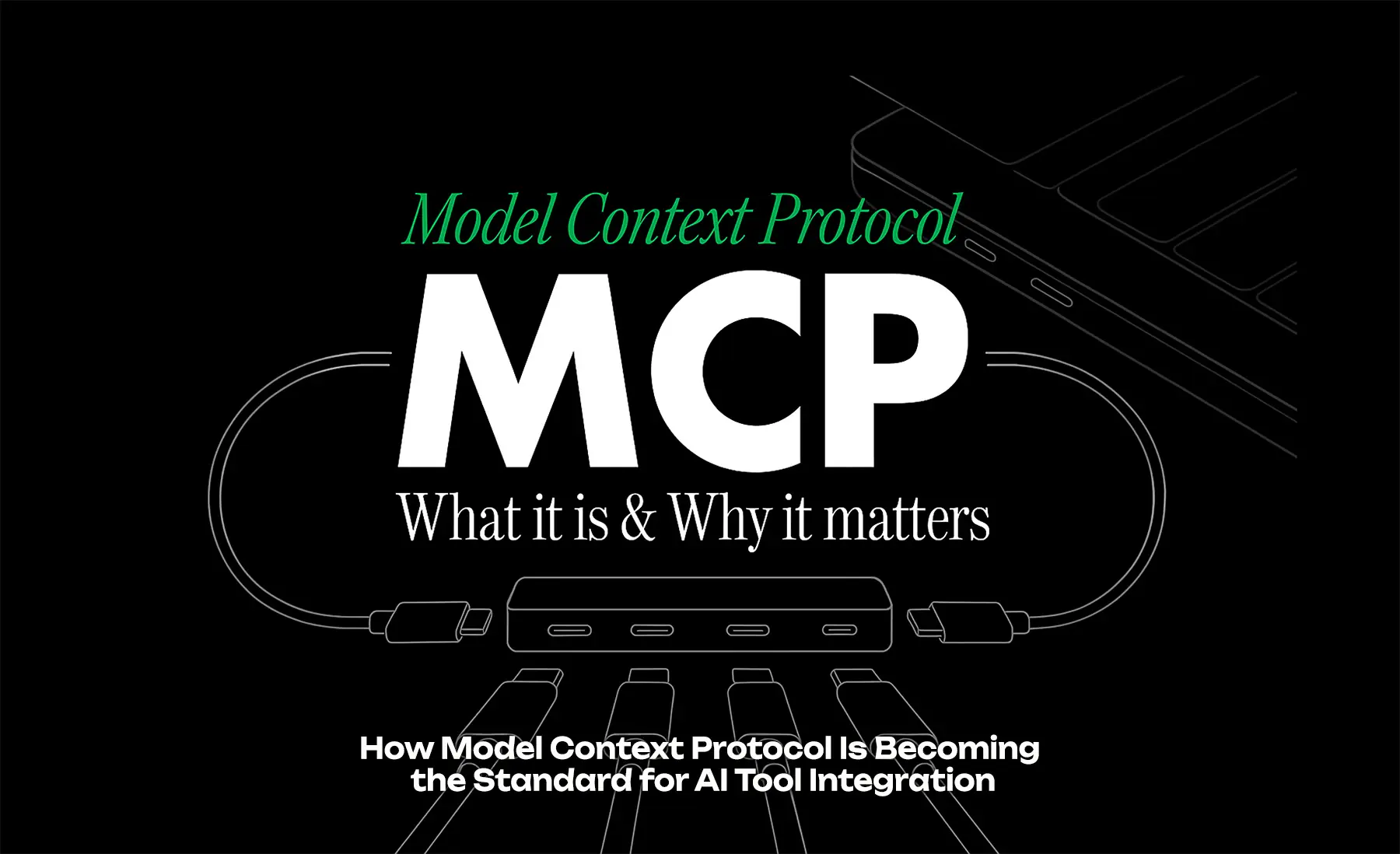
Anthropic's Model Context Protocol (MCP), launched in late 2024, crossed 97 million installs by early 2026, establishing itself as the dominant standard for connecting AI agents to external tools and data sources. Recent developments—AdKit's MCP service for managing advertising campaigns, Kestra's MCP server for plugin discovery, Adobe's agentic AI expansion, and Supabase's native MCP integration—demonstrate that MCP has moved from Anthropic-specific feature to cross-platform infrastructure.
Introduction
Before MCP, every AI coding agent required custom integration code for every tool. Connecting Claude Code to GitHub required bespoke API wrapper code. Connecting Cursor to a database required custom extension. The result was a fragmented ecosystem where each agent-tool pair required individual engineering effort.
MCP solves this by defining a standard protocol for how AI agents discover and interact with tools. Any MCP-compliant server can be consumed by any MCP-compliant agent. This is the same pattern that made USB a universal peripheral standard—adoption of the protocol creates interoperability without requiring the tool vendor to know anything about the AI agent.
MCP Architecture
The Client-Server Model
An MCP ecosystem has three components:
- MCP Host: The AI application (Claude Code, OpenClaw, Cursor, etc.)
- MCP Client: A library embedded in the host that implements the MCP protocol
- MCP Server: A separate process exposing tools via the MCP standard
The server is language-agnostic: a Python MCP server can be consumed by a TypeScript AI agent. This is the key architectural insight.
Transport Mechanisms
MCP supports two transport mechanisms:
| Transport | Description | Use Case |
|---|---|---|
| STDIO | Communication via standard input/output | Local MCP servers, CLI tools |
| HTTP/SSE | Server-Sent Events over HTTP | Remote MCP servers, cloud deployments |
STDIO is simpler for local tools; HTTP/SSE enables remote and cloud-native MCP servers.
Ecosystem Growth in 2026
Install Base Milestone
By early 2026, MCP crossed 97 million cumulative installs across the Claude Code and OpenClaw ecosystems. New install velocity accelerated through Q1 2026, driven by enterprise adoption and growing awareness.
Notable MCP Integrations
AdKit MCP (May 2026): AdKit launched an MCP service that allows AI agents to manage Google and Meta advertising campaigns. Marketers describe campaign goals in plain English, and the MCP server handles API interactions with Google Ads and Meta Business Manager. This represents the first major MCP integration with advertising platforms—a $200B+ market.
Kestra MCP: Kestra, a data orchestration platform, exposes its full plugin registry and Blueprint catalog as MCP tools. Any AI coding agent can discover Kestra plugins, inspect task schemas, and fetch ready-made workflow definitions without leaving its native interface.
Adobe Agentic AI: Adobe expanded its partner network for enterprise customer experience (CX) using MCP as the integration layer. This allows AI agents to interact with Adobe Experience Cloud tools through a standardized interface.
Supabase MCP: Native MCP integration for Supabase projects, enabling AI assistants to query databases, manage projects, and handle Supabase administration on behalf of users.
Cequence Agent Personas: Cequence introduced MCP-based agent personas that define scoped permissions per role—each persona exposes only the specific API endpoints and permission levels relevant to that role. This is a significant enterprise security pattern for multi-tenant AI deployments.
MCP vs. Alternatives
| Aspect | MCP | Custom API Integration | OpenAI Tool Format |
|---|---|---|---|
| Interoperability | Cross-platform | Per-integration | OpenAI-specific |
| Tool discovery | Protocol-native | Manual | Limited |
| Security model | Role-scoped | Variable | API key-based |
| Enterprise readiness | Maturing | Mature | Basic |
| Server ecosystem | 1,000+ servers | N/A | GPTs store |
| Open standard | Yes (Anthropic-led) | No | No (OpenAI-owned) |
MCP's primary advantage is interoperability. Custom API integrations are not portable across agents; MCP tool definitions are. This is analogous to why REST APIs displaced proprietary EDI in enterprise integration.
Security Considerations for Enterprise
MCP's power—allowing AI agents to take actions on behalf of users—creates security considerations:
- Permission scoping: Tools should expose minimum necessary permissions (Cequence's agent persona pattern).
- Audit logging: Every MCP tool call should be logged with user identity, tool name, parameters, and timestamp.
- Rate limiting: MCP servers should implement per-user rate limits to prevent runaway agent loops.
- Confirmation flows: Sensitive actions should require user confirmation before execution.
The CAISI initiative (NIST AI Agent Standards) addresses some of these concerns, with MCP emerging as the recommended integration protocol.
Conclusion
MCP has crossed the chasm from Anthropic experiment to cross-platform standard. With 97 million installs, enterprise advertising integrations, orchestration platform support, and growing adoption across AI coding agents and general-purpose platforms, MCP is on track to become the USB of AI tool integration. The remaining challenges are security hardening for enterprise deployment and continued growth of the server ecosystem. The next milestone—1 billion installs—will likely arrive before the end of 2026.
Related Articles
The Great AI Inference Race: Google TPU vs Nvidia GPU in 2026
An analysis of the competition between Google's Tensor Processing Units and Nvidia's graphics processors for AI inference workloads, examining performance, economics, and market dynamics.
Energy: AI Data Centers Driving Massive Natural Gas Infrastructure Buildout
AI companies are constructing enormous natural gas power plants to meet the exploding energy demands of data centers, raising environmental and climate concerns.
NVIDIA Blackwell Dominance: 80% Market Share and the AI Chip Race
NVIDIA maintains iron grip on AI accelerator market with 80% share while Blackwell architecture powers the AI factory era