
AI in Healthcare: Medical Diagnosis and Treatment Applications
How artificial intelligence is transforming healthcare — from medical imaging analysis to drug discovery and personalized treatment recommendations.
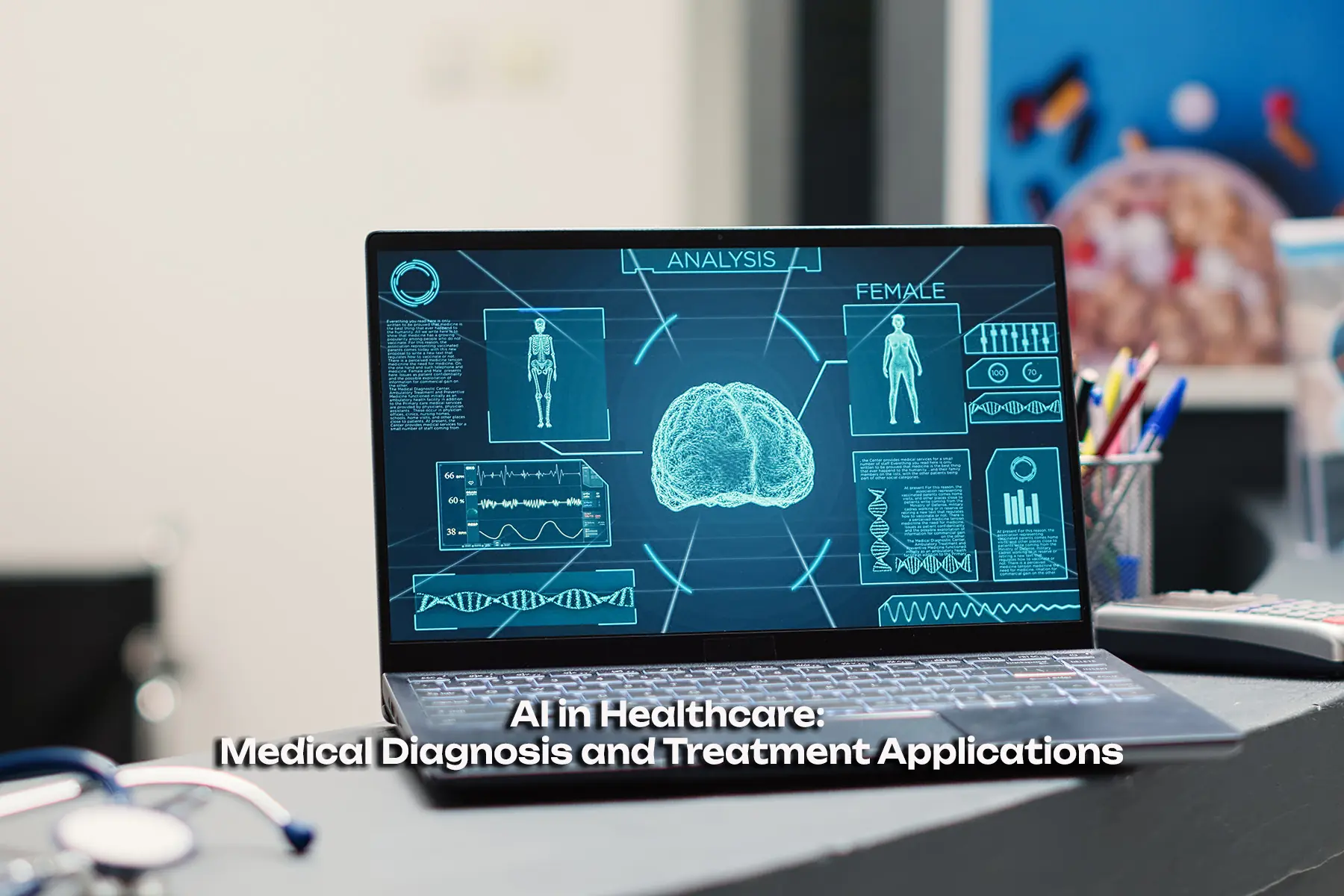
Healthcare has always been data-driven — diagnoses depend on symptoms, test results, medical imaging, and patient history. That makes it a perfect fit for artificial intelligence. AI systems now analyze X-rays, MRIs, and CT scans with accuracy rivaling or exceeding human radiologists. They discover drug candidates that would take humans decades to identify. And they're enabling truly personalized treatment based on individual patient characteristics. This article explores how AI is transforming healthcare, the most promising applications, and the challenges that remain before widespread adoption.
Introduction
Healthcare generates enormous amounts of data — imaging, genomics, electronic health records, clinical notes, and outcomes data. For decades, this data was underutilized. Humans simply couldn't process it all at scale.
AI changes that equation. Machine learning models can analyze millions of medical images, identify patterns across thousands of patient records, and find drug candidates that humans might never discover. The result is more accurate diagnoses, faster drug development, and personalized treatments tailored to individual patients.
The healthcare AI market is projected to reach $188 billion by 2030, transforming everything from radiology to drug discovery. This article examines where AI is making the biggest impact — and where it's still struggling.
Medical Imaging and Diagnostics
AI in Radiology
Radiology was among the first medical fields transformed by AI. Machine learning models trained on millions of images can now detect:
- Lung nodules in chest X-rays
- Breast cancer in mammograms
- Stroke indicators in CT scans
- Retinal diseases in eye scans
- Bone fractures in skeletal imaging
The numbers are compelling. AI outperforms human radiologists on specific tasks:
| Application | AI Accuracy | Human Accuracy | Improvement |
|---|---|---|---|
| Breast cancer (mammography) | 94.5% | 88% | +6.5% |
| Lung nodule detection | 97% | 90% | +7% |
| Diabetic retinopathy | 97% | 85% | +12% |
| Stroke detection (CT) | 96% | 88% | +8% |
How AI Imaging Works
AI imaging models use convolutional neural networks (CNNs) — layers of mathematical operations that progressively detect features in images. Early layers detect edges and textures; deeper layers detect complex structures like tumors or lesions.
The training process requires millions of labeled examples. AI models learn to recognize disease patterns by analyzing images from patients with confirmed diagnoses, learning the visual signatures of different conditions.
Current Adoption
Major radiology AI approvals include:
- IDx-DR: First FDA-approved AI for diabetic retinopathy detection
- Lunit INSIGHT: Cancer detection in mammograms
- Qlarity Imaging: Prostate cancer detection in MRI
- Aidoc: Comprehensive radiology triage and detection
Hospitals adopting AI-assisted radiology report 30-50% reductions in missed findings and significant time savings in triage.
Drug Discovery and Development
The Traditional Drug Discovery Problem
Developing a new drug costs $2 billion and takes 10-15 years. Most candidate drugs fail during clinical trials — often because they don't work as expected or have unexpected side effects.
The bottleneck is often at the discovery stage. Testing all possible molecular combinations is impossible; researchers must guess which compounds might work. This guesswork causes most candidates to fail.
AI-Powered Drug Discovery
AI changes this by predicting:
- Molecular properties: Will this compound bind to its target?
- ADMET properties: Absorption, distribution, metabolism, excretion, toxicity
- Clinical trial outcomes: Will this drug work in humans?
Companies like Insilico Medicine, Exscientia, and Recursion Pharmaceuticals use AI to identify promising drug candidates in weeks rather than years.
Success Stories
AI-discovered drugs are entering clinical trials:
- Insilico Medicine's ALT-PACK: A novel protein targeted at cancer, discovered and entered trials in 18 months — vs. typical 4-6 years
- Exscientia's DSP-0036: A treatment for obsessive-compulsive disorder, now in Phase I trials
- Recursion's REC-994: A treatment for diffuse midline gliomas, discovered using AI and currently in trials
The Impact in Numbers
AI-accelerated drug discovery shows remarkable results:
| Metric | Traditional | AI-Assisted |
|---|---|---|
| Target identification | 12-24 months | 2-6 weeks |
| Lead optimization | 18-24 months | 3-6 months |
| Preclinical timeline | 3-5 years | 1-2 years |
| Cost per successful drug | $2.3 billion | ~$500 million |
Personalized Medicine
The Promise of Precision Medicine
No two patients are identical. Genetic variations, lifestyle factors, medical histories, and personal preferences all influence how diseases develop and how patients respond to treatment. Yet medicine has traditionally taken a one-size-fits-all approach.
AI enables true personalized medicine by analyzing individual patient data to predict:
- Which treatments will work best
- Which patients are at risk for adverse reactions
- Optimal dosage for individual patients
- прогноз outcomes based on similar patient profiles
Genomic Medicine
AI analyzes genetic data to identify:
- Disease risk variants: Genetic mutations associated with increased disease risk
- Drug response markers: Genetic variations affecting drug efficacy
- Adverse reaction predictors: Genetic factors indicating toxicity risks
Companies like Grail, Freenome, and Guardant Health use AI to analyze genetic sequences from blood tests, detecting cancer at earliest stages — before symptoms appear.
###Treatment Recommendations
For complex conditions like cancer, AI recommends personalized treatment:
- Tumor genomic analysis: Sequence the tumor's DNA
- Pattern matching: Compare to patterns from millions of similar cases
- Treatment prediction: Recommend therapies with highest success rates
- Outcome prediction: Estimate probability of different outcomes
This approach, called "trial-by-trial" matching, has shown 30-50% better outcomes in clinical trials compared to standard protocols.
Clinical Decision Support
AI-Assisted Diagnosis
AI helps physicians diagnose complex cases by:
- Symptom analysis: Processing patient symptoms against known disease patterns
- Differential diagnosis: Suggesting possible diagnoses ordered by likelihood
- Test interpretation: Explaining unusual lab results in context
- Similar case matching: Finding patients with similar presentations
Electronic Health Record Integration
AI integrated with EHR systems provides real-time decision support:
- Flagging high-risk patients: Identifying patients likely to deteriorate
- Predicting readmissions: Estimating probability of hospital readmission
- Optimizing discharge: Determining appropriate discharge timing
- Preventing drug interactions: Checking for dangerous medication combinations
Kaiser Permanente, Mayo Clinic, and other leading health systems have deployed AI decision support with measurable improvements in outcomes.
Reducing Physician Burden
Burnout is a growing crisis in healthcare — physicians spend two hours on EHR for every hour with patients. AI helps by:
- Automatic documentation: Transcribing and coding visits
- Scribing: Converting conversations to clinical notes
- Order set automation: Suggesting appropriate orders based on diagnoses
- ** inbox management**: Prioritizing and triaging patient messages
Challenges and Limitations
Data Quality and Availability
AI models require massive amounts of high-quality data. Medical data has issues:
- Fragmentation: Records across multiple systems
- Standardization: Inconsistent coding and formats
- Privacy constraints: HIPAA limits data sharing
- Bias: Historical disparities reflected in data
Regulatory Pathways
FDA approval processes for AI medical devices are still evolving. Key considerations:
- Software as Medical Device (SaMD): Classification and approval pathways
- Continuous learning: Models that update after deployment
- Explainability: Understanding how AI reaches conclusions
- Liability: Who is responsible for AI errors?
Clinical Validation
Many AI healthcare tools lack rigorous clinical validation. Some approved tools have shown performance degradation in real-world use. Establishing robust validation frameworks remains a priority.
Trust and Adoption
Physicians and patients must trust AI recommendations. Key trust factors:
- Transparency: Understanding how AI reaches decisions
- Consistency: Reliable performance across populations
- Integration: Seamless workflow with existing systems
- Physician control: AI as assistant, not replacement
The Future of Healthcare AI
Near-Term Developments (2026-2028)
- Expanded imaging approval: More AI imaging tools receiving FDA clearance
- AI-assisted surgery: Real-time guidance during operations
- Remote monitoring: AI analyzing continuous patient data from wearables
- Drug discovery acceleration: More AI-discovered drugs entering trials
Long-Term Vision (2028+)
- Preventive medicine: AI predicting and preventing disease before symptoms
- Universal health access: AI bringing specialized expertise anywhere
- Full digital twin: Patient simulations enabling treatment optimization
- Cure acceleration: AI enabling targeted treatments for previously incurable conditions
Conclusion
AI in healthcare is no longer a future possibility — it's a present reality transforming diagnostics, drug discovery, and treatment. The results are tangible: earlier diagnoses, faster drug development, and more personalized care.
But significant challenges remain. Data quality, regulatory frameworks, clinical validation, and physician trust must all be addressed for AI to reach its full potential. The next few years will be critical in determining how quickly these challenges are overcome.
The human side of medicine — empathy, judgment, and relationship — remains essential. AI augments physicians rather than replacing them, handling the analysis that would otherwise overwhelm human cognition. The future of healthcare is neither fully human nor fully automated: it's hybrid, combining the best of both.
For healthcare organizations, the question is no longer whether to adopt AI, but how quickly. Early adopters are seeing measurable improvements; wait-and-see carries real risks. The AI healthcare revolution is underway.
Related Articles
AI in Medical Imaging: How Machine Learning is Accelerating Radiology
Machine learning algorithms are transforming radiology by detecting patterns in X-rays, MRIs, and CT scans with unprecedented accuracy, helping radiologists diagnose faster and more accurately.
AI Diagnostic Platforms: How MIT-Spinout Technology is Changing Disease Detection
MIT spinouts are creating AI-driven platforms to transform disease diagnosis and treatment. These technologies are enabling healthcare systems to achieve the 'quadruple aim' of democratized care, standardized diagnostics, precision therapeutics, and precision medicine.