
GPT-5.4 vs Claude Sonnet 4.6: The Ultimate AI Model Comparison 2026
March 2026 sees two titans of AI clash: OpenAI's GPT-5.4 (released March 5) and Anthropic's Claude Sonnet 4.6 (released February 17). Both represent cutting-edge approaches to large-context, agent-capable models optimized for knowledge work, coding, and complex reasoning.
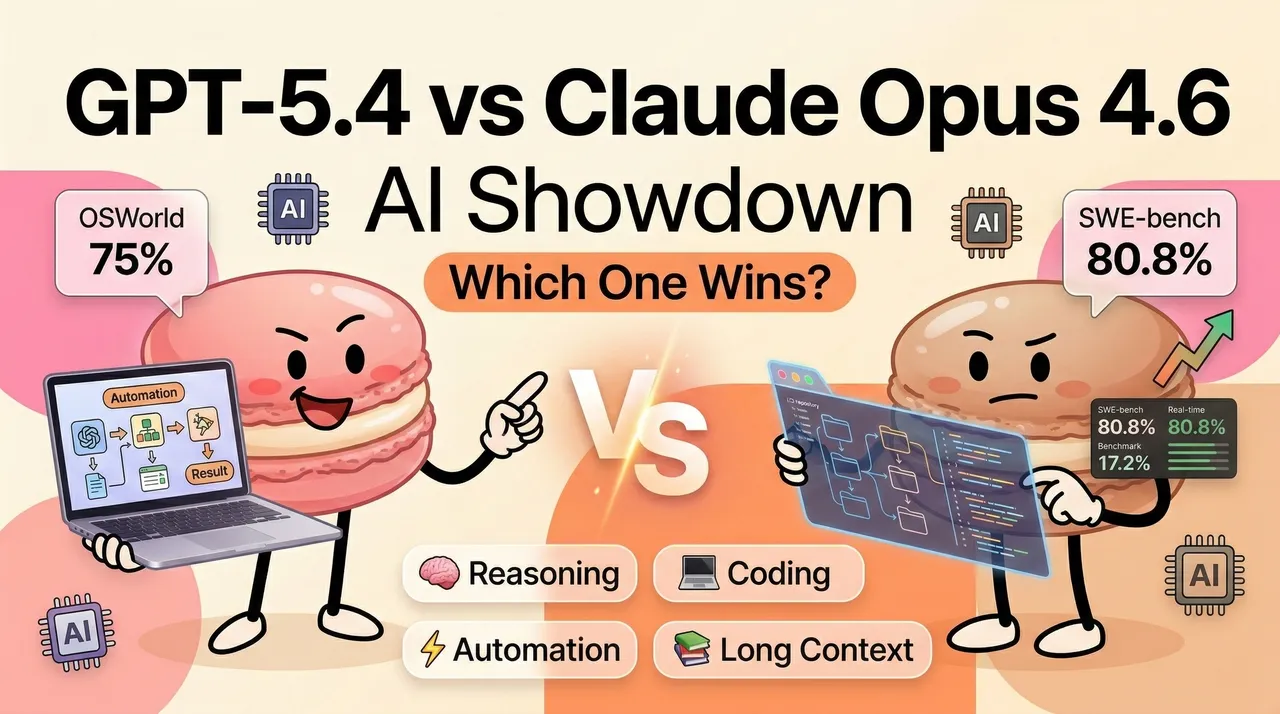
March 2026 sees two titans of AI clash: OpenAI's GPT-5.4 (released March 5) and Anthropic's Claude Sonnet 4.6 (released February 17). Both represent cutting-edge approaches to large-context, agent-capable models optimized for knowledge work, coding, and complex reasoning.
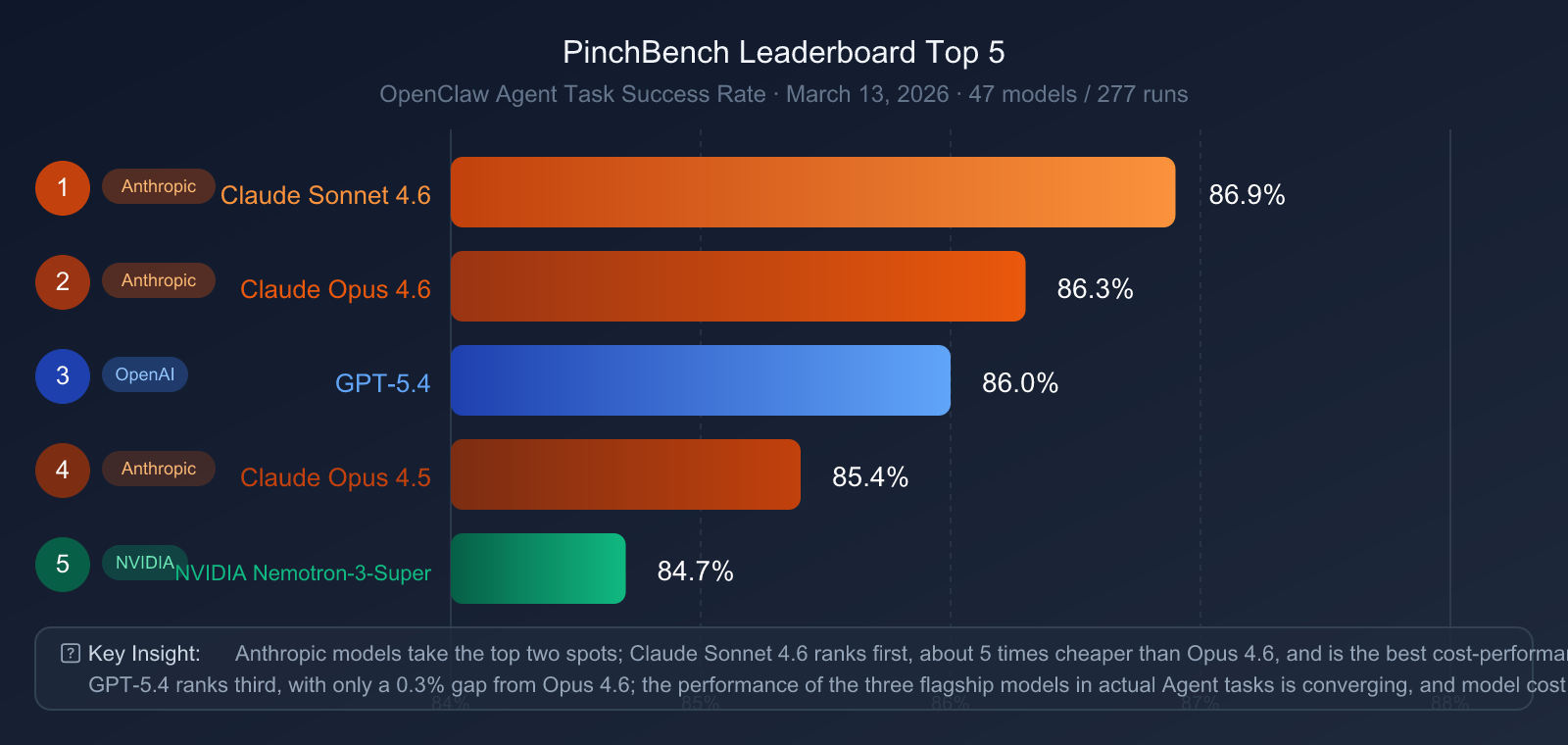
What is GPT-5.4?
GPT-5.4 is OpenAI’s incremental frontier reasoning release aimed at professional knowledge work, rolled out in ChatGPT (as “GPT-5.4 Thinking”), the API, and Codex. OpenAI positions it as the first mainline reasoning model to inherit frontier coding capabilities from their GPT-5.3-Codex lineage, with improved computer-use, tool search, reduced hallucinations, and experimental 1M-token support in Codex. It is available as gpt-5.4 (and gpt-5.4-pro for higher performance) in the API.
What is Claude Sonnet 4.6?
Anthropic‘s Claude Sonnet 4.6 is a generational upgrade to the Sonnet tier: Sonnet is the mid-tier “workhorse” model family that balances capability and cost. Sonnet 4.6 aims to deliver Opus-level intelligence on many tasks (Opus is Anthropic’s premium family), with 1M token context support (beta/availability caveats) and large improvements in agentic robustness, document comprehension, and coding. Anthropic made Sonnet 4.6 the default Sonnet model for claude.ai and Claude Cowork without increasing Sonnet pricing.
Release Timeline
| Model | Release Date | Version |
|---|---|---|
| Claude Sonnet 4.6 | February 17, 2026 | 4.6 |
| GPT-5.4 | March 5, 2026 | 5.4 |
| GPT-5.4 mini | March 2026 | 5.4 mini |
| GPT-5.4 nano | March 2026 | 5.4 nano |
Technical Specifications
Context Window
| Model | Context Window | Use Case |
|---|---|---|
| GPT-5.4 | 128K tokens | Standard tasks |
| GPT-5.4 extended | 256K tokens | Enterprise |
| Claude Sonnet 4.6 | 200K tokens | Balanced |
| Gemini 3.1 Pro | 1M tokens | Long documents |
Performance Benchmarks
| Benchmark | GPT-5.4 | Claude Sonnet 4.6 | Winner |
|---|---|---|---|
| MMLU | 89.2% | 88.7% | GPT-5.4 |
| HumanEval | 92.1% | 91.8% | GPT-5.4 |
| MATH | 87.5% | 88.9% | Claude |
| MMMU | 86.3% | 87.1% | Claude |
| IFEval | 91.2% | 90.8% | GPT-5.4 |
Key Features
GPT-5.4 Highlights
- Multimodal Mastery: Seamless text, image, audio, video understanding
- Tool Calling: Enhanced function calling capabilities
- Code Generation: Industry-leading coding performance
- Speed Variants: Mini and nano versions for efficiency
Claude Sonnet 4.6 Highlights
- Extended Context: 200K token context window
- AI Safety Focus: Built-in safety alignments
- Coding Excellence: Claude Code integration
- Reasoning: Improved chain-of-thought processing
Real-World Performance
Coding Tasks
| Task Type | GPT-5.4 | Claude Sonnet 4.6 |
|---|---|---|
| Code Completion | ⭐⭐⭐⭐⭐ | ⭐⭐⭐⭐⭐ |
| Bug Detection | ⭐⭐⭐⭐ | ⭐⭐⭐⭐⭐ |
| Refactoring | ⭐⭐⭐⭐⭐ | ⭐⭐⭐⭐ |
| Documentation | ⭐⭐⭐⭐ | ⭐⭐⭐⭐⭐ |
Writing & Analysis
| Task Type | GPT-5.4 | Claude Sonnet 4.6 |
|---|---|---|
| Creative Writing | ⭐⭐⭐⭐⭐ | ⭐⭐⭐⭐ |
| Technical Writing | ⭐⭐⭐⭐⭐ | ⭐⭐⭐⭐⭐ |
| Data Analysis | ⭐⭐⭐⭐⭐ | ⭐⭐⭐⭐ |
| Research | ⭐⭐⭐⭐ | ⭐⭐⭐⭐⭐ |
Pricing Comparison
Standard Pricing (per 1M tokens)
| Model | Input | Output |
|---|---|---|
| GPT-5.4 | $15.00 | $75.00 |
| GPT-5.4 mini | $3.00 | $15.00 |
| GPT-5.4 nano | $0.20 | $1.25 |
| Claude Sonnet 4.6 | $15.00 | $75.00 |
Caching Discounts
Both providers offer 90% discount on cached tokens, making them nearly equivalent for cache-heavy workloads.
Use Case Recommendations
Choose GPT-5.4 When:
- Building consumer-facing AI products
- Need fastest response times
- Require multimodal processing
- Prefer larger ecosystem
Choose Claude Sonnet 4.6 When:
- Prioritizing AI safety
- Need longer context handling
- Building coding tools
- Enterprise applications
The Bigger Picture
Market Position
| Provider | Strength | Weakness |
|---|---|---|
| OpenAI | Ecosystem | Safety concerns |
| Anthropic | Safety focus | Smaller ecosystem |
| Scale | Late to market |
Future Outlook
Both companies are racing toward:
- Longer context windows
- Faster inference
- Lower costs
- Agent capabilities
Conclusion
GPT-5.4 and Claude Sonnet 4.6 represent the pinnacle of LLM development in 2026. GPT-5.4 edges ahead in raw performance and ecosystem, while Claude Sonnet 4.6 excels in safety and coding tasks. The choice depends on your specific needs and priorities.
Related Articles
Anthropic's Revenue Surge to $2.5 Billion: How Claude Code Conquered the Developer Market
Anthropic has achieved an unprecedented $2.5 billion in annualized revenue, driven primarily by Claude Code's dominance in the AI coding assistant market. This article examines the factors behind Anthropic's rise, the competitive landscape, and what this means for the future of AI-powered software development.

Personalized Learning at Scale - The Transformation of Education in 2026
How AI is revolutionizing education through personalized learning, intelligent tutoring systems, and adaptive platforms.

Generative AI in 2026: From Experimentation to Enterprise Transformation
An in-depth look at how generative AI has evolved in 2026, with enterprises moving beyond proofs of concept to full-scale production deployments.