
From Script to Screen: How AI is Revolutionizing Video Production
Exploring the transformative impact of artificial intelligence on video creation—from automated editing to 生成式特效, and what this means for filmmakers, content creators, and audiences.
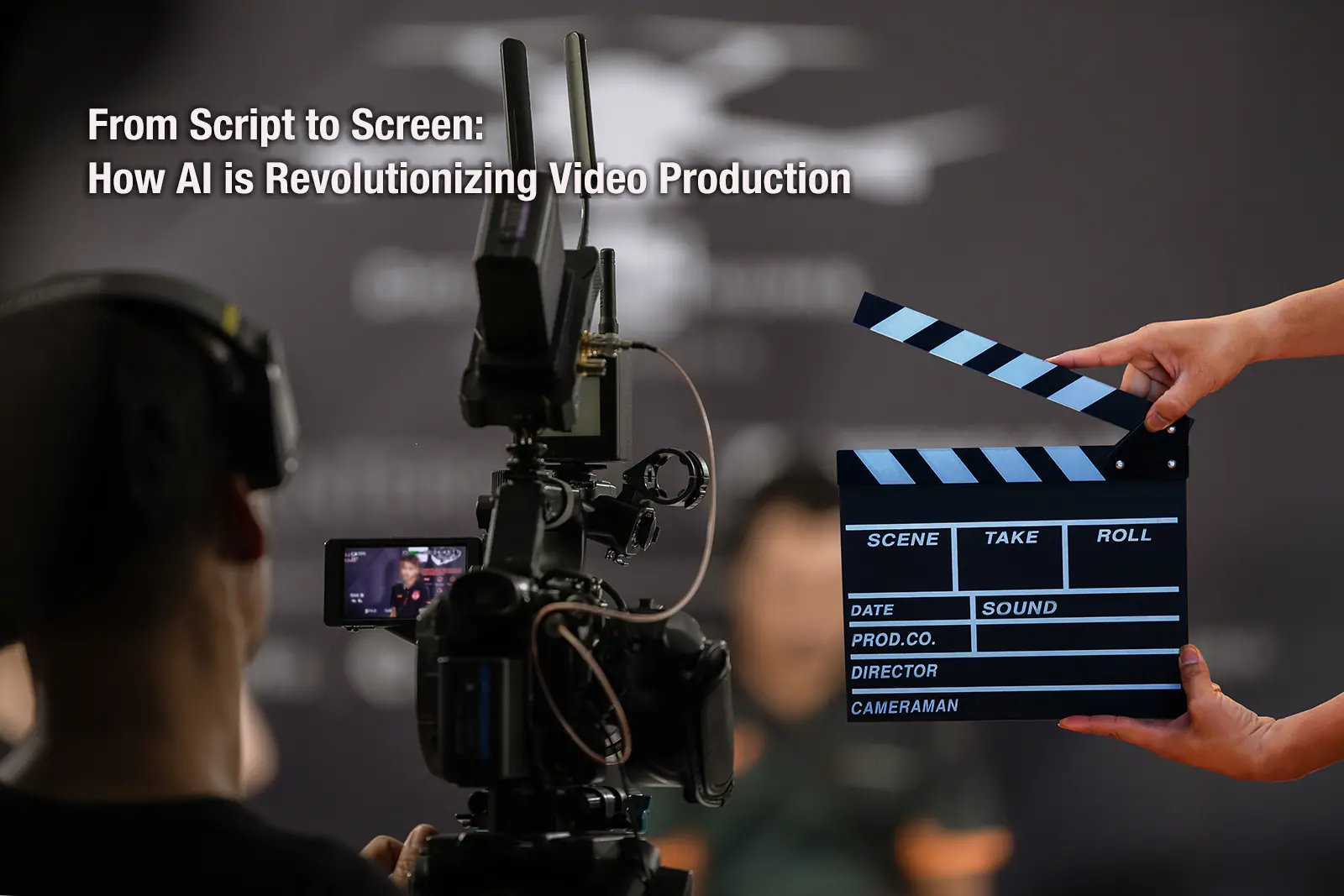
The film and video industry stands at a transformative crossroads. Artificial intelligence has progressed beyond simple automation tools to become a creative partner in the video production process. From generating storyboards and script suggestions to automated editing and 生成式 visual effects, AI systems now touch every stage of video creation. This transformation raises fundamental questions about the future of filmmaking, the role of human creativity, and what distinguishes authentic artistic expression from machine-generated content. As major studios and independent creators alike adopt AI tools, understanding this revolution becomes essential for anyone interested in the future of visual storytelling.
Introduction
For over a century, video production has been a labor-intensive process requiring massive teams of skilled professionals working tirelessly to bring stories to the screen. The traditional film production pipeline involves pre-production planning, scriptwriting, storyboarding, principal photography, post-production editing, visual effects, color grading, and final delivery—each stage demanding specialized expertise and significant resources.

Artificial intelligence is fundamentally disrupting this established workflow. What began with simple automated transcription and basic editing assistance has evolved into sophisticated systems capable of generating entire scenes, creating photorealistic digital actors, and producing theater-quality visual effects in a fraction of the traditional time and cost. This isn't merely about efficiency—it represents a qualitative shift in what's possible for storytellers with limited resources.
The AI Video Production Pipeline
Modern AI video production spans multiple stages, each with distinct capabilities and implications.
Pre-Production: AI as Creative Collaborator
Before a single frame is captured, AI systems now participate in the creative process. Script analysis tools can evaluate screenplays for narrative coherence, character development, and market appeal. These systems analyze thousands of successful films to identify patterns and suggest improvements.
Storyboard generation represents one of the most impactful pre-production applications. Traditional storyboarding required artists to manually sketch each scene—a time-consuming process that often became outdated as productions evolved. AI storyboard generators can now create hundreds of detailed scene compositions in minutes, allowing directors to visualize alternative approaches before committing resources.
| Traditional Approach | AI-Assisted Approach | Time Saved |
|---|---|---|
| Manual storyboarding (days-weeks) | AI generation (minutes-hours) | 80-95% |
| Script revision cycles (weeks) | Real-time analysis (seconds) | 90%+ |
| Location scouting (days) | Virtual scouting (hours) | 70%+ |
Production: Smart Capture and Enhancement
During principal photography, AI systems increasingly serve as intelligent assistants. Camera calibration automation ensures optimal exposure and focus across changing conditions. Real-time monitoring can flag potential issues before they require expensive reshoots.
AI-powered virtual production techniques have transformed studio filming. LED volumes with real-time rendering allow actors to perform against dynamic digital backgrounds that previously required expensive location shoots or elaborate set construction. This technology, pioneered on productions like "The Mandalorian," now appears across budget levels.

Post-Production: The Editing Revolution
Perhaps nowhere is AI's impact more visible than in post-production. Automated editing systems can now assemble rough cuts from raw footage based on narrative principles learned from thousands of films. While human editors remain essential for final artistic decisions, AI assistance dramatically accelerates the rough cut process.
Generative Video: The Frontier of Possibility
The most transformative development involves generative video—AI systems capable of creating new video content from text descriptions or reference images. Several approaches have emerged:
Text-to-video generation interprets descriptive prompts to create sequential imagery. Current systems produce results ranging from abstract animations to increasingly photorealistic scenes. Quality continues to improve, though significant limitations remain.
Image-to-video extension takes static images and animates them with plausible motion. A photograph of a cityscape might become a bustling urban scene; a portrait might display subtle movement and expression.
Video-to-video translation transforms existing footage into different styles or contexts. This ranges from simple aesthetic adjustments to complete re-rendering in different visual styles.
Current Capabilities and Limitations
| Capability | Status | Quality |
|---|---|---|
| Short clips (2-5 seconds) | Production-ready | Good |
| Feature-length generation | Experimental | Variable |
| Consistent character rendering | Improving | Moderate |
| Physical simulation | Limited | Challenging |
| Complex narrative coherence | Research stage | Developing |
The technology remains imperfect. Generating consistent characters across sequences—maintaining identical faces, costumes, and physical proportions—proves technically challenging. Physics-accurate simulation of water, fire, fabric, and complex interactions requires specialized solutions beyond current generative capabilities.
Industry Implications
Democratization of Production
AI video tools have dramatically lowered production barriers. Independent creators can now produce content that would have required major studio resources a decade ago. This democratization enables diverse voices and experimental approaches previously impossible.
A single creator with AI assistance can accomplish what once required dozens of specialists. This isn't about replacing human creativity but amplifying individual capability. The result is an explosion of video content across platforms.
Employment Transformation
The production industry faces significant workforce adjustments. Roles focused on repetitive technical tasks face automation pressure, while positions requiring artistic judgment, relationship management, and complex problem-solving remain valuable.
Many studios report hybrid workflows where AI handles technical execution while humans focus on creative direction. The most successful practitioners develop fluency with AI tools while cultivating distinctly human creative strengths.
Copyright and Authenticity
Generative video raises serious questions about authenticity and ownership. If an AI system creates based on training data from existing works, what rights do original creators hold? When a performance is synthesized rather than captured, who deserves credit?
These questions remain unresolved, with ongoing litigation and legislative debates. The industry awaits clearer frameworks defining permissible use and attribution requirements.
The Human Element
Despite remarkable AI capabilities, human creative vision remains essential. Current systems excel at execution based on provided direction but struggle with the conceptual leap that defines great storytelling—the unexpected insight, the emotional truth, the fresh perspective.
The most effective approach treats AI as a powerful tool in service of human vision rather than a replacement for human creativity. Filmmakers who understand this distinction leverage AI capabilities while contributing the irreplaceable human element that makes stories meaningful.
Conclusion
AI video production stands at an inflection point. Capabilities continue advancing rapidly, with new tools and approaches appearing regularly. The implications extend beyond efficiency gains to fundamental questions about creativity, authorship, and the nature of artistic expression.
For practitioners throughout the industry, the path forward involves embracing new capabilities while developing distinctly human creative strengths. The future likely involves increasingly powerful AI tools in the hands of more creators—democratizing production while requiring new forms of creative differentiation.
The script-to-screen pipeline will continue evolving. How the industry adapts to these changes—and how society resolves attendant ethical questions—will shape the future of visual storytelling for generations to come.
Related Articles
Anthropic's Revenue Surge to $2.5 Billion: How Claude Code Conquered the Developer Market
Anthropic has achieved an unprecedented $2.5 billion in annualized revenue, driven primarily by Claude Code's dominance in the AI coding assistant market. This article examines the factors behind Anthropic's rise, the competitive landscape, and what this means for the future of AI-powered software development.

Personalized Learning at Scale - The Transformation of Education in 2026
How AI is revolutionizing education through personalized learning, intelligent tutoring systems, and adaptive platforms.
Generative AI in 2026: From Experimentation to Enterprise Transformation
An in-depth look at how generative AI has evolved in 2026, with enterprises moving beyond proofs of concept to full-scale production deployments.