
Gen Z and AI: A Complicated Love Story
As Generation Z adopts artificial intelligence more than any other generation, complex feelings emerge—using AI frequently while expressing significant concerns about its impact on work, relationships, and their future.
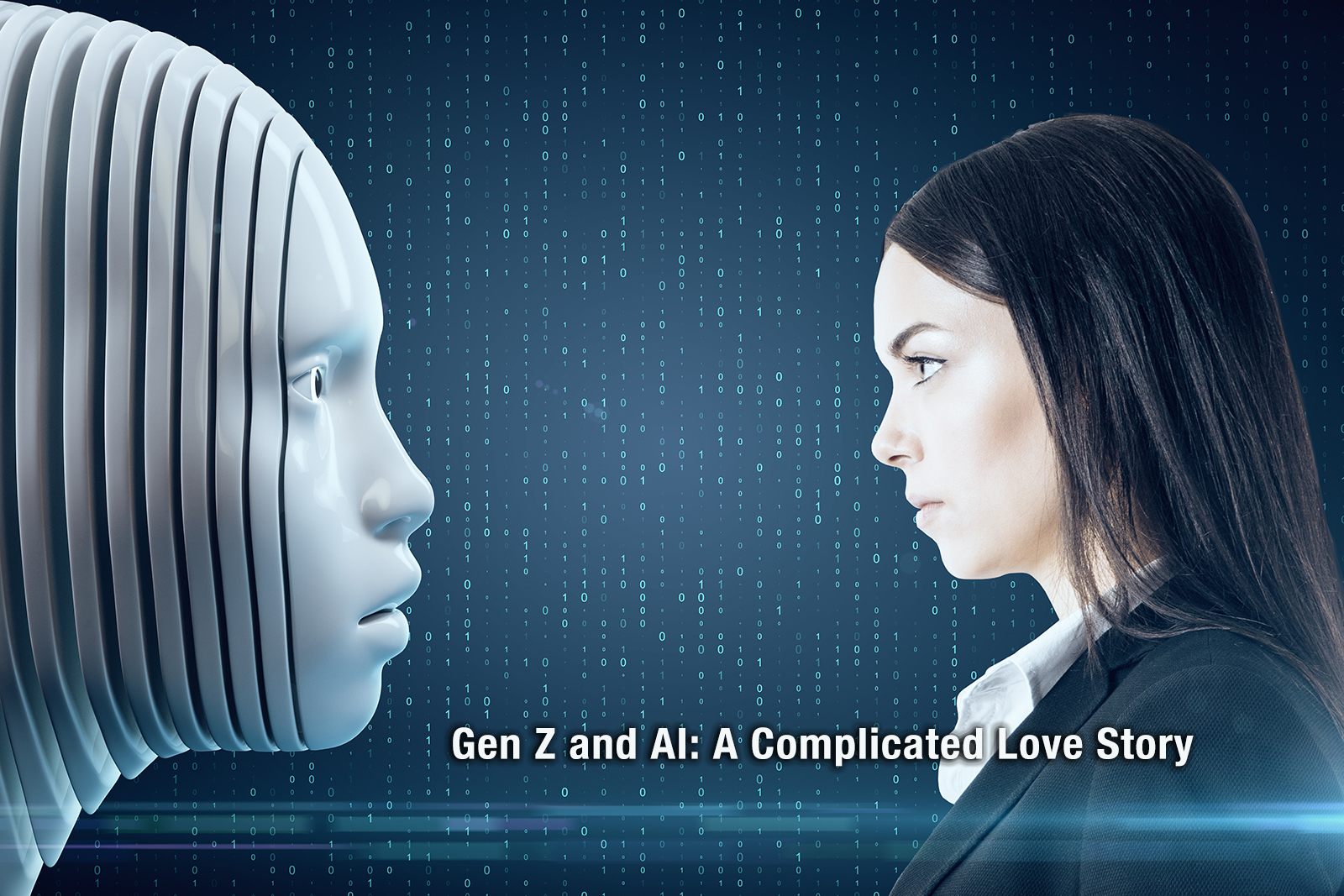
Generation Z uses artificial intelligence more extensively than any previous generation— integrating AI into homework, creative projects, career preparation, and daily life. Yet research reveals a complicated relationship: frequent adoption coexists with significant concerns about AI's impact on employment, authenticity, and human connection. This analysis examines how young people experience AI transformation, exploring both adoption patterns and the concerns that accompany them.
Introduction
Born between 1997 and 2012, members of Generation Z grew up with smartphones, social media, and constant digital connectivity. They're the first generation to have AI assistants as long as they can remember—and the first to face AI's transformation of work, creativity, and human interaction.
Recent research documents their complicated relationship with AI. They use it extensively. They express significant concerns. And they navigate daily between embracing capabilities and worrying about implications.
Adoption Patterns: How Gen Z Uses AI
Young people integrate AI into diverse life domains.
Academic Use
AI assists with research, writing, and learning. Students report using AI for homework help, essay writing, and exam preparation.
| Application | Reported Usage | Frequency |
|---|---|---|
| Homework help | High | Daily-weekly |
| Writing assistance | High | Weekly |
| Research | Moderate | Weekly |
| Learning | Moderate | Daily |
Creative Projects
Gen Z creators use AI for content creation—video, music, visual art, and writing. AI enables creative production that would otherwise require skills or resources they lack.
Career Preparation
AI assists with job applications, interview preparation, and skill development. Young job seekers leverage AI capabilities in their career searches.
Daily Life
AI assistants help with organization, decision-making, and task management. The integration extends beyond work into personal life management.
The Complicated Feelings
Research reveals complex emotional responses to AI adoption.
Convenience Appreciation
Young people genuinely appreciate AI capabilities. Efficiency gains, access to information, and creative assistance provide real value.
Authenticity Concerns
Despite heavy use, significant concerns emerge about authenticity. Is work "theirs" if AI contributes substantially?
Employment Anxiety
Perhaps most significantly, young people worry about AI's impact on their futures. What jobs will exist? How will they compete?
Relationship Impacts
Concerns about how AI affects human relationships. Are AI assistants replacing human connection—or enabling it?
The Authenticity Paradox
Gen Z faces a particular authenticity challenge.
Using AI While Rejecting It
Research documents young people using AI extensively while privately expressing reservations. The practical benefits conflict with authentic values.
Disclosure Decisions
When does disclosure matter? Young people navigate when to mention AI assistance—and when it feels like cheating.
Identity Formation
Authenticity during identity formation raises particular challenges. How do you develop an authentic voice when AI can produce "better" output?
Employment Concerns
Perhaps no domain generates more concern than employment.
Job Displacement Fears
Young workers worry about AI replacing human labor. Which jobs will survive? What skills provide security?
Skill Obsolescence
Skills that seemed valuable may become obsolete. How do you invest in development when the target keeps moving?
Competition Anxiety
Competing with AI-assisted workers creates anxiety. Those with AI access may have systematic advantages.
The employment concerns aren't abstract—they shape decisions about education, career preparation, and skill development.
Coping Strategies
Young people develop strategies for navigating their complex relationship with AI.
Selective Use
Many adopt selective approaches—using AI for some tasks while maintaining human execution for others based on perceived importance or authenticity concerns.
Transparency Choice
Some emphasize transparency—disclosing AI use openly. Others prefer privacy—using AI without acknowledgment.
Integration Approaches
Young people develop varied integration approaches ranging from heavy reliance to careful limitation.
Generational Perspective
Gen Z's relationship with AI differs from older generations.
Baseline Differences
Younger people simply expect AI availability. It's not an enhancement—it's a baseline assumption.
Fluency Advantages
Gen Z demonstrates AI fluency from constant exposure. This creates advantages in working with AI systems.
Formative Experience
Growing up with AI shapes relationship differently than adopting AI as an adult. It's normalization rather than disruption.
Implications for Organizations
Organizations seeking to employ Gen Z workers should understand their complicated relationship with AI.
Expectation Management
Young workers expect AI availability. Lack of AI tools may seem like deprivation.
Value Configurations
Meaningful work involves human contribution. Purely AI-facilitated work may feel less valuable.
Development Needs
Young workers want help navigating AI—understanding how to use it ethically, productively, and in ways that build rather than undermine their capabilities.
The Path Forward
Gen Z's complicated experience with AI offers lessons for all ages navigating this transformation.
Embrace the Tension
The tension between convenience and concern isn't resolvable—it needs managing. Acknowledging this complexity enables healthier relationships.
Foundational Values
Values around authenticity and human contribution remain important even with AI. Configuration—not elimination—of AI use preserves what matters.
Continuous Negotiation
Relationship with AI requires ongoing negotiation. What felt right last year may not feel right this year—and vice versa.
Conclusion
Generation Z's relationship with artificial intelligence exemplifies the broader human experience. They use it extensively because it provides real value. They concern themselves because they understand implications. And they navigate daily between appreciation and anxiety.
The appropriate response isn't judging their approach as inconsistent or their concerns as overblown. Rather, their experience offers a mirror for how all ages might approach AI transformation: openly, critically, and with attention to both capabilities and implications.
They are—the first generation to come of age with AI as a constant—pioneers in a relationship that all of humanity will negotiate in coming years. Their navigation offers lessons for the rest of us.
Related Articles
Anthropic's Revenue Surge to $2.5 Billion: How Claude Code Conquered the Developer Market
Anthropic has achieved an unprecedented $2.5 billion in annualized revenue, driven primarily by Claude Code's dominance in the AI coding assistant market. This article examines the factors behind Anthropic's rise, the competitive landscape, and what this means for the future of AI-powered software development.

Personalized Learning at Scale - The Transformation of Education in 2026
How AI is revolutionizing education through personalized learning, intelligent tutoring systems, and adaptive platforms.
Generative AI in 2026: From Experimentation to Enterprise Transformation
An in-depth look at how generative AI has evolved in 2026, with enterprises moving beyond proofs of concept to full-scale production deployments.