
AI Compiler Technology: Optimizing Model Execution for Production
How AI compilers bridge the gap between model development and efficient hardware execution, reducing latency and costs.
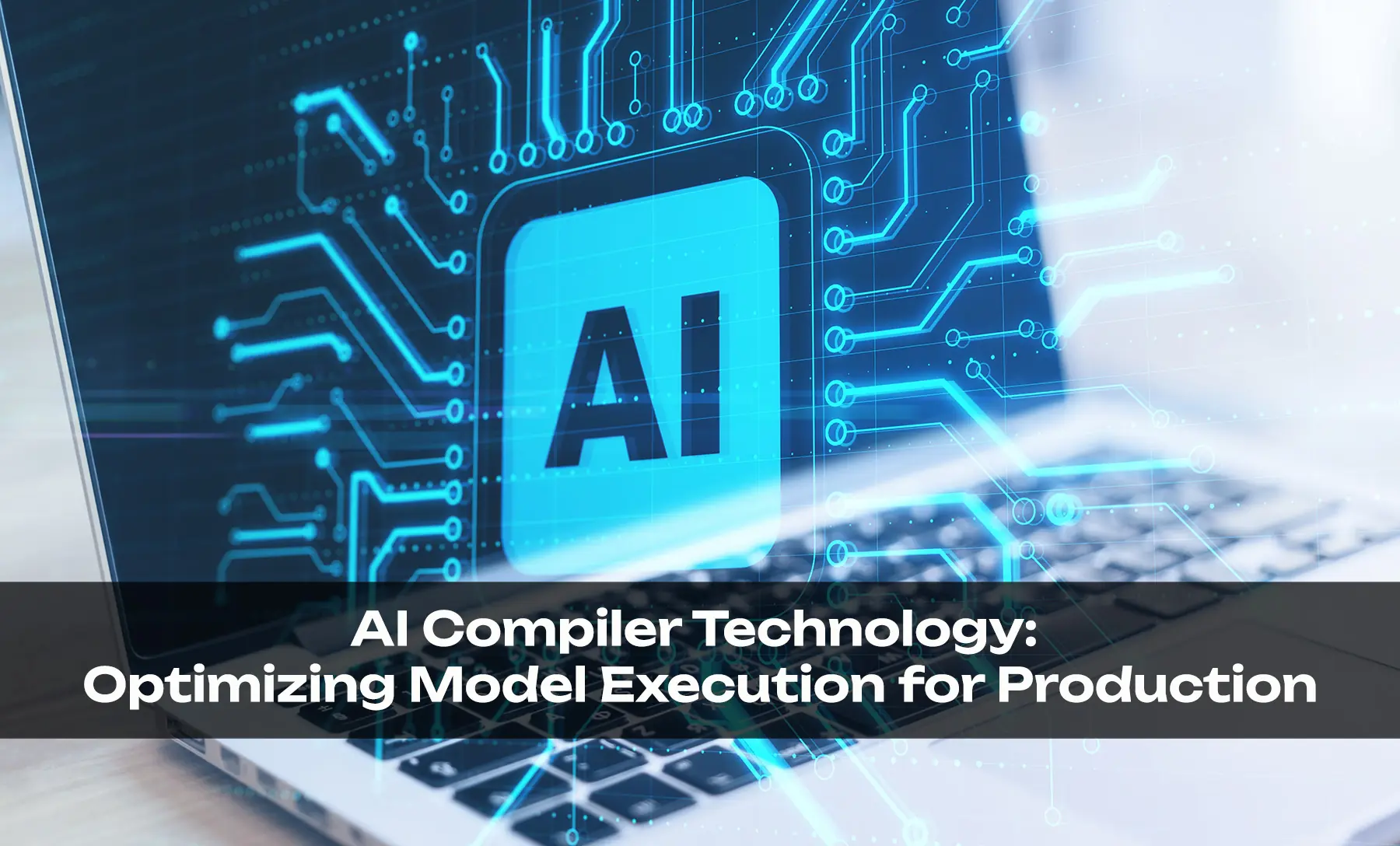
AI compilers represent a critical piece of infrastructure in the modern machine learning stack. These specialized tools transform trained neural network models into optimized execution plans that maximize hardware utilization while minimizing computational overhead. This article examines the architecture of AI compilers, their optimization techniques, and practical implementation strategies for production environments.
Introduction
As AI models grow in complexity and deployment scale, the need for efficient model execution has become increasingly critical. Traditional approaches of running models directly through frameworks like TensorFlow or PyTorch often leave significant performance on the table. AI compilers address this gap by analyzing computational graphs and generating highly optimized machine code tailored to specific hardware targets.
The landscape of AI compilation has evolved significantly, with tools like TensorRT, ONNX Runtime, and Apache TVM becoming essential components of production AI systems. Understanding these tools and their optimization strategies is crucial for engineers building scalable AI applications.
Understanding AI Compiler Architecture
Graph Representation and Optimization
AI compilers operate on intermediate representations (IR) that capture the computational structure of neural networks. This representation abstracts away framework-specific details, enabling optimization across different model formats.
| Component | Description | Function |
|---|---|---|
| Frontend | Model parsing | Converts TensorFlow/PyTorch models to IR |
| Optimizer | Graph transformation | Applies hardware-agnostic optimizations |
| Backend | Code generation | Generates target-specific executable |
| Runtime | Model execution | Manages inference lifecycle |
Key Optimization Techniques
Modern AI compilers employ multiple optimization strategies to improve inference performance:
Operator Fusion combines multiple operations into single kernels, reducing memory bandwidth requirements and kernel launch overhead. For example, consecutive convolution-bias-relu patterns fuse into a single optimized kernel.
Memory Planning optimizes buffer allocation and reuse, minimizing data movement between memory tiers. This is particularly important for GPU inference where memory bandwidth is often the bottleneck.
Quantization reduces numerical precision from FP32 to INT8 or other reduced formats, dramatically improving throughput while maintaining acceptable accuracy.
Popular AI Compilers Comparison
| Compiler | Primary Use Case | Strengths | Limitations |
|---|---|---|---|
| TensorRT | NVIDIA GPUs | Best-in-class GPU optimization | Vendor-locked |
| ONNX Runtime | Cross-platform | Broad hardware support | Moderate optimization |
| Apache TVM | Research/custom | Extreme flexibility | Steeper learning curve |
| OpenVINO | Intel hardware | Fast intro on CPUs | Limited hardware options |
Implementation Best Practices
Profiling Before Optimization
Always establish baseline performance metrics before applying optimizations. Use tools like NVIDIA Nsight Systems or PyTorch Profiler to identify actual bottlenecks rather than guessing.
Incremental Optimization
Apply optimizations progressively:
- Start with graph-level optimizations (operator fusion)
- Add quantization where accuracy permits
- Tune memory planning parameters
- Finally, explore hardware-specific tuning
Testing and Validation
Quantization and aggressive optimization can impact model accuracy. Implement comprehensive testing pipelines that compare output against baseline models with tolerance thresholds.
Conclusion
AI compilers have become indispensable for production AI deployments. By understanding their architecture and optimization techniques, engineers can achieve significant improvements in inference latency and throughput. The key is to approach optimization systematically, profiling first and applying incremental changes while validated against baseline accuracy requirements.
The field continues to evolve, with new tools and techniques emerging to address the growing demands of production AI systems. Staying current with compiler technologies is essential for building efficient, scalable AI applications.
Related Articles
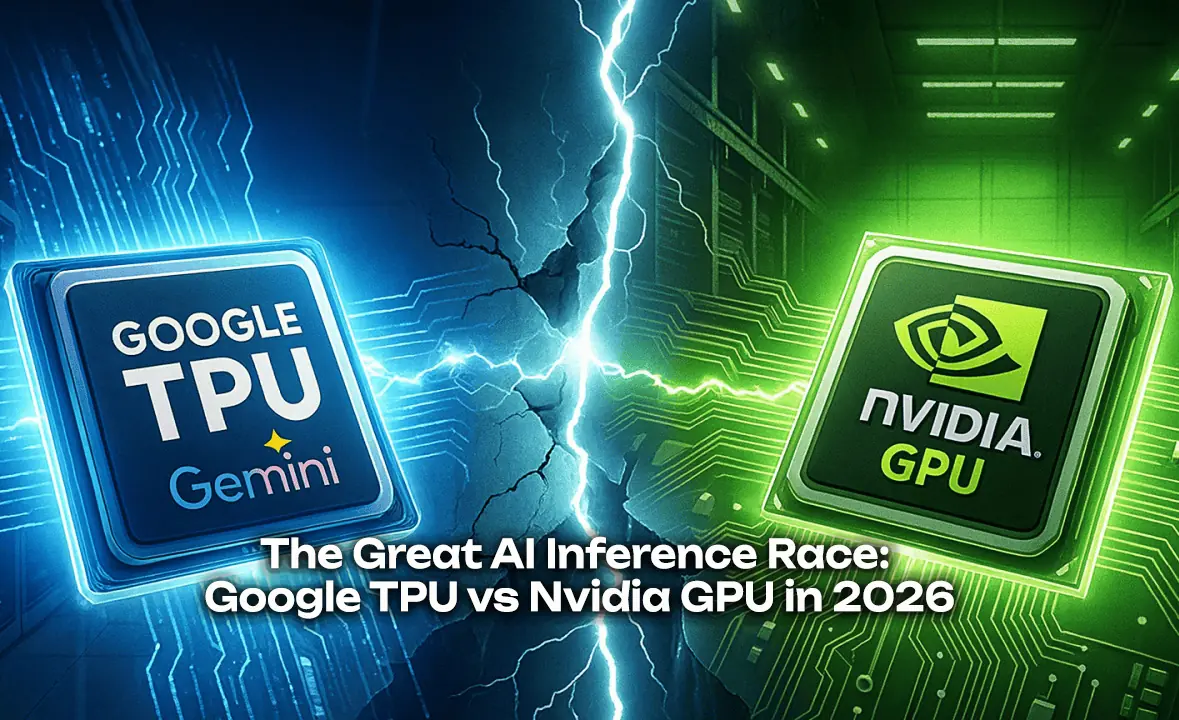
The Great AI Inference Race: Google TPU vs Nvidia GPU in 2026
An analysis of the competition between Google's Tensor Processing Units and Nvidia's graphics processors for AI inference workloads, examining performance, economics, and market dynamics.

Energy: AI Data Centers Driving Massive Natural Gas Infrastructure Buildout
AI companies are constructing enormous natural gas power plants to meet the exploding energy demands of data centers, raising environmental and climate concerns.
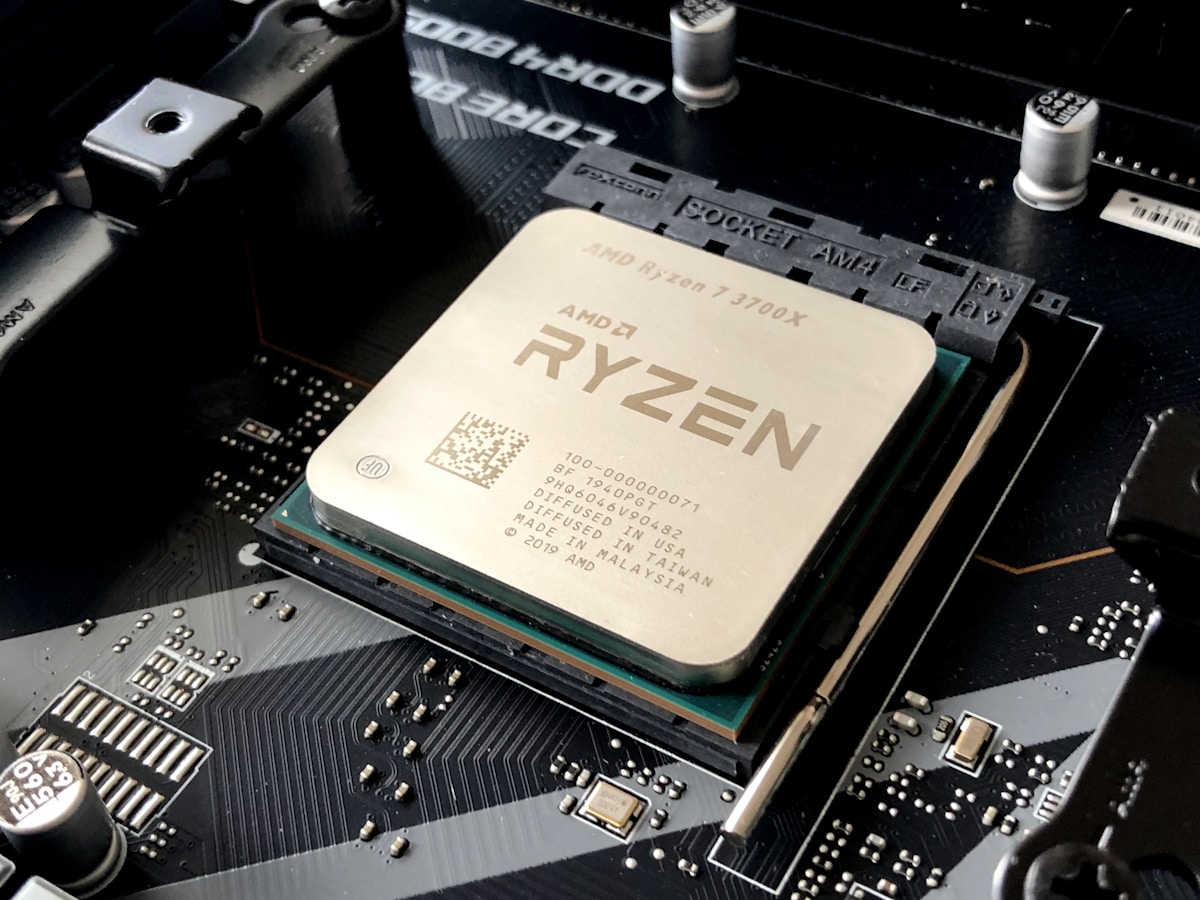
NVIDIA Blackwell Dominance: 80% Market Share and the AI Chip Race
NVIDIA maintains iron grip on AI accelerator market with 80% share while Blackwell architecture powers the AI factory era