
AI Agents: The Autonomous Future of Artificial Intelligence
Exploring AI agents—autonomous systems that can plan, execute, and adapt—revolutionizing how we interact with artificial intelligence.
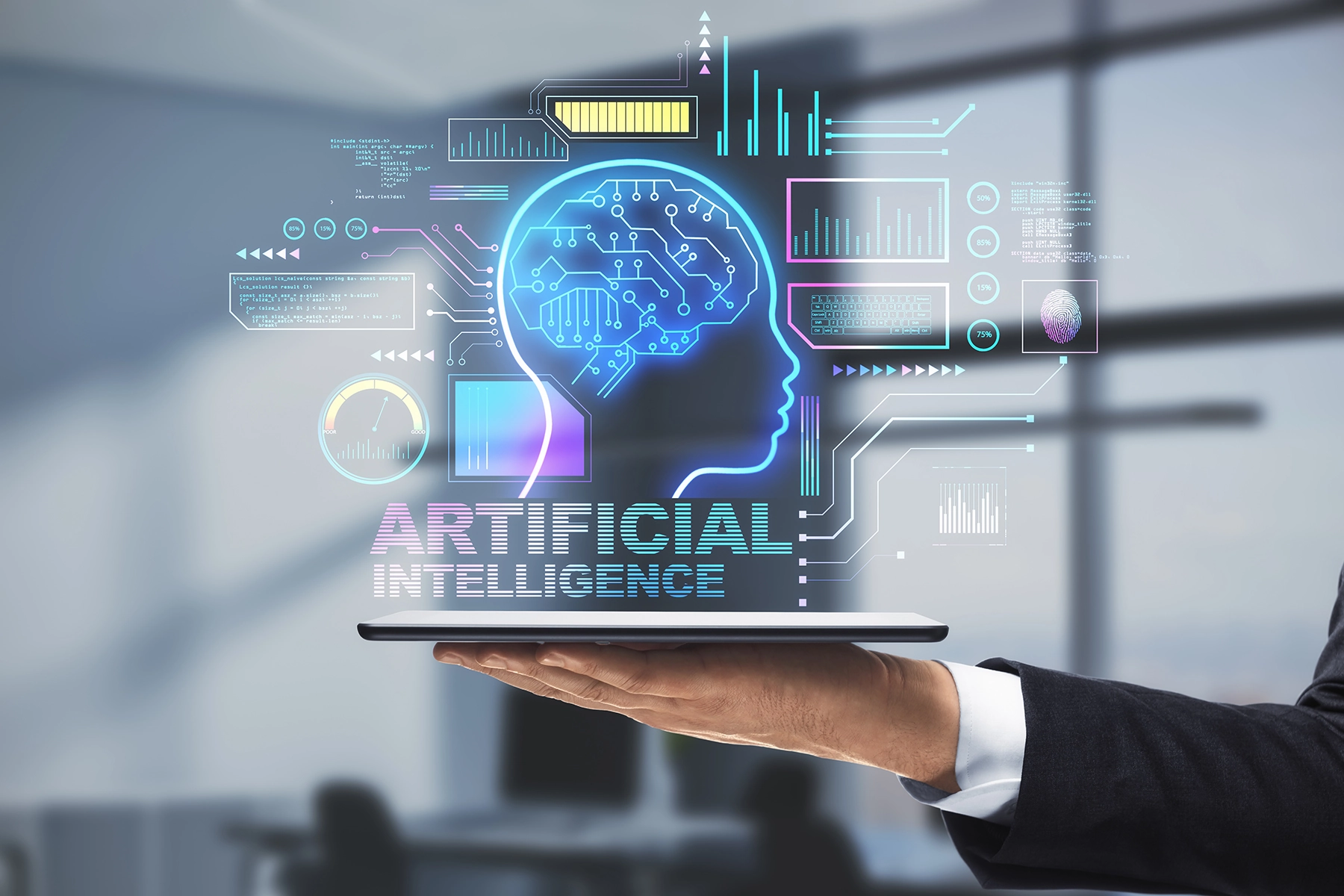
AI agents represent a fundamental evolution in artificial intelligence—moving beyond passive tools that respond to prompts toward autonomous systems that can plan, execute, and adapt. This article provides a comprehensive exploration of AI agents, their architecture, capabilities, applications, and implications for the future of human-AI interaction. As AI systems become more agentic, they promise to transform how we work, solve problems, and interact with technology.
Introduction
For decades, interacting with computers meant issuing explicit commands: click this button, run this program, enter this command. Even the most sophisticated AI systems have traditionally been reactive—responding to prompts but not taking initiative. This paradigm is shifting dramatically with the emergence of AI agents.
AI agents are AI systems that can autonomously plan and execute multi-step tasks to achieve goals. Unlike traditional AI that responds to single prompts, agents can break down complex objectives, create action plans, execute those plans, and adapt based on results. They can use tools, interact with external systems, and handle uncertainty and ambiguity.
The emergence of AI agents marks a significant shift in the human-AI relationship. Rather than serving as tools that require constant direction, AI agents become partners capable of independent action. This transformation has profound implications for productivity, automation, and the nature of work itself.
Understanding AI Agents
What Makes an AI Agent
An AI agent is characterized by its ability to operate autonomously toward goals. While definitions vary, several capabilities distinguish agents from traditional AI systems.
Goal-oriented behavior is fundamental. Agents don't just respond to prompts; they work toward objectives. Given a high-level goal like "plan a trip" or "research this topic," agents can determine necessary sub-tasks and work toward completion.
Planning and reasoning allow agents to break complex goals into manageable steps, reason about dependencies and constraints, and sequence actions appropriately. Modern agents leverage large language models for sophisticated reasoning about how to achieve objectives.
Tool use enables agents to interact with external systems. Agents can search the web, access APIs, manipulate files, run code, send messages, and perform actions beyond their internal processing. This extends their capabilities beyond what any single model can do.
Memory and context allow agents to maintain understanding across interactions. They can recall previous actions and decisions, build on prior work, and maintain coherent state over extended periods.
Learning and adaptation enable agents to improve over time based on experience. They can learn from feedback, adjust approaches, and become more effective at their tasks.
Agent Architecture
AI agents typically combine multiple components that work together to enable autonomous behavior.
The core model provides reasoning and decision-making capabilities. This is typically a large language model capable of sophisticated thought, though specialized models may be used for specific functions.
The planning module breaks down goals into actionable steps. This includes task decomposition, dependency management, and sequencing. Modern agents use sophisticated prompting techniques to structure reasoning.
The tool execution layer enables interaction with external systems. This includes function calling capabilities, API integrations, and feedback mechanisms that let agents understand the results of their actions.
The memory system maintains state across interactions. This includes short-term working memory for current tasks and long-term memory for accumulated knowledge and learning.
The reflection module enables agents to evaluate their own performance, identify errors, and adjust approaches. This metacognitive capability is crucial for reliable autonomous operation.
Types of AI Agents
Simple Reflex Agents
The simplest type of AI agent responds directly to stimuli based on predefined rules. These agents map situations to actions without considering history or future consequences. While limited, they form the foundation for more sophisticated agent architectures.
Model-Based Reflex Agents
These agents maintain internal models of the world, allowing them to consider how actions affect future states. They can plan more effectively by simulating potential outcomes before taking action.
Goal-Based Agents
Goal-based agents work toward specific objectives, considering different paths and selecting actions that move toward desired end states. They can evaluate trade-offs and make decisions based on long-term outcomes.
Utility-Based Agents
These agents evaluate multiple possible actions based on utility functions that quantify desirability of outcomes. They can balance multiple objectives and handle complex trade-offs.
Learning Agents
Learning agents improve their performance over time based on experience. They can adapt to new situations, refine strategies based on feedback, and develop new capabilities without explicit programming.
Multi-Agent Systems
Advanced systems involve multiple agents that can collaborate, compete, or negotiate with each other. Multi-agent systems can tackle problems that exceed the capabilities of single agents, distributing work and leveraging diverse expertise.
Applications of AI Agents
Software Development
AI agents are transforming software development. They can understand high-level requirements, generate code, debug issues, and manage entire development workflows. From writing functions to reviewing pull requests to deploying applications, agents are becoming capable developers.
Tools like AI coding assistants have evolved from simple autocomplete to sophisticated agents that can handle complex development tasks. These agents can work on multi-file projects, understand codebases, and execute multi-step development workflows.
Research and Analysis
Agents can conduct research across vast information spaces. They can formulate research questions, identify relevant sources, extract and synthesize information, and compile findings into reports. This dramatically accelerates knowledge work.
For complex analysis tasks, agents can gather data from multiple sources, apply appropriate analytical techniques, and present insights. They serve as powerful research partners, handling routine aspects while humans focus on interpretation and judgment.
Automation and Operations
AI agents enable sophisticated automation of knowledge work. They can handle complex workflows that previously required human judgment—processing documents, making decisions, coordinating with other systems.
In business operations, agents can manage supply chains, optimize processes, and handle customer inquiries. They combine the scalability of automation with the flexibility to handle exceptions and edge cases.
Personal Assistance
Personal AI agents are emerging as sophisticated digital assistants. They can manage calendars, coordinate communications, plan events, and handle various tasks on behalf of users. The vision is agents that can truly act as personal representatives, handling routine matters independently.
The Agentic AI Revolution
From Prompts to Partnerships
The shift toward agentic AI represents a fundamental change in human-AI interaction. Rather than constantly directing AI systems, users can delegate tasks and let agents work toward completion. This reduces cognitive load and enables more natural interaction.
This shift has implications across industries. Professionals can focus on higher-value work while agents handle routine tasks. Organizations can achieve more with available resources. Individuals can offload cognitive overhead to capable digital assistants.
Implications for Work
AI agents will significantly impact the nature of work. Many routine cognitive tasks will be automated—data analysis, report generation, scheduling, coordination. This shifts human work toward creativity, relationship-building, and judgment.
Yet the transition will be disruptive. Workers whose roles involve primarily routine cognitive tasks may need to develop new skills or transition to different roles. Organizations must manage this transition thoughtfully.
New Possibilities
Agentic AI enables new possibilities that weren't previously feasible. Complex multi-step tasks that required significant human coordination can now be handled autonomously. Systems can handle exceptions and edge cases without human intervention. Scale becomes easier to achieve.
This opens new business models and opportunities. Services that were previously impractical due to coordination costs become viable. Organizations can pursue opportunities that required capabilities beyond their resources.
Challenges and Considerations
Reliability and Trust
A key challenge for AI agents is reliability. Agents can make errors, take inappropriate actions, or fail in unexpected ways. Building systems that users can trust requires robust design, appropriate oversight, and clear communication about limitations.
Mechanisms for human oversight are essential. Users need visibility into agent actions and the ability to intervene when necessary. Agents should recognize uncertainty and seek human input for consequential decisions.
Safety and Control
Autonomous agents raise safety concerns. What happens when agents take unexpected actions? How do we ensure agents operate within appropriate boundaries? How do we maintain control over powerful AI systems?
These concerns require careful design. Agents should have clear boundaries on acceptable actions. They should be designed to be interpretable and controllable. They should be testable and verifiable to the extent possible.
Coordination and Alignment
Ensuring agent behavior aligns with human intentions is crucial. This includes both technical alignment (agents do what they're designed to do) and value alignment (agents pursue outcomes humans actually want).
The challenge is that human intentions are often implicit, ambiguous, or incompletely specified. Agents must handle this uncertainty while still acting effectively. This requires sophisticated reasoning about human values and preferences.
Economic and Social Impacts
The widespread deployment of AI agents will have significant economic and social impacts. These include disruption of labor markets, shifts in competitive dynamics, and changes in how value is created and distributed.
Societies must grapple with these impacts. Policies around education, employment, and economic security may need to adapt. The benefits and costs of agentic AI may not be evenly distributed.
The Future of AI Agents
Increasing Sophistication
AI agents will become increasingly capable. They will handle more complex tasks, reason more effectively, and operate more reliably. The boundary of what agents can accomplish will continue to expand.
This progression raises the stakes for addressing challenges around safety, alignment, and governance. As agents become more powerful, the potential for both benefit and harm increases.
Deep Integration
AI agents will become deeply integrated into daily life and work. Rather than separate tools, agents will operate continuously in the background, handling tasks, coordinating systems, and providing assistance as needed.
This integration raises questions about autonomy, privacy, and human agency. As agents take on more responsibility, humans must maintain appropriate control and ensure technology serves human interests.
New Human-AI Relationships
The emergence of capable agents will reshape human-AI relationships. Rather than users and tools, the relationship becomes more like principals and agents—or even partners. This requires new frameworks for thinking about these relationships and new practices for effective collaboration.
Conclusion
AI agents represent a transformative development in artificial intelligence—moving from reactive systems to autonomous actors capable of planning, executing, and adapting. The implications extend far beyond productivity improvements, fundamentally changing how we interact with technology and organize work.
The agentic AI revolution is just beginning. As capabilities advance and adoption spreads, agents will become increasingly integral to daily life and economic activity. Navigating this transformation successfully requires attention not just to technical capabilities but to the broader implications for individuals, organizations, and society.
The future of AI is agentic. Those who understand this shift and prepare for it will be well-positioned to thrive in the years ahead.
Related Articles
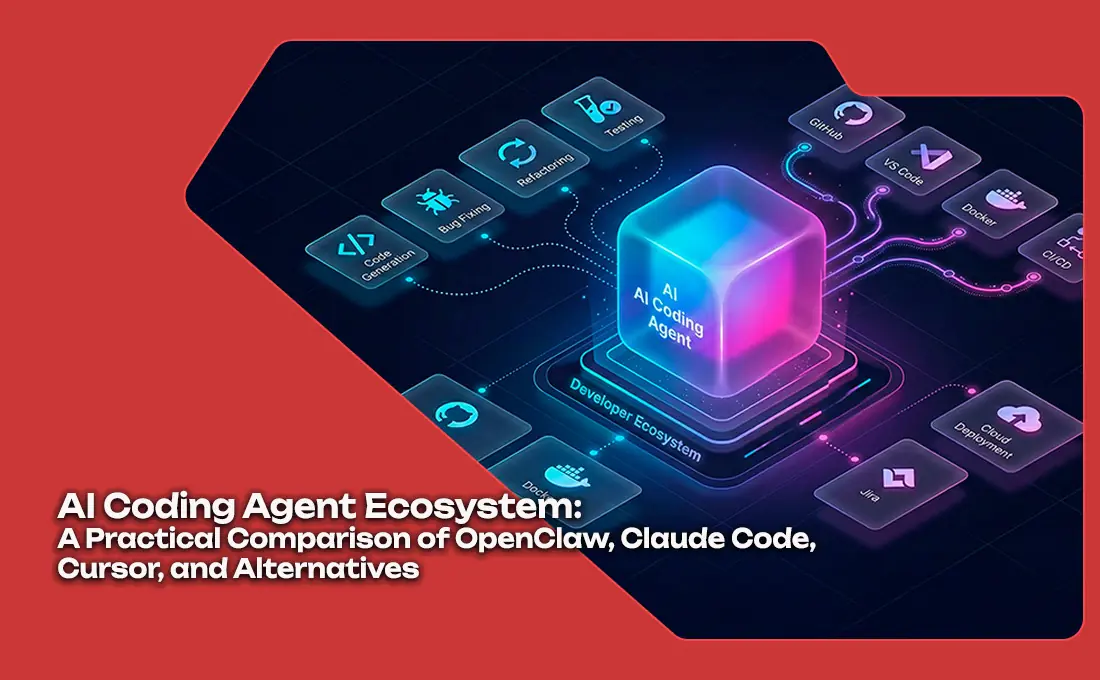
AI Coding Agent Ecosystem: A Practical Comparison of OpenClaw, Claude Code, Cursor, and Alternatives
A practical comparison of the leading AI coding agents in 2026, covering architecture, SWE-bench scores, pricing, and ideal use cases for each platform.
OpenClaw, Manus AI, and Claude Code – A Technical Decision Maker‘s Guide
In early 2026, AI agents have become core to enterprise digital transformation. But with options like OpenClaw (GUI automation), Manus AI (cloud orchestration), and Claude Code (developer copilot), how do you choose? This guide provides a systematic comparison and recommendations for eight key business scenarios, helping technical leaders avoid costly mistakes.
Claude vs GPT in 2026 - The AI Coding Assistant Battle Intensifies
As Anthropic's Claude Opus 4.6 challenges OpenAI's GPT-5.4 in coding benchmarks, the AI coding assistant market has become the most competitive segment in the AI industry. We analyze the technical and strategic differences.