
The Year Autonomous Humanoids Enter the Workforce
From Boston Dynamics' production-ready Atlas to Tesla's Optimus and Figure AI's humanoid robots, 2026 marks the transition from laboratory demonstrations to real-world workforce deployment.
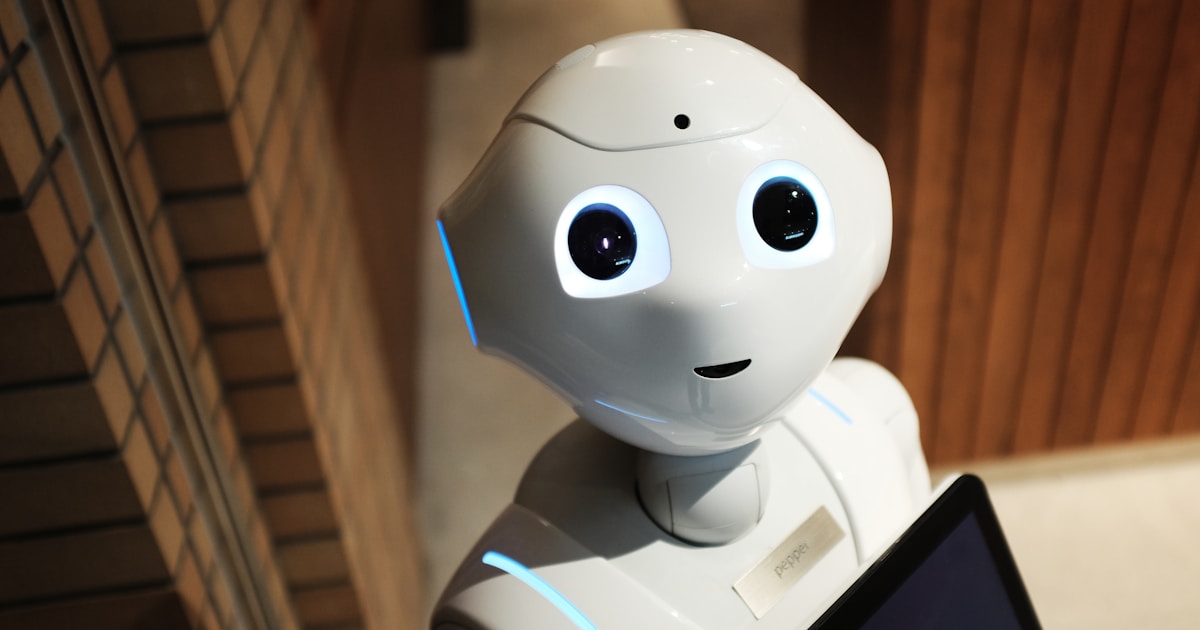
The humanoid robot industry has reached an inflection point in 2026. After years of development, demonstration, and incremental improvement, production-ready humanoid robots are finally entering the workforce. Boston Dynamics has begun shipping its Atlas robot to initial customers, Tesla continues advancing Optimus toward practical applications, and Figure AI has secured major partnerships for workplace deployment. This analysis examines the current state of humanoid robotics, the technological advances enabling mass deployment, and the implications for industries ranging from manufacturing to logistics.
Introduction
For decades, humanoid robots have captured the public imagination—from early science fiction to YouTube videos of robots stumbling through obstacle courses. However, the gap between impressive demos and practical applications has always seemed perpetually distant. Until now.
In 2026, that gap is closing rapidly. The convergence of advanced AI, improved actuator technology, mature perception systems, and lessons learned from decades of robotics development has produced robots capable of meaningful work. Companies are no longer asking whether humanoid robots will be practical, but rather when and where they will deploy first.
The Key Players
Boston Dynamics Atlas
Boston Dynamics has taken the lead in bringing humanoid robots to market:
Recent Milestones:
- Announced production version of Atlas at CES 2026
- Began initial shipments to early customers
- Transitioned from research platform to commercial product
Technical Capabilities:
- Advanced hydraulic actuators for powerful, dynamic movement
- Sophisticated perception system for complex environments
- Proven reliability from years of testing and iteration
- Human-like manipulation with high degrees of freedom
Target Applications:
- Construction and industrial inspection
- Search and rescue operations
- Warehousing and logistics
Tesla Optimus
Tesla's humanoid robot program continues to advance:
Development Approach:
- Leverages FSD (Full Self-Driving) AI and neural networks
- Applies automotive manufacturing expertise to robotics
- Targets cost-effective mass production
Current Capabilities:
- Walking and basic navigation
- Precise manipulation (egg-handling demonstrations)
- Task learning through imitation
Target Timeline:
- Internal use in Tesla factories by end of 2026
- External sales possibly by 2027-2028
- Price target: $20,000-$30,000
Figure AI
Figure has emerged as a significant competitor with practical focus:
Recent Developments:
- Partnership with BMW for manufacturing deployment
- $675 million funding round
- Focus on workplace tasks rather than flashy demos
Approach:
- Emphasis on practical, immediately useful capabilities
- Rapid iteration based on real-world feedback
- Partnerships with established manufacturers
Technology Comparison
| Feature | Boston Dynamics Atlas | Tesla Optimus | Figure 01 |
|---|---|---|---|
| Actuator Type | Hydraulic | Electric | Electric |
| Current Status | Production | Development | Pre-production |
| Target Price | $ousands+ | $20,000-$30,000 | Not disclosed |
| AI Integration | Advanced | FSD-derived | Proprietary |
| First Application | Inspection/Rescue | Internal factory | Manufacturing |
The Path to Practical Deployment
Technical Advances Enabling 2026 Progress
Several technological developments have made mass deployment possible:
Actuator Technology Modern actuators combine high power density with precise control:
- Electric motors with advanced gearing
- Series elastic actuators for safe human interaction
- Improved battery technology for extended operation
Perception Systems Advanced sensors and processing enable navigation in complex environments:
- LiDAR for precise 3D mapping
- Camera systems with AI processing
- Fusion of multiple sensor modalities
AI and Control Machine learning enables adaptive behavior:
- Reinforcement learning for task acquisition
- Imitation learning from human demonstrations
- Real-time adaptation to changing conditions
Deployment Challenges
Despite progress, significant challenges remain:
Reliability
- Continuous operation requirements
- Maintenance and repair capabilities
- Real-world vs. laboratory performance
Environment Adaptation
- Unstructured environments vs. controlled settings
- Handling edge cases and unexpected situations
- Integration with existing workflows
Cost
- Initial acquisition costs
- Total cost of ownership
- ROI justification for customers
Industry Applications
Manufacturing
The first major deployment sector is manufacturing:
Current Applications:
- Parts handling and assembly
- Quality inspection
- Machine tending
Early Adopters:
- BMW (Figure partnership)
- Tesla (internal use)
- Various logistics companies
Logistics and Warehousing
Significant potential exists for warehouse applications:
Tasks Suited to Humanoids:
- Order picking and packing
- Inventory management
- Loading and unloading
Advantages Over Existing Automation:
- Flexibility to handle varied tasks
- Ability to operate in human-designed environments
- Easier integration with existing workflows
Construction and Inspection
Dangerous or difficult environments benefit from humanoid deployment:
Applications:
- Structural inspection
- Hazardous material handling
- Search and rescue
Value Proposition:
- Reduce human risk
- Continuous operation in dangerous conditions
- Inspections in confined or elevated spaces
Market Dynamics
Investment Landscape
Significant capital is flowing into humanoid robotics:
| Company | Funding | Valuation |
|---|---|---|
| Figure AI | $675M+ | ~$2B |
| Boston Dynamics | Hyundai ownership | Strategic value |
| Tesla Optimus | Internal | Unknown |
| Various startups | Varies | Growing |
Competitive Dynamics
The field is consolidating around several approaches:
Full-System Vendors Companies building complete robot solutions (Boston Dynamics, Figure)
Component Suppliers Companies providing actuators, sensors, or AI (NVIDIA, various hardware vendors)
End-User Partners Companies integrating robots into operations (manufacturers, logistics firms)
Looking Forward: 2026 and Beyond
Near-Term Expectations
Q2-Q3 2026:
- Continued Atlas shipments to customers
- Progress on Optimus internal testing
- Additional Figure partnerships expected
Q4 2026:
- First operational deployments in manufacturing
- Performance data from early installations
- Refinement of business cases
Long-Term Vision
The ultimate vision is humanoids working alongside humans:
- Household assistance for elderly and disabled
- Full manufacturing automation
- Space exploration and colonization support
- Disaster response and recovery
Conclusion
2026 marks the beginning of the humanoid robot workforce. What was once science fiction is now becoming reality as companies translate decades of research into practical products. While challenges remain—cost, reliability, integration—the trajectory is clear.
For industries facing labor shortages and the need for increased automation, humanoid robots offer a compelling option. The ability to deploy robots designed to work in human environments, using human tools, and perform human tasks provides unique value that specialized automation cannot match.
The next few years will determine which applications prove most valuable and which companies capture the market opportunity. What is certain is that the workforce of the future will include a significant number of robotic workers—and that future begins in 2026.