
The Rise of AI Agent Marketplaces: A New Ecosystem Emerges
As autonomous AI agents become reality, a new marketplace ecosystem is emerging to connect AI developers with businesses seeking automation solutions.
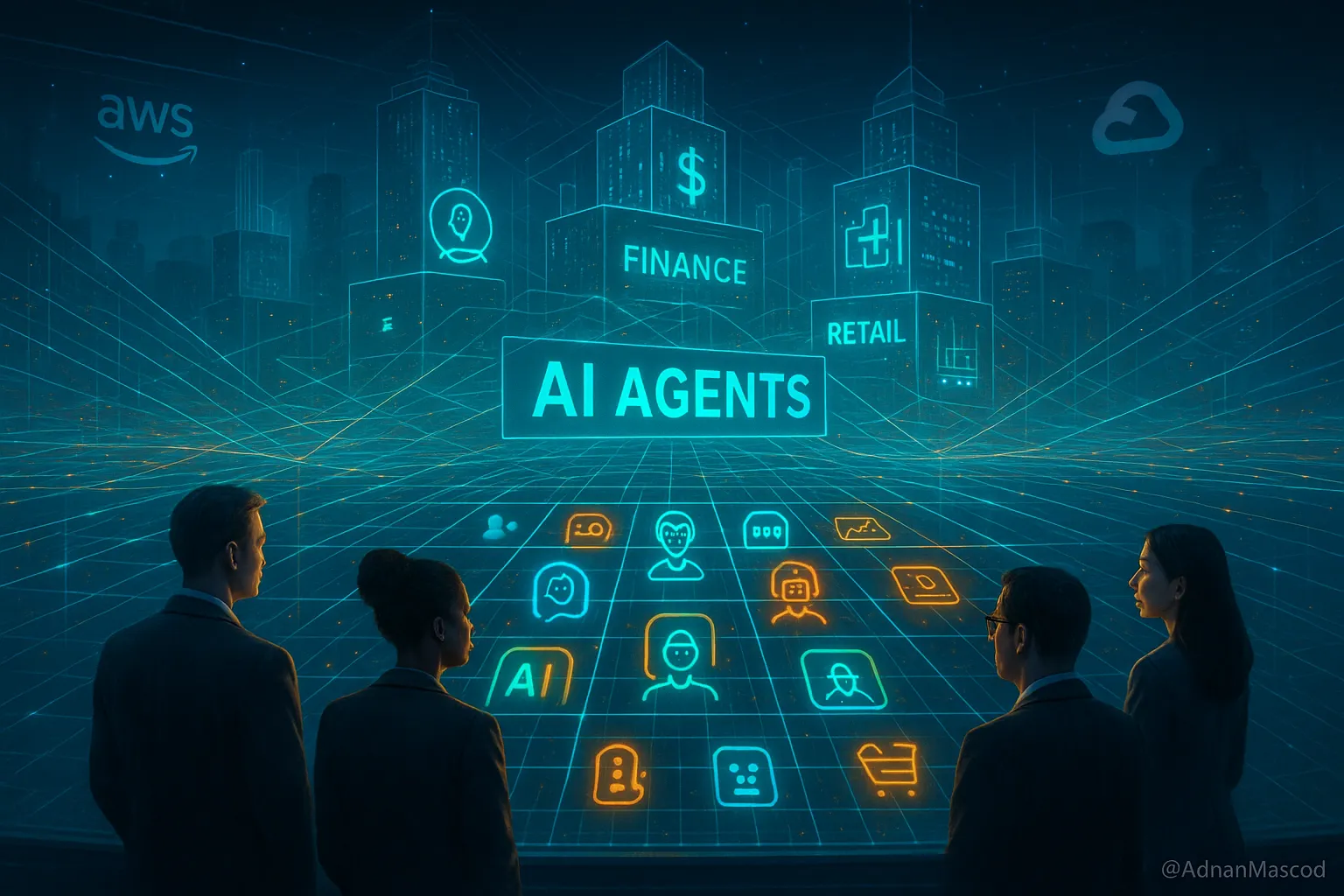
The AI industry is experiencing a fundamental shift: from static chatbots to autonomous agents capable of executing complex tasks. This transition is giving rise to a new business ecosystem—AI agent marketplaces—where developers can monetize their creations and businesses can find specialized automation solutions. This article examines the emergence of AI agent marketplaces, the economic dynamics driving their growth, and what they mean for the future of work and AI development.
Introduction
For years, the primary interface between humans and AI has been prompt-and-response. You ask a question, you get an answer. But a new paradigm is emerging: AI agents that don't just respond—they act. These autonomous systems can execute multi-step tasks, make decisions, and handle complex workflows with minimal human supervision.
This shift is creating new economic opportunities. Just as app stores democratized software distribution, AI agent marketplaces are emerging to connect AI developers with businesses seeking automation solutions. The result is a new ecosystem that could reshape how AI is developed, distributed, and monetized.
What Are AI Agent Marketplaces?
AI agent marketplaces are platforms where developers can publish and sell AI agents designed for specific tasks. Unlike traditional software marketplaces, these platforms offer AI that can execute actions autonomously:
Task-Specific Agents: The agents available are typically designed for specific use cases—customer service, data analysis, content creation, scheduling, and more.
Integration Capabilities: These agents are designed to integrate with existing business systems, connecting to APIs, databases, and workflow tools.
Autonomous Execution: Unlike chatbots that wait for input, agents can execute tasks proactively based on triggers, schedules, or ongoing instructions.
Customization: Many platforms allow buyers to customize agents for their specific needs, combining general capabilities with specialized knowledge.
The Market Landscape
The AI agent marketplace space is rapidly evolving:
Specialized Platforms: Numerous platforms have emerged focusing on specific verticals or use cases.
General Marketplaces: Larger platforms are offering agent listings alongside traditional software.
Developer Tools: Tools for building and deploying agents have grown alongside the marketplace concept.
Enterprise Solutions: Major enterprise software vendors are incorporating agent marketplace concepts into their platforms.
Economic Drivers
Several factors are driving the emergence of AI agent marketplaces:
AI Capability Advances: Modern AI models can handle complex tasks that previously required human intelligence, making agent-type applications feasible.
Automation Demand: Businesses increasingly seek automation for repetitive tasks, creating demand for ready-made solutions.
Developer Monetization: AI developers need ways to monetize their work beyond API access—marketplaces provide recurring revenue opportunities.
Lower Barriers: Building and deploying AI agents has become easier, enabling more developers to create and sell solutions.
Business Model Dynamics
The economics of AI agent marketplaces differ from traditional software:
Subscription Models: Many agents are sold through subscription pricing, providing recurring revenue for developers.
Usage-Based Pricing: Some marketplaces charge based on how much the agent does—tasks completed, API calls made, etc.
Commission Structures: Marketplaces typically take a percentage of transactions, creating sustainable business models for platforms.
Premium Add-ons: Developers can offer premium features or customization services on top of base agent functionality.
Use Cases Driving Adoption
Certain categories of agents are seeing particularly strong adoption:
Customer Service: Agents that handle common customer inquiries, process returns, and provide support.
Data Operations: Agents that collect, analyze, and report on business data from various sources.
Content Creation: Agents that generate marketing content, social media posts, and documentation.
Scheduling and Coordination: Agents that manage calendars, coordinate meetings, and handle logistics.
Research and Analysis: Agents that gather information, summarize findings, and prepare reports.
The Developer Opportunity
For AI developers, marketplaces represent significant opportunities:
Revenue Streams: Marketplaces provide ways to monetize AI capabilities beyond one-off projects or API access.
Distribution: Platforms handle marketing and customer acquisition, allowing developers to focus on building.
Validation: Success in marketplaces provides market validation that can attract investment or enterprise customers.
Community: Developer communities around marketplaces provide feedback, collaboration, and learning opportunities.
Enterprise Adoption Dynamics
Businesses are increasingly drawn to AI agent solutions:
Quick Implementation: Pre-built agents can be deployed faster than custom development.
Cost Efficiency: Subscription pricing can be more predictable than development costs.
Scalability: Agents can scale with business needs without additional hiring.
Continuous Improvement: Many marketplace agents improve over time as developers add features and fix issues.
Challenges and Concerns
The marketplace model faces significant challenges:
Quality Assurance: Ensuring agents perform reliably across different use cases and environments is difficult.
Security and Privacy: Agents often have access to sensitive business systems, raising security concerns.
Integration Complexity: Connecting agents to existing business systems can be more complex than expected.
Vendor Lock-In: Dependence on specific agents creates concerns about long-term viability and switching costs.
The Future Trajectory
The AI agent marketplace space is likely to evolve significantly:
Specialization: Expect more vertical-specific agents designed for particular industries or functions.
Composition: The ability to combine multiple agents for more complex workflows will improve.
Standards: Common standards for agent communication and interaction will emerge.
Regulation: Regulatory frameworks will develop to address concerns about agent behavior and accountability.
Competitive Dynamics
The marketplace space is becoming competitive:
Big Tech Entrants: Major platforms are entering the space, bringing established distribution and user bases.
Specialist Platforms: Focused platforms offer deeper capabilities in specific areas.
Open Source Alternatives: Open-source agent frameworks provide competition for commercial solutions.
Vertical Integrators: Companies building complete solutions rather than participating in marketplaces.
What This Means for Work
The rise of AI agent marketplaces has implications for the future of work:
Task Redefinition: The nature of work will shift as routine tasks become automated through agents.
New Roles: New roles will emerge around agent development, deployment, and management.
Productivity Gains: Organizations that effectively deploy agents may see significant productivity improvements.
Transition Challenges: Workers in roles most affected by automation will need to transition to new types of work.
Getting Started
For businesses and developers interested in participating:
For Developers: Start by identifying specific problems that agents could solve, build prototypes, and test with early users before launching on marketplaces.
For Businesses: Start with well-defined, lower-risk use cases, and ensure you have proper oversight and governance for agent deployment.
For Both: Engage with the growing community around AI agents to learn from others' experiences.
Conclusion
AI agent marketplaces represent a significant evolution in how AI is developed, distributed, and used. The emergence of this new ecosystem reflects both the increasing capability of AI systems and the growing demand for automation solutions in businesses worldwide.
For developers, marketplaces offer new opportunities to monetize AI capabilities and reach customers. For businesses, they offer access to powerful automation tools without the cost of custom development. For the AI industry as a whole, they represent a shift toward a more mature and diverse ecosystem.
The trajectory is clear: AI agents are becoming a major category of software, and marketplaces are becoming the primary distribution mechanism. Organizations that understand this shift and position themselves appropriately—whether as developers, buyers, or platform providers—will be best placed to benefit from the significant opportunities ahead.
The AI agent marketplace is not just a new business category—it's a sign of how AI itself is evolving from a tool that answers questions to a force that accomplishes tasks. This evolution will reshape industries, create new opportunities, and change how we think about work and automation in fundamental ways.
Related Articles

Apple's Gemini Deal: The Deepest AI Partnership in Tech History
Inside Apple's unprecedented deal with Google that gives Cupertino 'complete access' to Gemini for building on-device AI models.

Apple's Siri Revolution: Opening the Gateway to All AI Assistants
Apple's planned iOS 27 update will let users route Siri queries to any AI assistant, marking a fundamental shift from exclusive partnerships to platform strategy.

Google's TurboQuant: The 'Pied Piper' Algorithm That Could Transform AI Economics
How Google's new compression technology could reduce AI memory requirements by 6x and reshape the semiconductor industry.