
Apple's Gemini Deal: The Deepest AI Partnership in Tech History
Inside Apple's unprecedented deal with Google that gives Cupertino 'complete access' to Gemini for building on-device AI models.
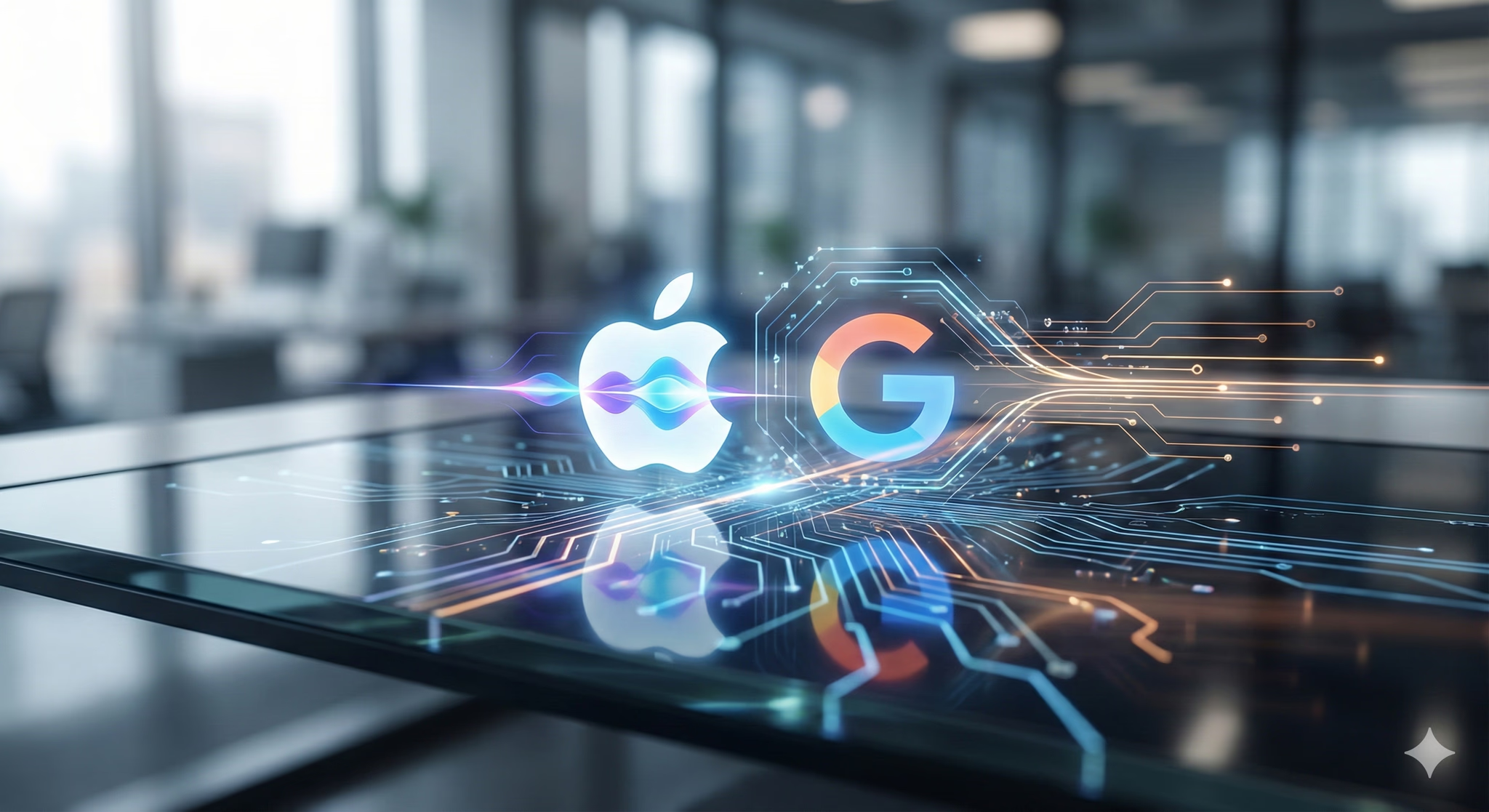
In January 2026, Apple and Google announced a multi-year AI partnership that shocked the technology world. Since then, new reporting has revealed the true depth of this arrangement: Apple has been granted "complete access" to Google's Gemini models, including the ability to distill the technology into smaller, task-specific models for on-device processing. This article examines what this partnership means for both companies, Apple's AI strategy, and the future of mobile AI.
Introduction
When Apple announced in January 2026 that it would integrate Google Gemini into Siri and other AI features, the deal was widely described as a licensing agreement. However, recent reporting by The Information has painted a dramatically different picture—one in which Apple has access to the very foundation of Google's AI capabilities.
The partnership represents the most significant collaboration between two tech giants in the history of the smartphone industry. It also raises profound questions about competitive dynamics, regulatory implications, and the future of on-device artificial intelligence. As Apple prepares to unveil its AI-powered Siri changes at WWDC 2026, the true scope of this arrangement is becoming increasingly clear.
The Structure of the Deal
Beyond Licensing
Unlike a typical licensing arrangement where one company pays to use another's technology, Apple's partnership with Google goes to the core of Google's AI research. The deal provides Apple with full access to Gemini models running in Google's data centers, giving Cupertino the ability to:
- Examine the internal workings of the models
- Modify how the models respond to specific queries
- Extract knowledge from the larger models to create smaller, specialized versions
- Customize outputs for Apple's specific use cases
This level of access is unprecedented in the history of AI partnerships. It effectively makes Apple a co-developer of the technology rather than simply a licensee.
Model Distillation: The Key Capability
Perhaps the most significant aspect of the partnership is Apple's ability to distill Google's models. Model distillation refers to the process of training a smaller model to replicate the capabilities of a larger one. This technique allows companies to maintain the advanced capabilities of large AI models while reducing the computational requirements needed to run them.
Apple plans to use this capability extensively. By distilling Gemini, Apple can create specialized models optimized for specific tasks that can run directly on iPhones. This approach addresses one of the biggest challenges in mobile AI: how to deliver sophisticated AI capabilities without requiring constant cloud connectivity.
The implications are substantial. An iPhone with a distilled Gemini model could perform complex AI tasks—language translation, image analysis, contextual suggestions—without sending data to external servers. This aligns with Apple's historical emphasis on privacy while delivering AI capabilities that were previously impossible on mobile devices.
Strategic Implications for Apple
Siri's Transformation
Apple's AI strategy centers on fundamentally reimagining Siri. The assistant, which has lagged behind competitors in recent years, is poised for a dramatic transformation powered by Gemini technology.
The new Siri will be able to handle more complex queries, maintain context across multiple interactions, and integrate more deeply with Apple's ecosystem of apps and services. Apple reportedly believes that Gemini's architecture is better suited to these tasks than its own internal models had proven to be.
WWDC 2026, scheduled for June 8, will serve as the public debut of these new Siri capabilities. Full rollout is expected alongside iOS 27 later in the year.
Competitive Positioning
The Google partnership represents a pragmatic acknowledgment that Apple could not match Google's AI capabilities through internal development alone. While Apple has made significant investments in its own AI research, the company recognized that achieving parity would require years of development—time it did not have as competitors pulled ahead.
By partnering with Google, Apple gains immediate access to state-of-the-art AI capabilities while continuing to develop its own underlying technologies. The partnership also provides Apple with flexibility: as its own models improve, it can potentially reduce its reliance on Google while still maintaining the option to leverage Gemini for specific use cases.
Privacy vs. Capability Balance
Apple has long positioned itself as a champion of user privacy. The Gemini partnership creates an interesting tension: how to offer cutting-edge AI capabilities while maintaining Apple's privacy commitments.
The solution lies in on-device processing. By distilling Gemini models to run locally on iPhones, Apple can deliver AI features without transmitting user data to external servers. This approach allows Apple to offer sophisticated AI while adhering to its privacy-first philosophy.
Strategic Implications for Google
The Apple Relationship
For Google, the Apple partnership represents both an opportunity and a risk. On the positive side, having Apple's massive user base running Gemini-powered features provides unprecedented distribution for Google's AI technology. Every Siri query on an iPhone becomes a showcase for Gemini's capabilities.
The partnership also validates Google's approach to AI development. Having Apple—the company that famously resists dependencies on third-party technology—choose Gemini as its foundation represents a significant vote of confidence in Google's research.
However, the deal also carries risks. By providing Apple with deep access to its models, Google is essentially teaching a potential competitor how to replicate its technology. Apple's stated goal of eventually creating its own models means that Google may be training its future competition.
The Android Competitive Dynamic
The Apple partnership also creates interesting dynamics in the broader smartphone market. Google now finds itself in the position of powering AI features on the primary competitor to its own Android platform. While Apple's AI features will be exclusive, the underlying technology is the same.
This dynamic raises questions about how Google will differentiate Android going forward. If Apple's AI capabilities powered by Gemini are substantially better than what Google can offer Android users directly, the platform advantage could shift in unexpected ways.
Technical Deep Dive: On-Device AI
The Challenge of Mobile AI
Running sophisticated AI models on mobile devices presents enormous technical challenges. Large language models typically require gigabytes of memory and substantial processing power—resources that are scarce on mobile devices.
Traditional approaches to mobile AI have relied on cloud-based processing: queries are sent to powerful servers, processed, and results are returned to the device. While effective, this approach introduces latency, requires internet connectivity, and raises privacy concerns.
Distillation as the Solution
Model distillation addresses these challenges by compressing the knowledge from large models into smaller packages that can run on consumer hardware. The process involves training a smaller model to mimic the outputs of a larger model, effectively transferring the "intelligence" into a more compact form.
Apple's use of distillation allows it to leverage Gemini's capabilities while creating specialized models optimized for mobile hardware. These distilled models can handle common tasks like language processing, image recognition, and predictive typing, while more complex queries can be forwarded to the cloud when necessary.
Future Directions
The partnership points toward a future where on-device AI becomes the norm rather than the exception. As distillation techniques improve and mobile hardware becomes more powerful, the range of tasks that can be handled locally will expand.
Apple's roadmap reportedly includes plans to gradually increase the sophistication of on-device AI capabilities. Over time, users may find that the majority of their AI interactions happen on their devices rather than in the cloud.
Market and Regulatory Considerations
Antitrust Scrutiny
The Apple-Google partnership is likely to attract regulatory attention. Regulators in the European Union and United States have increasingly scrutinized the relationship between the two companies, which already includes Google paying Apple billions annually to be the default search engine on iOS devices.
The AI partnership deepens this relationship significantly, potentially creating a more formidable duopoly in mobile computing. Regulators may question whether this partnership effectively locks out competitors and harms consumer choice.
Competitive Response
The partnership is likely to accelerate investments in alternative AI solutions. Microsoft, which has invested heavily in OpenAI, may see opportunity in offering AI capabilities to smartphone manufacturers seeking alternatives to Google. Amazon, with its Alexa ecosystem, represents another potential competitor.
The partnership may also drive consolidation in the AI chip industry, as companies seek to develop specialized processors optimized for on-device AI workloads.
Conclusion
The Apple-Google AI partnership represents a new paradigm in technology collaboration—one that transcends simple licensing to create a deep, strategic integration between two of the world's most valuable companies. For Apple, it provides a path to competitive AI capabilities without years of internal development. For Google, it offers unprecedented distribution while potentially training a future competitor.
As the partnership matures and Apple begins rolling out Gemini-powered features at WWDC 2026, the technology world will be watching closely. The success or failure of this collaboration will shape the future of mobile AI and potentially the entire smartphone industry. What is clear is that the days of viewing AI as a cloud-based service are numbered—on-device intelligence is the future, and this partnership is designed to bring that future to hundreds of millions of iPhone users.
Related Articles
The Rise of AI Agent Marketplaces: A New Ecosystem Emerges
As autonomous AI agents become reality, a new marketplace ecosystem is emerging to connect AI developers with businesses seeking automation solutions.

Apple's Siri Revolution: Opening the Gateway to All AI Assistants
Apple's planned iOS 27 update will let users route Siri queries to any AI assistant, marking a fundamental shift from exclusive partnerships to platform strategy.

Google's TurboQuant: The 'Pied Piper' Algorithm That Could Transform AI Economics
How Google's new compression technology could reduce AI memory requirements by 6x and reshape the semiconductor industry.