
The Agentic Revolution—How AI Is Transforming from Chatbot to Autonomous Worker
AI agents are moving beyond simple chat interactions to autonomously executing complex tasks, marking a fundamental shift in how humans work with artificial intelligence
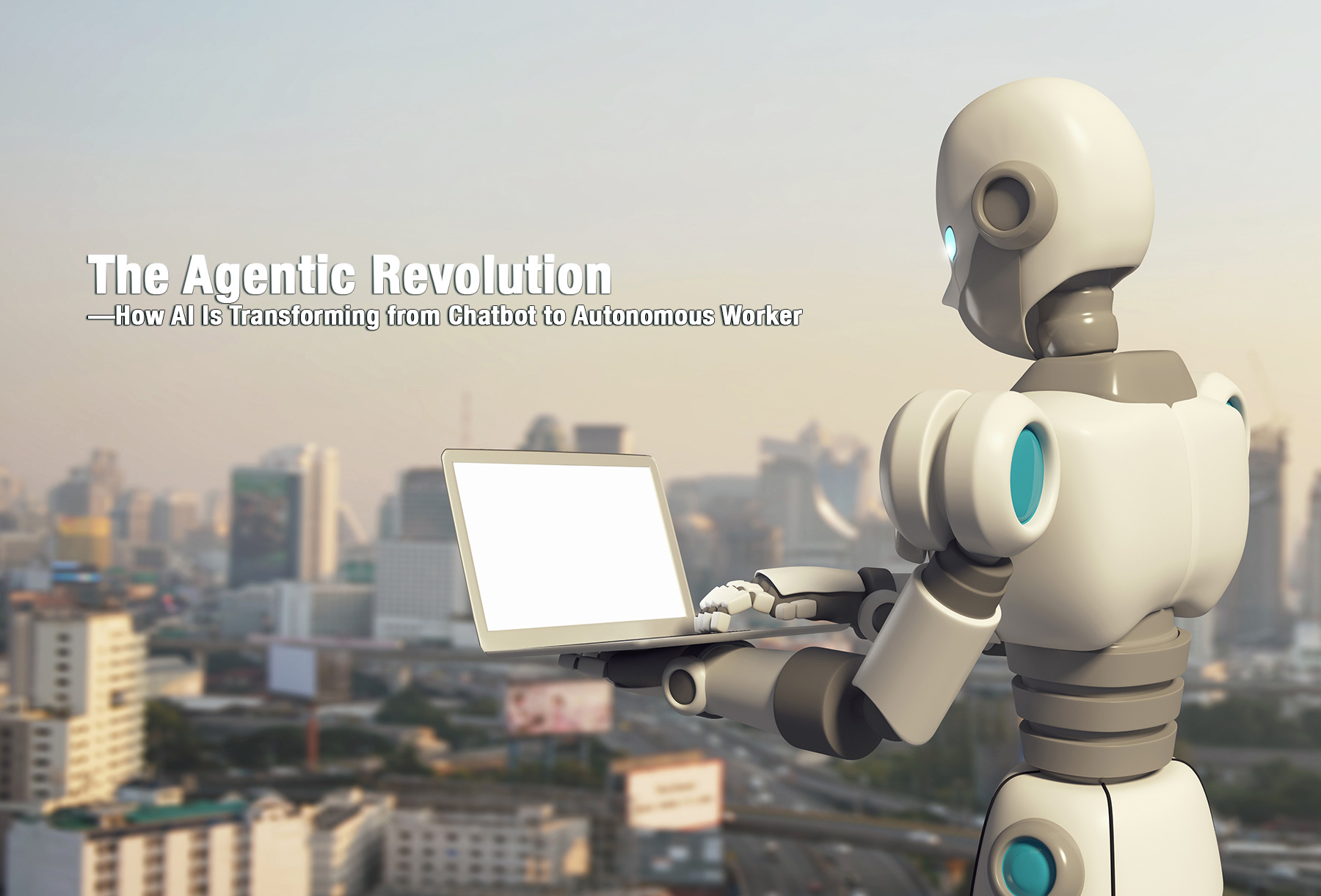
The AI industry is experiencing a fundamental transformation. After years of focus on improving conversational AI, the next frontier is autonomous agents—AI systems that can not only understand instructions but execute complex workflows independently. From code generation to research automation, AI agents are becoming capable of remarkable productivity. This analysis examines the current state of AI agents, the platforms enabling their development, and what this means for the future of work.
Introduction
For most of their existence, AI systems have been reactive—waiting for user input, processing requests, and responding. The shift to "agentic" AI represents a paradigm change: AI systems that can take initiative, plan multi-step actions, and execute complex workflows with minimal human intervention.
This transformation is not theoretical. It's happening now, across industries and use cases. In March 2026, the evidence of this shift is everywhere, from the platforms developers use to the tools enterprises deploy.
The Rise of Autonomous Agents
What Makes an Agent?
An AI agent differs from a traditional chatbot in several key ways:
- Initiative: Agents can take independent action rather than just responding
- Planning: They can break complex tasks into steps and execute them sequentially
- Tool Use: Agents can invoke external tools, APIs, and systems to accomplish goals
- Persistence: They maintain context across longer time horizons and multiple interactions
Current Capabilities
Modern AI agents can:
- Write and debug code: Entire software projects from specification to implementation
- Conduct research: Gather, analyze, and synthesize information from multiple sources
- Manage workflows: Coordinate multi-step business processes
- Interact with systems: Navigate software interfaces, fill forms, manipulate data
Platform Landscape
Leading Frameworks
According to recent analysis, several platforms are leading the charge in agent development:
- LangChain/LangGraph: Provides the building blocks for complex agentic systems
- AutoGen: Microsoft's approach to multi-agent collaboration
- CrewAI: Enables coordinated agent teams with specialized roles
- Phidata: Offers no-code solutions for faster deployment
Enterprise Adoption
Enterprises are increasingly deploying agents:
- Customer Service: Agents handling complex support tickets without human intervention
- Software Development: AI pairs and autonomous coding assistants
- Data Analysis: Agents exploring datasets and generating insights
The Business Impact
Productivity Transformation
The productivity implications are significant. When AI can execute workflows autonomously:
- Time Savings: Tasks that took hours take minutes
- Scale: Work that required teams can be done by individuals
- Consistency: Results are more uniform and predictable
New Categories of Work
Perhaps more importantly, agents enable entirely new categories of work:
- Continuous Monitoring: AI systems that watch processes and respond to changes
- Proactive Optimization: Agents that identify and implement improvements
- Complex Coordination: Managing multi-party workflows across organizations
Technical Challenges
Reliability
Agent systems introduce new failure modes:
- Error Propagation: A mistake in one step can cascade through subsequent steps
- Recovery: When agents fail, human intervention may be required to reset
- Validation: Verifying agent outputs requires new approaches
Security
Autonomous systems create new security considerations:
- Authorization: How much autonomy should agents have?
- Audit Trails: Understanding what agents have done
- Boundary Control: Preventing agents from taking unintended actions
The Human Factor
Augmentation vs. Replacement
The question on many minds is whether AI agents will replace human workers. The more accurate framing is:
- Augmentation: Agents dramatically increase individual productivity
- Role Evolution: Human work shifts toward oversight and creative direction
- New Skills: Working effectively with AI agents becomes essential
The Manager's Challenge
Managing AI agents requires new skills:
- Prompt Engineering: Specifying tasks clearly for agent execution
- Monitoring: Understanding agent behavior and intervening when needed
- Integration: Connecting agents to existing systems and workflows
Looking Ahead
The Path to More Capable Agents
The trajectory is clear: agents will become more capable and more autonomous. Key developments to watch:
- Longer Contexts: Agents maintaining coherence over extended periods
- Better Planning: Improved reasoning about multi-step workflows
- Tool Ecosystem: Growing library of tools agents can invoke
Enterprise Implications
Organizations should be preparing for an agent-centric future:
- Infrastructure: Building systems that can support agent deployment
- Governance: Developing policies for agent use
- Training: Preparing workers to collaborate with AI agents
Conclusion
The agentic revolution represents a fundamental shift in what AI can do. We're moving from systems that respond to prompts to systems that execute workflows. The productivity implications are enormous, but so are the challenges.
What's clear is that the chatbot era, while impressive, was just the beginning. The real transformation in how humans work with AI is just getting started. Organizations that understand this shift—and prepare for it—will be best positioned to capture its benefits.
Related Articles

The Rise of AI Agent Marketplaces: Platforms Reshaping Enterprise Automation
AI agent marketplaces are emerging as the new frontier in enterprise automation, enabling businesses to discover, deploy, and manage specialized AI agents for every business function.

AI Agent Security, Performance & Enterprise Deployment: The Deep Dive
we explored the fundamental philosophies behind OpenClaw, Manus AI, and Claude Code. Now it's time for the uncomfortable conversations — the ones every CTO and security lead needs to have before production deployment.
AI Agents: The Autonomous Future of Artificial Intelligence
Exploring AI agents—autonomous systems that can plan, execute, and adapt—revolutionizing how we interact with artificial intelligence.