
The New Sound: How AI is Transforming Music Creation and Production
Exploring how artificial intelligence is reshaping music—from composition assistance to production tools—and what this means for musicians, listeners, and the future of musical expression.
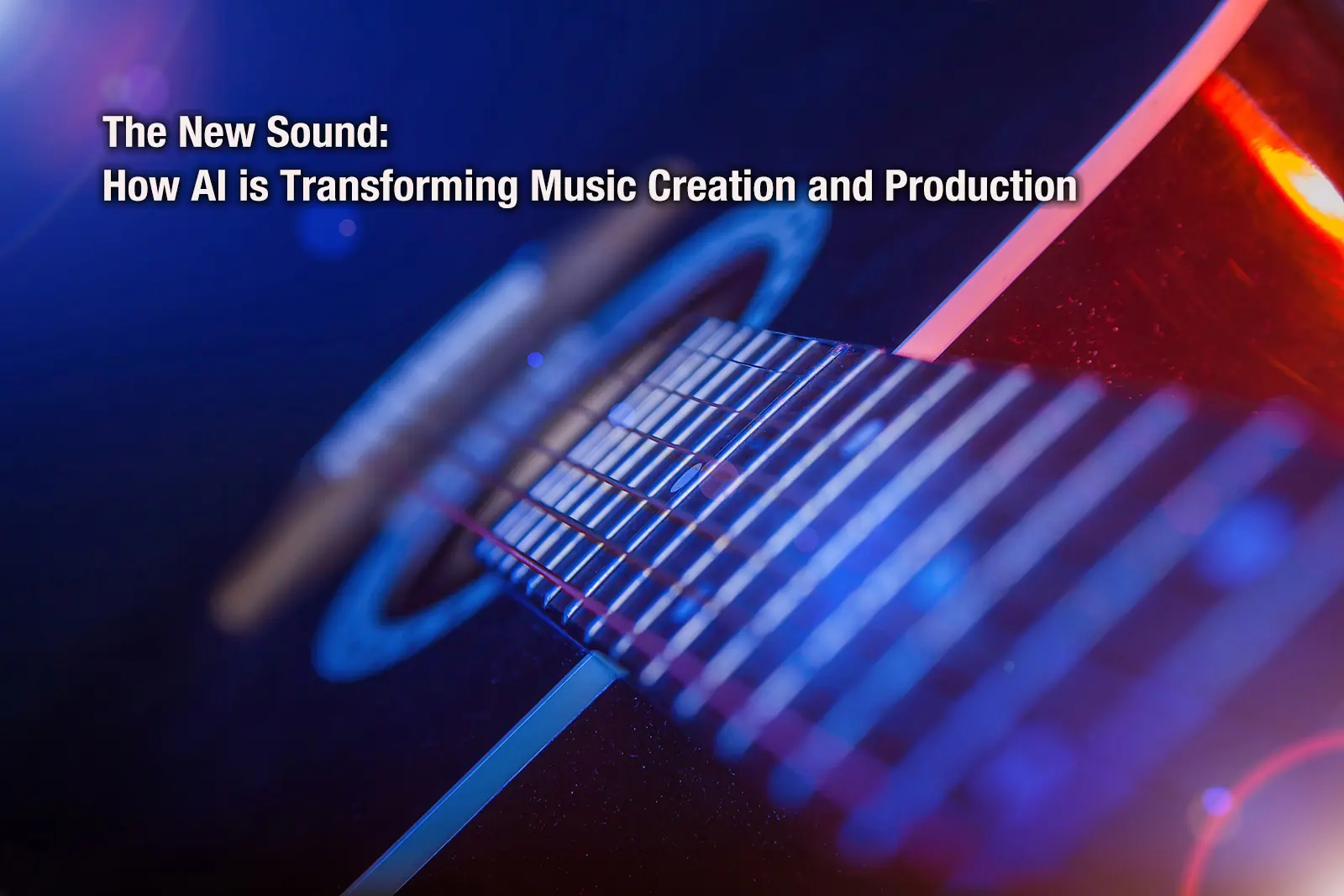
Music, among humanity's most ancient art forms, faces transformation through artificial intelligence. From composition assistance to production tools to performance synthesis, AI capabilities increasingly touch every aspect of music creation. This transformation raises fundamental questions about creativity, authorship, and the nature of musical expression. As AI music tools proliferate, understanding their potential and limitations becomes essential for musicians, producers, listeners, and anyone interested in music's future.
Introduction
Creating music has always involved technology. Instruments are technologies—tools that translate human intention into sound. Recording technology transformed music from ephemeral performance to reproducible artifact. Digital audio workstations revolutionized production.
Artificial intelligence represents the latest technological transformation. What's different now is that AI systems don't just assist human musicians—they can create music independently. AI-generated compositions compete with human music for listener attention. AI production tools achieve results that once required expensive studios and specialized expertise.

This transformation brings both opportunity and challenge. Musicians gain powerful new tools. Listeners access more music than ever. But questions arise about creativity, authenticity, and music's meaning when machines can create emotionally resonant sound.
AI Composition Systems
Composition—creating musical content—represents the most visible AI application in music.
How AI Music Generation Works
AI music systems learn from existing music, identifying patterns in melodies, harmonies, rhythms, and structures. Training typically involves extensive music databases spanning various styles and traditions.
Once trained, these systems can generate new music based on learned patterns. Some systems create music in specific styles; others blend influences. Some allow user control over various parameters; others produce relatively unconstrained output.
| Generation Approach | Capabilities | Limitations |
|---|---|---|
| Melody-focused | Generate melodic lines | Limited harmonic depth |
| Chord progression based | Create harmonic frameworks | May lack melodic interest |
| Full arrangement | Complete musical passages | Variable quality |
| Style Transfer | Render in specific styles | May lose originality |
Composition Assistance
Rather than fully automated composition, many tools assist human composers. These systems suggest melodic ideas, propose chord progressions, or generate instrumental arrangements based on initial human input.
This assistance accelerates the composing process. Musicians can explore more possibilities in less time. The ultimately released work remains human-created, with AI serving as a sophisticated suggestion engine.
CurrentCapabilities and Limitations
AI composition has achieved remarkable results in certain contexts. Simple loops, background tracks, and functional music can be generated effectively. Some AI-generated music has achieved commercial success.
However, significant limitations remain. AI systems struggle with long-form coherence—the ability to maintain musical ideas across extended compositions. They often produce derivative rather than truly original work. And they generally lack the cultural context and emotional depth that informs great music.
AI in Music Production
Beyond composition, AI increasingly assists music production—the process of creating polished recordings from musical performances.
Automated Mixing
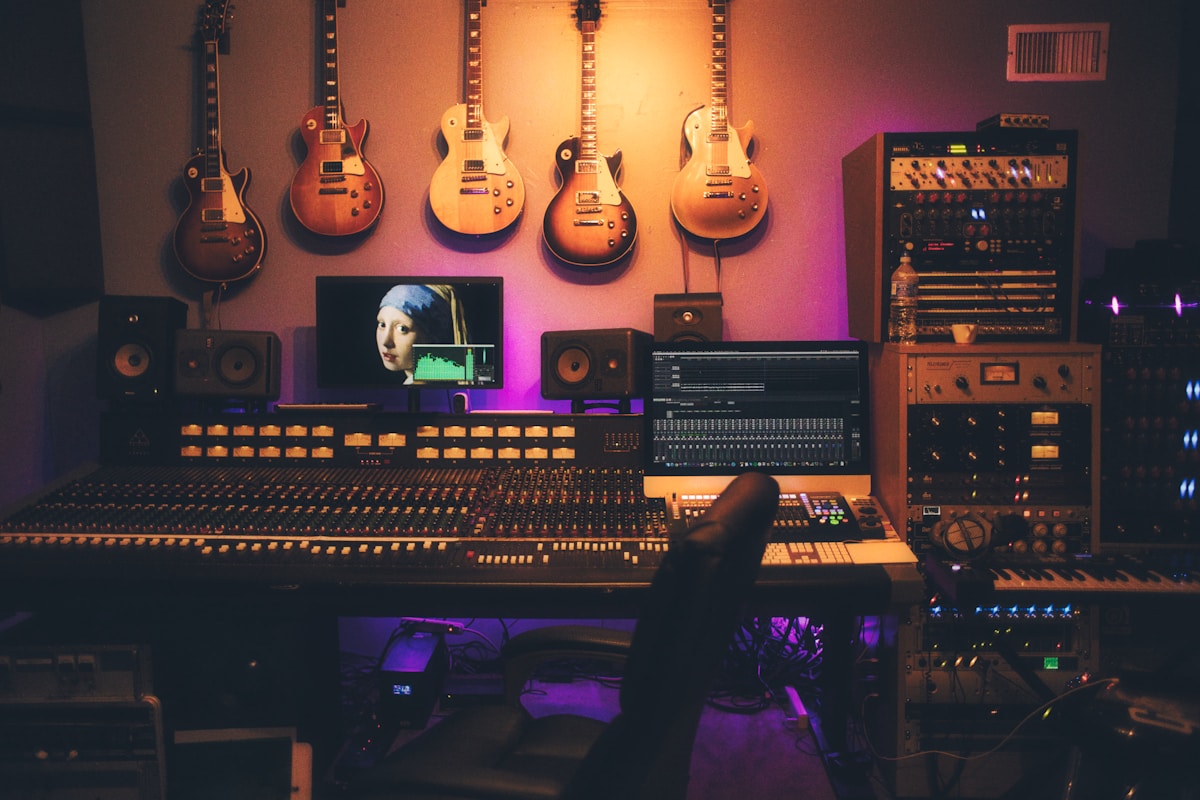
Mixing combines multiple recorded elements into coherent final tracks. AI mixing tools can analyze recordings and suggest or implement balanced mixes—adjusting relative volumes, panning, and processing for each element.
These tools democratize mixing quality. Previously, professional mixes required expensive equipment and extensive expertise. Now, AI-assisted mixing provides reasonable results for those without traditional studio backgrounds.
Mastering
Mastering prepares final mixes for distribution, applying processing that ensures consistent quality across playback systems. AI mastering systems can analyze reference tracks and apply similar processing, often achieving professional-sounding results.
This capability has particularly democratized production. Independent artists can release polished masters without expensive mastering engineers—expanding the possibility of professional-sounding releases.
Vocal Processing
AI vocal processing includes pitch correction, timing adjustment, and vocal effect application. These tools have long existed but have become significantly more sophisticated.
Current AI systems can correct timing and pitch while maintaining natural sound. They can generate harmonies from lead vocals, create group vocal effects from solo performances, and apply processing that once required specialized expertise.
Synthesis and Performance
AI synthesis creates sounds that never existed in recorded form—generating musical performances from written scores or even from no explicit source.
Virtual Instruments
AI virtual instruments generate sounds resembling acoustic instruments. More than simple samples or synthesis, these systems model the physical behavior of instruments, producing realistic performances with appropriate dynamics and articulations.
This technology enables previously impossible possibilities. Composers can hear full orchestral performances from MIDI input—without recruiting actual orchestras. This accelerates composition by enabling rapid iteration.
AI Performance
AI systems can interpret musical scores with sophisticated understanding of expression. Rather than mechanical playback, these systems apply musical understanding—phrasing, dynamics, articulation—conveying musical meaning.
The distinction between AI and human performance continues narrowing. Listeners often cannot identify AI-generated performances, and the best AI performances achieve genuine musical expression.
Voice Synthesis
AI voice synthesis has achieved remarkable results. Systems can generate singing voices matching specific characteristics—timbre, vibrato, style—from text input or even melodic notation.
This capability raises both possibilities and concerns. It enables creating vocal performances without singers. It potentially threatens singer livelihoods. And it creates deepfake concerns when used to generate performances by specific artists without authorization.
The Music Industry's Transformation
AI transforms not just how music is made but how the music industry functions.
Democratization
AI tools have dramatically democratized music production. What once required major label resources now requires laptop and appropriate software. This democratization expands who can participate in music creation.
The result is more music than ever before. Millions of releases annually represent unprecedented access—but also unprecedented competition for listener attention.
Role Changes
Traditional music roles face transformation. Session musicians, mix engineers, and mastering engineers all face varying degrees of AI competition. Roles requiring primarily technical execution face the most pressure.
Roles involving genuine creativity, relationships, and judgment remain valuable. The most successful musicians leverage AI while developing irreplaceable human creative strengths.
Business Models
Music industry business models evolve with AI capabilities. The value may shift from execution to curation, from creation to connection, from recordings to experiences. What listeners pay for continues evolving.
Successful artists adapt to changing value propositions. Pure audio recording may face pressure while unique experiences, artist relationships, and live performance may become relatively more valuable.
Authenticity and Creativity
AI music raises fundamental questions about authenticity and creativity.
What Makes Music Authentic?
When AI contributes to music creation, what makes the work authentic? When a system generates a composition, who is the artist—the system's creator, the human who selected from outputs, the training data contributors?
These questions remain contested. Different stakeholders hold different views, and the conversation continues.
Human Creativity
Some argue human creativity is irreplaceable—that music made by humans carries meaning that AI cannot replicate. Others argue creativity was always pattern manipulation—now performed by more sophisticated systems.
The most nuanced view often acknowledges both sides. AI can create music with certain qualities while humans contribute dimensions that remain distinct.
Copyright and Ownership
AI-generated music raises serious copyright questions. If AI systems trained on copyrighted music create new works, what rights do training data contributors hold?
Ongoing litigation continues working through these questions. Legislative attention follows. The industry awaits clearer frameworks.
| Stakeholder | Primary Concern |
|---|---|
| Musicians | Attribution, compensation |
| Labels/Publishers | Rights, revenue |
| Listeners | Transparency, value |
| Platforms | Liability, content |
| policymakers | Protection, innovation |
The Future of AI Music
AI music continues developing. Several directions seem likely:
Increasing sophistication will continue. AI music quality will improve, potentially reaching thresholds where distinctions matter less.
Human-AI collaboration may become standard. Rather than either AI or human creation, hybrid approaches may dominate.
New forms may emerge—music impossible without AI, whether because of complexity or because of sonic qualities impossible for humans to produce.
Regulatory frameworks will clarify rights and responsibilities, enabling more confident development and use.
Conclusion
AI transformation of music creation is underway. Composition, production, synthesis, and business models all incorporate AI capabilities. This transformation offers genuine benefits—democratized access, expanded possibility, new creative directions.
However, fundamental questions remain about creativity, authenticity, and value. The answers will emerge through ongoing experimentation, conversation, and conflict among stakeholders.
For musicians, the path forward likely involves leveraging AI capabilities while developing distinctly human creative strengths. What humans contribute—cultural context, emotional depth, meaningful relationships—remains valuable even as AI capabilities expand.
For listeners, more music is available than ever before. The challenge shifts from access to discovery—from finding music to finding the music that's meaningful. This curation challenge may become increasingly important.
Music has survived previous technological transformations—recording, synthesis, digital production. Artificial intelligence represents another transformation. How music adapts and evolves through this change will shape musical culture for generations to come.
Related Articles
AI Text-to-Speech: The Voice Revolution in 2026
How AI-powered voice synthesis is creating lifelike speech and transforming content creation
Claude Mythos 5: Anthropic's 10-Trillion Parameter Leap into Unknown Territory
An in-depth analysis of Anthropic's accidental leak revealing Claude Mythos 5, the world's first widely-recognized 10-trillion-parameter AI model, and what it means for the AI race.
GLM-5.1 vs GPT-5: China's Free AI Model Tops Coding Benchmark
GLM-5.1, a free open-source AI model from China, outperforms GPT-5.4 and Claude Opus 4.6 on SWE-Bench Pro coding benchmark. Built entirely on Huawei chips without US hardware.