
AI in NFL Draft Analysis: How Teams Are Using Artificial Intelligence to Find the Next Stars
Professional football teams are leveraging artificial intelligence and machine learning to analyze prospects, predict success, and gain competitive advantages in the NFL Draft.
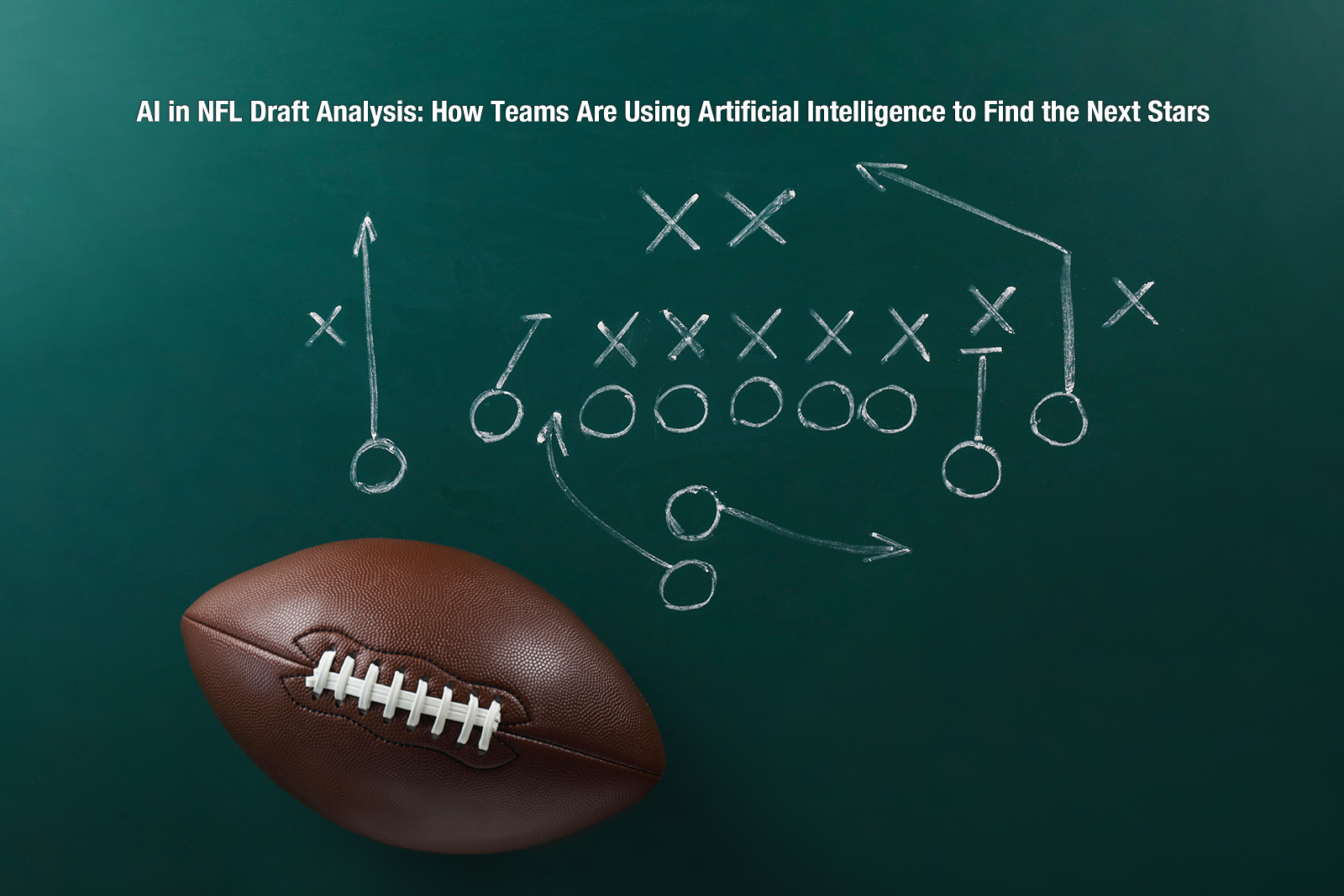
The NFL Draft represents one of the most high-stakes decision-making processes in professional sports, with teams investing millions of dollars in young talent based on incomplete information and subjective evaluations. Enter artificial intelligence—a transformative force that is fundamentally changing how teams identify, evaluate, and select prospects. This article explores the cutting-edge AI systems being deployed by NFL franchises to gain competitive advantages in the draft process.
Introduction
According to recent reports from ESPN and other sports outlets, artificial intelligence is pushing NFL draft preparation to "a different level." The integration of machine learning, computer vision, and predictive analytics into the scouting process represents a paradigm shift in how professional football teams approach talent acquisition.
The stakes could not be higher. A single draft mistake can cost a team millions in wasted salary cap space, set back a franchise's competitive timeline by years, and potentially cost general managers and coaches their jobs. In this high-pressure environment, AI provides a data-driven edge that can supplement—though not replace—traditional scouting expertise.
The AI Revolution in Scouting
Historical Context
Traditional NFL scouting has relied heavily on:
- Game Film Analysis: Manual review of hours of game footage
- Combine Testing: Physical performance metrics from the NFL Combine
- Interviews: Personal evaluations through formal interviews and informal conversations
- Medical Reviews: Injury history and physical examination results
- Intangibles: Leadership, work ethic, character assessments
While these methods remain valuable, they suffer from inherent limitations:
| Method | Limitation |
|---|---|
| Game Film | Subjective interpretation, limited sample size |
| Combine | Doesn't capture football-specific movements |
| Interviews | Social desirability bias, limited predictive power |
| Medical | Incomplete injury history, unknown future risk |
The AI Advantage
AI systems address these limitations by processing vast amounts of data that would be impossible for human analysts to examine:
Comprehensive Film Analysis: Computer vision systems can analyze every play a prospect has ever played, identifying patterns and tendencies invisible to the human eye.
Biomechanical Analysis: AI can break down an athlete's movement patterns to predict injury risk and project position-specific performance.
Predictive Modeling: Machine learning algorithms can identify characteristics correlated with NFL success based on historical data spanning decades.
Key AI Technologies in Use
Computer Vision and Film Analysis
Modern AI film analysis systems employ sophisticated computer vision techniques:
Pose Estimation: AI can track an athlete's body position frame-by-frame, identifying mechanical flaws or exceptional movement patterns.
Spatial Tracking: Systems can track exactly where players are on every play, measuring factors like acceleration, deceleration, and area of influence.
Play Recognition: Machine learning models can automatically categorize plays by formation, concept, and outcome—allowing scouts to quickly find relevant examples.
Comparative Analysis: AI can identify how a prospect's metrics compare to historical players at similar positions, providing comps that might take humans years to develop.
Predictive Analytics
Perhaps the most valuable application of AI is predicting NFL success:
Performance Projection: Models trained on decades of draft data can identify which college statistics translate to NFL production.
Injury Prediction: By analyzing movement patterns and injury history, AI can flag prospects with elevated risk profiles.
Character Assessment: Natural language processing can analyze interview transcripts, social media posts, and other text to assess personality traits.
Team Fit Analysis: AI can identify which prospects best match specific offensive or defensive schemes, improving draft value.
Implementation Across the League
Leading Teams
Several NFL franchises have become pioneers in AI scouting:
| Team | AI Implementation | Focus Areas |
|---|---|---|
| Philadelphia Eagles | Proprietary analytics department | Draft value modeling, contract optimization |
| Baltimore Ravens | Advanced scouting technology | Character analysis, scheme fit |
| San Francisco 49ers | Partnership with tech companies | Video analysis, injury prediction |
| Kansas City Chiefs | Internal ML models | Performance projection, trade value |
| New England Patriots | Data-driven approach | Statistical analysis, trend identification |
Technology Partnerships
The NFL has seen an influx of technology companies offering AI scouting solutions:
Second Spectrum: Provides advanced tracking and analytics for player movement Zebra Technologies: Supplies RFID tracking for precise player location data AWS: Offers cloud-based machine learning tools for predictive modeling Hawk Eye: Computer vision systems for detailed game analysis
The Human Element
Despite the sophistication of AI systems, human judgment remains crucial:
What AI Can't Measure
Leadership: The intangible quality that makes teammates better remains difficult for AI to quantify.
Clutch Performance: How players perform in high-pressure situations transcends statistical analysis.
Motivation: Drive and determination that shows up in practice but not games remains a human assessment.
Team Chemistry: How a player will fit into a specific locker room is a nuanced evaluation.
The Hybrid Approach
The most successful teams are integrating AI as a tool to augment—not replace—traditional scouting:
- AI identifies candidates that might be overlooked by traditional methods
- Scouts focus their attention on high-value prospects identified by algorithms
- Human evaluation remains final for subjective qualities AI cannot measure
- Post-draft analysis refines models based on actual career outcomes
Ethical Considerations
Fair Play Concerns
The use of advanced AI in sports raises important questions:
- Competitive Balance: Do teams with more resources have unfair advantages?
- Data Privacy: What are the ethical limits on analyzing players' personal data?
- Algorithmic Bias: Could AI systems perpetuate existing biases in player evaluation?
The Integrity Question
Some worry that over-reliance on AI could:
- Reduce the human element that makes sports compelling
- Create arms race dynamics that disadvantage smaller-market teams
- Lead to systems that can be gamed by savvy prospects
Future Implications
Emerging Technologies
The next frontier of AI in NFL scouting includes:
Generative AI: Creating realistic practice scenarios to test player decision-making
Digital Twins: Building comprehensive virtual models of prospects for scenario testing
Neural Interfaces: Future possibilities include direct brain-computer interfaces for performance analysis
Real-time Analysis: Instant AI evaluation during pre-draft visits and workouts
Impact on the Draft
As AI becomes more sophisticated, expect to see:
- Reduced importance of traditional metrics as AI finds better predictors
- More trades as AI identifies value discrepancies between teams
- Earlier picks for higher-ceiling prospects as AI better projects potential
- Surprise selections when AI identifies value in overlooked prospects
Conclusion
The integration of artificial intelligence into NFL draft analysis represents a fundamental transformation in how professional football teams evaluate talent. While AI will never fully replace the human element of scouting—the intangibles, the interviews, the gut feelings that come from decades of experience—it provides an unprecedented tool for identifying value, predicting success, and making more informed decisions.
The teams that most effectively blend AI capabilities with traditional scouting expertise will likely gain the most competitive advantage. As one league executive told ESPN, AI has pushed draft preparation to "a different level"—and that level will only continue to rise.
The question is no longer whether to use AI in NFL scouting, but how to use it most effectively. The franchises that answer that question correctly will build the next generation of championship teams.
Related Articles
AI Audio & Speech Processing: Breaking Language Barriers with Near-Human Quality
How speech-to-speech translation and voice synthesis technologies are reaching near-human quality, transforming communication across languages and accessibility boundaries.
AI Emotional Intelligence & Affective Computing: The Rise of Empathetic Machines
Exploring how affective computing advances are enabling AI systems to recognize and respond to human emotions, transforming healthcare, education, and customer service.

AI in Healthcare: The Medical Revolution of 2026
How artificial intelligence is transforming diagnosis, treatment, and patient care in modern medicine