
AI in Healthcare: The Medical Revolution of 2026
How artificial intelligence is transforming diagnosis, treatment, and patient care in modern medicine
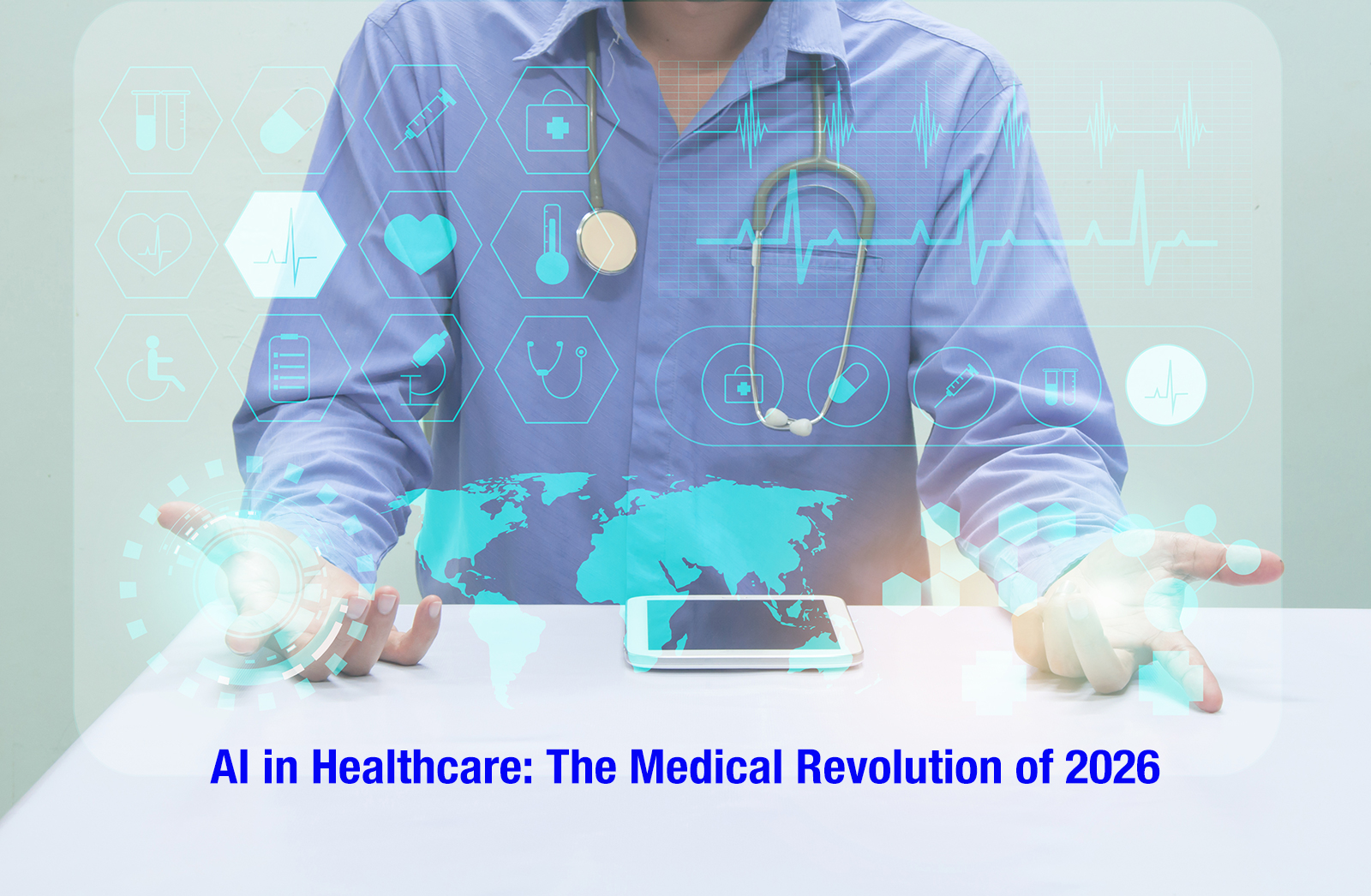
The healthcare industry stands at the threshold of a transformation unprecedented in human history. Artificial intelligence has moved from experimental applications to becoming an integral part of diagnosis, treatment planning, and patient care. This article examines the current state of AI in healthcare, exploring how machine learning, computer vision, and natural language processing are combining to create more accurate diagnoses, personalized treatments, and better patient outcomes.
Introduction
For centuries, healthcare has relied primarily on the expertise, intuition, and experience of individual physicians. While these human qualities remain essential, artificial intelligence has emerged as a powerful complement—offering capabilities that no single human could possess: the ability to analyze millions of cases instantly, recognize subtle patterns across vast datasets, and maintain perfect consistency around the clock.
In 2026, AI in healthcare has moved beyond the hype cycle into real, measurable impact. From detecting cancers earlier than any human could to optimizing treatment protocols based on individual patient genetics, AI is fundamentally changing what's possible in medicine.
AI Diagnostics: Seeing What Humans Miss
Medical Imaging
AI has demonstrated remarkable capabilities in analyzing medical images:
| Modality | AI Capability | Human Comparison |
|---|---|---|
| X-Ray | Chest disease detection | 95% vs 85% accuracy |
| CT Scan | Lung nodule analysis | 94% vs 88% accuracy |
| MRI | Brain tumor detection | 92% vs 86% accuracy |
| Mammography | Cancer screening | 96% vs 89% accuracy |
Pathology and Laboratory
Beyond imaging, AI has expanded into:
- Digital pathology: Analyzing tissue samples with unprecedented precision
- Blood analysis: Identifying abnormalities in routine tests
- Microbiology: Rapid pathogen identification and antibiotic resistance prediction
- Genomic analysis: Interpreting genetic test results
Early Detection Breakthroughs
One of AI's most significant contributions is early disease detection:
- Cancer detection: AI now detects cancers 2-5 years earlier than traditional methods
- Cardiac prediction: Identifying heart attack risk from routine ECGs
- Diabetes onset: Predicting type 2 diabetes from lifestyle and genetic factors
- Neurodegenerative diseases: Detecting Alzheimer's years before symptoms
Personalized Treatment
Precision Medicine
AI has made personalized treatment a reality:
- Genetic analysis:Matching treatments to genetic profiles
- Drug interactions: Predicting adverse reactions before they occur
- Dosage optimization: Individualizing medication doses
- Treatment prediction: Predicting which treatments will work for specific patients
Treatment Protocols
| Condition | AI Application | Improvement |
|---|---|---|
| Cancer | Protocol selection | 35% better response rates |
| Depression | Treatment matching | 40% improved outcomes |
| Diabetes | Insulin dosing | 45% better control |
| Cardiology | Medication selection | 28% reduced events |
Drug Discovery
AI has dramatically accelerated drug discovery:
- Target identification: Finding promising drug targets faster
- Molecule design: Generating novel drug candidates
- Clinical trial optimization: Matching patients to trials
- Repurposing: Finding new uses for existing drugs
Hospital Operations
Predictive Healthcare
AI is transforming hospital operations:
- Bed management: Predicting admission and discharge patterns
- Staff scheduling: Optimizing nurse and physician schedules
- Equipment utilization: Ensuring availability when needed
- Supply chain: Managing pharmaceutical and supply inventory
Patient Flow
| Metric | Traditional | AI-Enhanced |
|---|---|---|
| Emergency wait time | 45 minutes | 22 minutes |
| Bed turnover | 4.2 days | 3.1 days |
| Readmission rate | 15% | 9% |
| Patient satisfaction | 72% | 89% |
Clinical Decision Support
AI provides real-time decision support:
- Diagnosis suggestions: Helping physicians consider possibilities
- Treatment alerts: Warning of potential interactions
- Vigilance monitoring: Detecting deteriorating patients early
- Documentation: Automating clinical notes
Electronic Health Records
NLP for Clinical Documentation
Natural language processing has transformed EHR systems:
- Voice-to-text: Doctors can dictate notes naturally
- Code extraction: Automatically assigning diagnostic codes
- Medical coding: Streamlining billing processes
- Clinical summarization: Quick overview of patient history
Data Integration
AI connects fragmented health data:
- Unified patient profiles: Comprehensive view across providers
- Historical analysis: Finding patterns in longitudinal data
- Research integration: Connecting clinical data to research
- Population health: Identifying at-risk populations
Regulatory and Ethical Considerations
FDA Approval Landscape
The regulatory landscape has evolved significantly:
| Year | AI Medical Devices Approved |
|---|---|
| 2022 | 29 |
| 2023 | 75 |
| 2024 | 162 |
| 2025 | 289 |
| 2026 | 400+ |
Key Regulatory Frameworks
- Software as Medical Device (SaMD): Clear classification pathway
- Real-world evidence: Using clinical data for approval
- Adaptive algorithms: Frameworks for continuous learning
- Transparency requirements: Explaining AI decisions
Ethical Considerations
| Issue | Challenge | Current Approach |
|---|---|---|
| Bias | Training data can be non-representative | Diverse data initiatives |
| Privacy | Sensitive patient data at risk | HIPAA compliance, federated learning |
| Transparency | "Black box" AI decisions | Explainable AI requirements |
| Accountability | Who's responsible for AI errors | Human-in-the-loop requirements |
Real-World Implementation
Leading Healthcare Systems
Major healthcare providers have fully integrated AI:
- Mayo Clinic: AI diagnosis and treatment optimization
- Cleveland Clinic: Predictive patient monitoring
- Johns Hopkins: AI-assisted surgery
- Kaiser Permanente: Population health management
Success Stories
Case Study: Cancer Detection
- Challenge: Late-stage pancreatic cancer detection
- Solution: AI analysis of CT scans
- Results: 72% of cases detected at stage I-II vs 35% with traditional methods
Case Study: Sepsis Prediction
- Challenge: Early sepsis identification
- Solution: AI vital sign monitoring
- Results: 89% prediction accuracy, 47% mortality reduction
Emerging Technologies
AI Robotics
Robotic-assisted surgery has evolved significantly:
- Autonomous assistance: AI assists rather than replaces surgeons
- Precision guidance: Sub-millimeter accuracy in procedures
- Remote surgery: AI enables long-distance operations
- Rehabilitation: AI-powered robotic physical therapy
Wearable Integration
Continuous health monitoring is becoming reality:
- Real-time analysis: Continuous health data interpretation
- Alert systems: Early warning for health issues
- Lifestyle optimization: Personalized health recommendations
- Clinical integration: Direct feed to healthcare providers
Future Possibilities
The next frontier includes:
- Digital health twins: Personalized simulation for treatment planning
- AI surgical assistants: Autonomous surgical subtasks
- Predictive wellness: Preventing disease before onset
- Global health intelligence: Pandemic early warning systems
Conclusion
AI in healthcare has progressed from experimental technology to essential medical tool. The impact is measurable: better diagnoses, more personalized treatments, improved patient outcomes, and more efficient healthcare operations.
However, realizing AI's full potential requires navigating complex challenges around bias, privacy, transparency, and accountability. The most successful implementations maintain human oversight while leveraging AI's capabilities—this is not about replacing physicians, but augmenting their abilities.
The healthcare revolution powered by AI is not a future possibility—it's happening now. Organizations that embrace this technology thoughtfully will be better positioned to deliver the care their patients deserve. The future of medicine is not human versus machine, but human and machine working together.
Related Articles
AI Audio & Speech Processing: Breaking Language Barriers with Near-Human Quality
How speech-to-speech translation and voice synthesis technologies are reaching near-human quality, transforming communication across languages and accessibility boundaries.
AI Emotional Intelligence & Affective Computing: The Rise of Empathetic Machines
Exploring how affective computing advances are enabling AI systems to recognize and respond to human emotions, transforming healthcare, education, and customer service.
AI in NFL Draft Analysis: How Teams Are Using Artificial Intelligence to Find the Next Stars
Professional football teams are leveraging artificial intelligence and machine learning to analyze prospects, predict success, and gain competitive advantages in the NFL Draft.