
AI Coding Assistants 2026: The Developer's New Partner
How AI-powered code generation is transforming software development workflows and democratizing programming
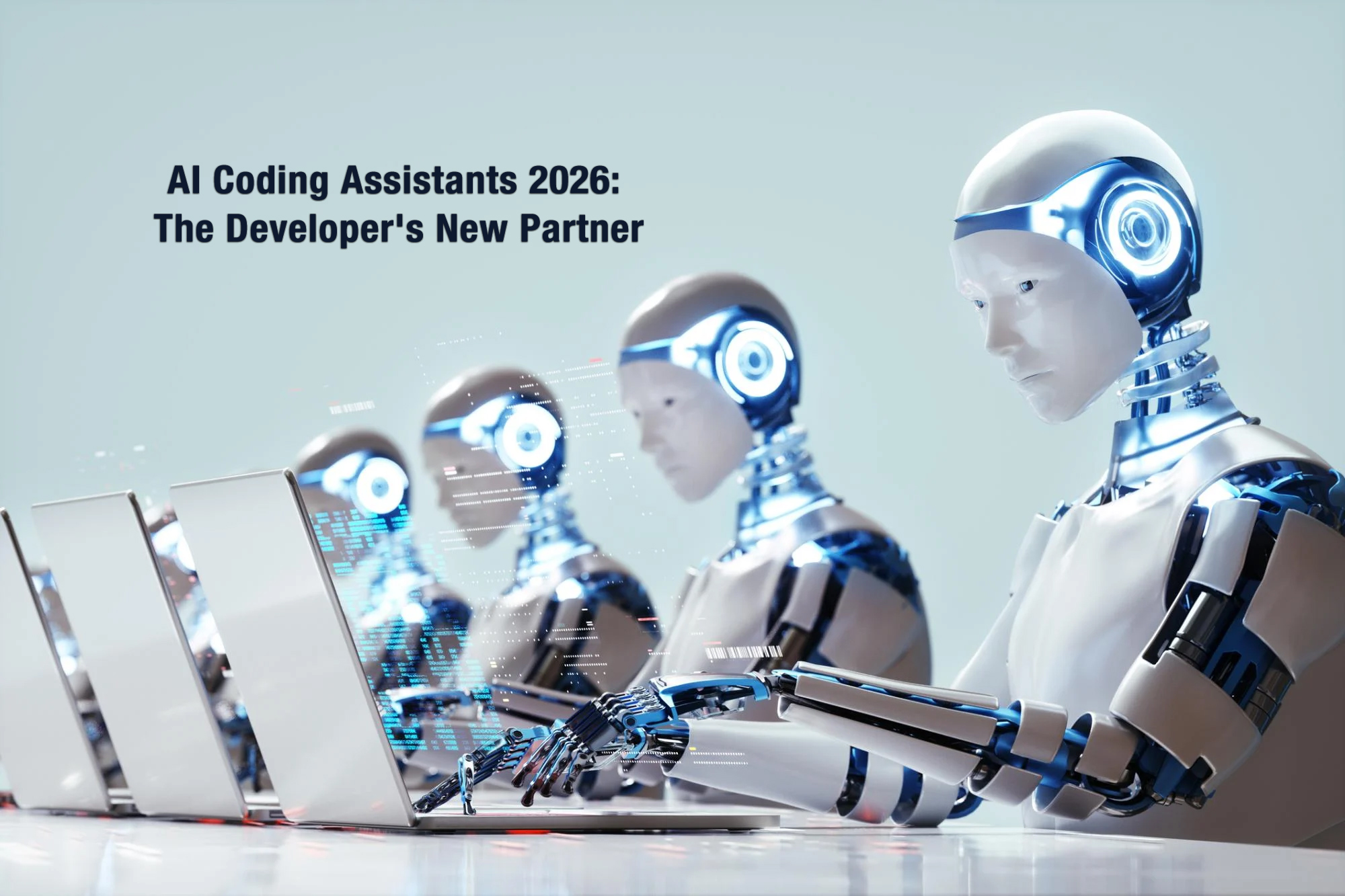
AI-powered coding assistants have fundamentally transformed the software development landscape in 2026. From autocomplete on steroids to full-fledged development partners, these tools are reshaping how developers write code, debug problems, and think about software architecture. This article explores the current state of AI coding tools, their impact on developer productivity, and what the future holds for human-AI collaboration in software development.
Introduction
The software development profession is undergoing its most significant transformation since high-level programming languages. AI coding assistants have evolved from simple autocomplete tools into sophisticated development partners capable of understanding context, suggesting architectural improvements, and even debugging complex issues.

This transformation extends beyond mere productivity gains. AI coding assistants are democratizing programming itself, enabling people with less formal training to contribute to software projects, and allowing experienced developers to focus on higher-level architectural decisions rather than syntax details.
The AI Coding Landscape
Leading Tools
| Tool | Provider | Primary Use | Market Position |
|---|---|---|---|
| Copilot | Microsoft/GitHub | General coding | Market leader |
| Claude Code | Anthropic | Reasoning-heavy coding | Strong alternative |
| Cursor | Anysphere | IDE-focused | Fast-growing |
| Windsurf | Codeium | Agentic coding | Emerging |
| Amazon Q | Amazon | Enterprise | Growing |
Capability Comparison
| Feature | Copilot | Claude Code | Cursor |
|---|---|---|---|
| Autocomplete | Yes | Yes | Yes |
| Chat Integration | Yes | Yes | Yes |
| Agent Mode | Limited | Yes | Yes |
| Multi-file Edit | Yes | Yes | Yes |
| Terminal | Limited | Limited | Yes |
Productivity Impact
Quantified Benefits
Research and surveys reveal significant productivity improvements:
| Metric | Improvement | Source |
|---|---|---|
| Code Completion | 30-50% faster | User surveys |
| Documentation | 40% time saved | Internal data |
| Debugging | 25% faster | Developer reports |
| Boilerplate | 60% reduction | Usage analysis |
| Overall Productivity | 25-40% improvement | Multiple studies |
Developer Experience
Developers report improved experiences across multiple dimensions:
- Reduced tedium: Less time on repetitive tasks
- Faster learning: New frameworks more accessible
- Better code quality: Automated suggestions improve patterns
- Reduced context-switching: Everything in one place
- Increased satisfaction: Focus on interesting problems
Technical Architecture
How AI Coding Works
Modern AI coding assistants combine several technologies:
| Layer | Technology | Function |
|---|---|---|
| Foundation | Code-specialized LLMs | Core understanding |
| Retrieval | Code search indexes | Context retrieval |
| Integration | IDE APIs | Environment access |
| Reasoning | Agent frameworks | Multi-step tasks |
| Evaluation | Test frameworks | Output validation |
Context Handling
| Method | Description | Usage |
|---|---|---|
| File Awareness | Open file context | Default |
| Project Index | Full project understanding | Enhanced |
| Documentation | External reference | RAG-based |
| Terminal | Command history | Agent mode |
Advanced Capabilities
Multi-Modal Editing
AI assistants now handle complex editing across files:
- Batch Edits: Multiple file modifications
- Refactoring: Large-scale code changes
- Migration: Framework or library upgrades
- Documentation: Auto-generated docs
- Testing: Unit test generation
Agent Capabilities
Modern coding agents can:
| Capability | Description | Example |
|---|---|---|
| Read + Write | Full file manipulation | Create new components |
| Terminal | Command execution | Git operations |
| Debug | Issue identification | Error resolution |
| Test | Validation | Test writing |
| Deploy | Release automation | CI/CD integration |
Enterprise Adoption
Implementation Patterns
| Pattern | Description | Adoption |
|---|---|---|
| Individual | Personal tools | 70% |
| Team | Shared licenses | 20% |
| Enterprise | Custom deployment | 8% |
| Regulated | Compliant tools | 2% |
Enterprise Considerations
Key factors in enterprise adoption:
- Data Privacy: Code not shared with providers
- Security: Enterprise-grade security
- Compliance: Regulatory requirements
- Integration: Existing tool chains
Coding Education
Learning Impact
AI coding assistants are transforming programming education:
| Aspect | Traditional | AI-Assisted |
|---|---|---|
| Syntax Focus | High | Reduced |
| Concept Focus | Medium | Higher |
| Debugging | Harder | Easier |
| Project Complexity | Limited | Earlier |
| Learning Curve | Steep | Smoother |
New Developer Pathways
- Faster ramp-up: New developers productive sooner
- Mentorship: AI augmentation fills gaps
- Exploration: Lower cost of experimentation
- Best Practices: Automated guidance
Quality and Standards
Code Quality
| Factor | Without AI | With AI |
|---|---|---|
| Consistency | Variable | Higher |
| Documentation | Often missing | Auto-generated |
| Testing | Limited | More complete |
| Patterns | Skill-dependent | Suggested |
Maintaining Standards
Organizations implement standards through:
- Custom Instructions: Project-specific rules
- Review Guidelines: Human oversight
- Linting: Automated checks
- Testing: Validation requirements
Future Directions
Emerging Capabilities
| Capability | Timeline | Impact |
|---|---|---|
| Full Agent | Q3 2026 | Autonomy |
| Cross-Repo | Q4 2026 | Scale |
| Architectural | 2027 | Design |
| Self-Healing | 2027 | Reliability |
Developer Evolution
The role of developers is evolving:
- From syntax to architecture: Higher-level thinking
- From writing to directing: AI as executor
- From individual to team player: Human-AI collaboration
- From reactive to creative: Problem-definition focus
Ethical Considerations
Attribution Debates
| Issue | Discussion | Status |
|---|---|---|
| Copyright | AI-generated code ownership | Uncertain |
| Licensing | License compliance | Developing |
| Attribution | Credit for AI contributions | Debated |
| Plagiarism | AI copying training data | Concern |
Responsible Use
Guidelines for AI coding:
- Understand the code: Don't just accept suggestions
- Review thoroughly: Human oversight essential
- Maintain skills: Don't atrophy basics
- Acknowledge usage: Be transparent
Conclusion
AI coding assistants have become indispensable tools for developers in 2026. The transformation from writing code to directing AI represents a fundamental shift in how software gets created—an evolution that amplifies human creativity rather than replacing it.
The key to successful AI coding adoption lies in balance. These tools are powerful assistants, not replacements for human judgment. Developers who learn to collaborate effectively with AI will thrive; those who simply accept suggestions without understanding will find themselves outmatched by those who direct.
The future of software development isn't about humans versus AI—it's about humans with AI, building things that neither could create alone.
Related Articles

The Rise of AI Agent Marketplaces: Platforms Reshaping Enterprise Automation
AI agent marketplaces are emerging as the new frontier in enterprise automation, enabling businesses to discover, deploy, and manage specialized AI agents for every business function.

AI Agent Security, Performance & Enterprise Deployment: The Deep Dive
we explored the fundamental philosophies behind OpenClaw, Manus AI, and Claude Code. Now it's time for the uncomfortable conversations — the ones every CTO and security lead needs to have before production deployment.

The Agentic Revolution—How AI Is Transforming from Chatbot to Autonomous Worker
AI agents are moving beyond simple chat interactions to autonomously executing complex tasks, marking a fundamental shift in how humans work with artificial intelligence