
AI Coding Assistants: Transforming the Developer Experience in 2026
How AI-powered code completion and generation tools are revolutionizing software development workflows
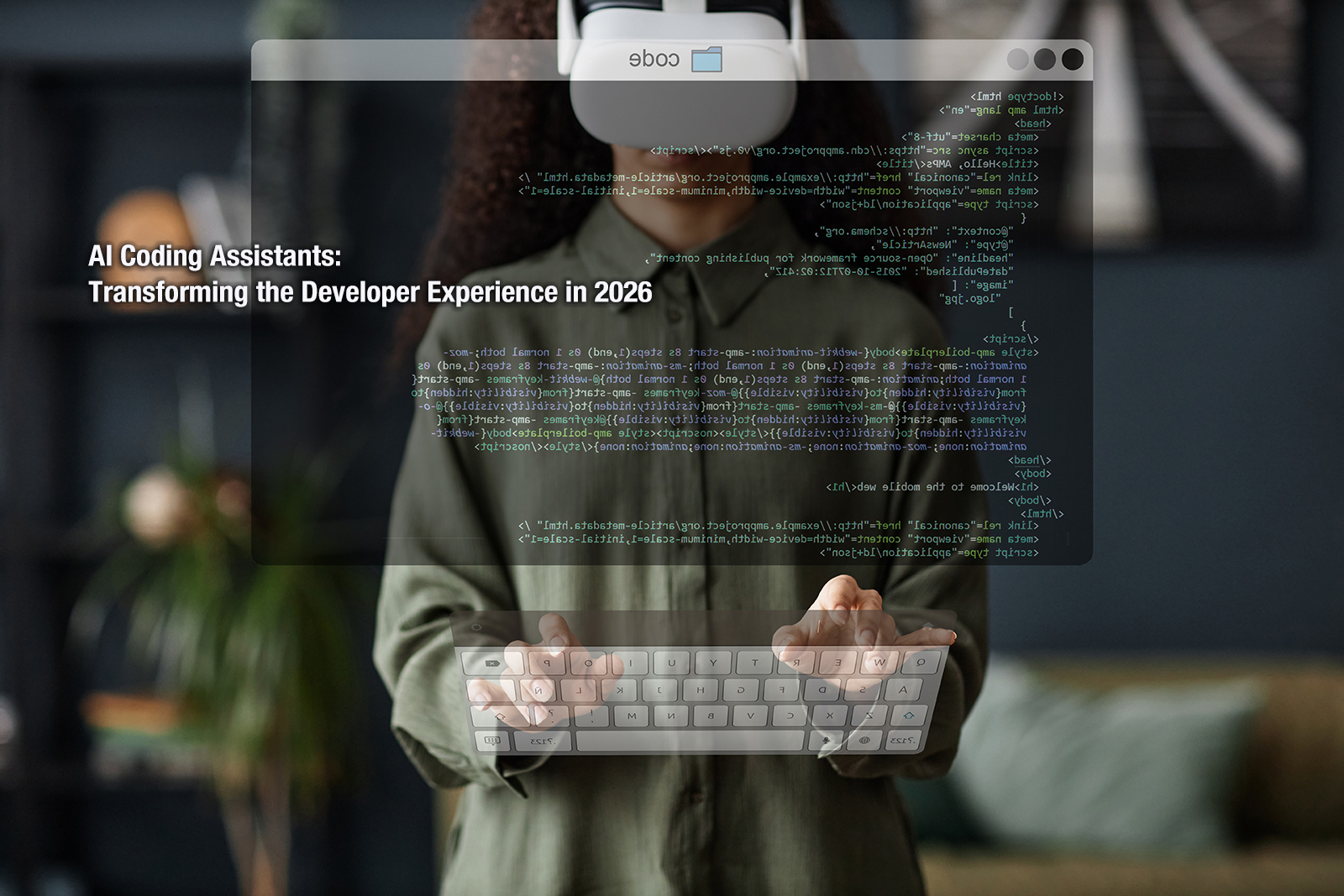
The landscape of software development has undergone a dramatic transformation with the emergence of sophisticated AI coding assistants. These tools have evolved from simple autocomplete features to intelligent partners capable of understanding context, generating complex code structures, and even debugging applications. This article explores the current state of AI coding assistants, their capabilities, limitations, and their profound impact on developer productivity and the software industry as a whole.
Introduction
The relationship between developers and their tools has always been intimate. From the earliest days of programming, developers have sought tools that amplify their capabilities and reduce tedium. Enter AI coding assistants—the new generation of intelligent development tools that are fundamentally changing how software is written, tested, and maintained.
In 2026, AI coding assistants have moved from experimental novelties to essential components of the modern development workflow. Companies across every sector are adopting these tools, and developers who once resisted AI assistance now find themselves unable to imagine working without it. But what exactly are these tools capable of, and where are they headed?
The Evolution of AI Coding Assistants
From Autocomplete to Intelligent Partners
The journey from basic autocomplete to sophisticated AI coding assistants represents one of the most significant evolutions in developer tooling. What started as simple pattern-matching suggestions has transformed into contextual understanding that rivals human comprehension.
| Generation | Capability | Example |
|---|---|---|
| First | Keyword completion | Traditional IDE autocomplete |
| Second | Syntax completion | IntelliSense-style suggestions |
| Third | Contextual completion | GitHub Copilot v1 |
| Fourth | Multi-file understanding | Current state-of-the-art |
Current Market Landscape
The market for AI coding assistants has exploded, with numerous players competing for developer mindshare:
- GitHub Copilot: The pioneer, now integrated into GitHub's ecosystem
- Amazon CodeWhisperer: Amazon's entry, with strong AWS integration
- Cursor: Built on top of VS Code with advanced AI features
- Claude Code: Anthropic's developer-focused AI assistant
- Tabnine: Offering both individual and enterprise solutions
How AI Coding Assistants Work
Underlying Technologies
Modern AI coding assistants rely on a combination of sophisticated technologies:
- Large Language Models: Specialized models trained on vast amounts of code
- Context Windows: Understanding surrounding code, project structure, and dependencies
- Retrieval Augmented Generation: Accessing documentation and code examples
- Fine-tuning: Adapting general models to specific languages and frameworks
The Processing Pipeline
Understanding how these tools generate code reveals their strengths and limitations:
Input → Context Analysis → Model Inference → Output Generation → Post-processing
The context analysis phase is crucial—it examines not just the current file but often the entire project, including dependencies, documentation, and test files. This holistic understanding allows for more relevant and accurate suggestions.
Key Capabilities in 2026
Code Generation
Modern AI assistants can generate substantial code blocks from natural language descriptions:
# Example: AI generates this function from description
def calculate_portfolio_metrics(holdings, current_prices):
    """
    Calculate comprehensive portfolio metrics including
    total value, daily returns, and risk metrics.
    """
    total_value = sum(h.quantity * current_prices[h.symbol]
                      for h in holdings)

    # Calculate weighted returns
    returns = {}
    for h in holdings:
        weight = (h.quantity * current_prices[h.symbol]) / total_value
        returns[h.symbol] = h.daily_return * weight

    return {
        'total_value': total_value,
        'weighted_return': sum(returns.values()),
        'diversification': len(holdings) / 20  # Normalized
    }
Debugging and Error Resolution
AI assistants have become remarkably skilled at identifying and fixing bugs:
| Capability | Description | Accuracy |
|---|---|---|
| Error Detection | Identifying syntax and logic errors | ~95% |
| Root Cause Analysis | Understanding why errors occur | ~85% |
| Fix Generation | Proposing corrections | ~80% |
| Test Generation | Creating unit tests | ~75% |
Refactoring and Optimization
Beyond initial code generation, these tools excel at improving existing code:
- Performance optimization: Identifying inefficient patterns
- Code quality: Suggesting improvements for readability
- Security: Finding potential vulnerabilities
- Architecture: Recommending structural changes
Impact on Developer Productivity
Quantitative Improvements
Studies have consistently shown significant productivity gains:
| Metric | Improvement |
|---|---|
| Code output | 40-55% increase |
| Debugging time | 30-50% reduction |
| Documentation | 60% time savings |
| Code review | 25% faster |
Qualitative Changes
Beyond raw productivity numbers, AI assistants have transformed the development experience:
- Lower barrier to entry: New developers can contribute more quickly
- Reduced tedium: Routine tasks are automated
- Learning tool: Developers learn new patterns and languages
- Focus on design: More time for architectural decisions
Challenges and Limitations
Accuracy Concerns
Despite impressive capabilities, AI coding assistants are not infallible:
- Hallucinations: Occasionally generating non-existent APIs or incorrect implementations
- Context blindness: Missing important project-specific constraints
- Security risks: Sometimes suggesting vulnerable code patterns
- Outdated knowledge: Training data limitations can lead to outdated practices
Best Practices for Safe Use
| Practice | Rationale |
|---|---|
| Always review generated code | Catch errors and misunderstand contexts |
| Understand before accepting | Learn from the suggestions |
| Test thoroughly | Verify functionality and security |
| Maintain human oversight | Final decisions should be human-made |
The Future of AI Coding
Emerging Trends
The next generation of AI coding assistants promises even more advanced capabilities:
- Agentic workflows: AI that can plan and execute multi-step tasks
- Full-stack understanding: Seamless context across frontend and backend
- Automated testing: Generating comprehensive test suites
- Deployment assistance: Moving from code to production
Integration with Development Workflow
Future tools will become even more deeply integrated:
- IDE evolution: More sophisticated native AI features
- CI/CD integration: AI in continuous integration pipelines
- Documentation automation: Auto-generating and updating docs
- Performance monitoring: AI analyzing production behavior
Conclusion
AI coding assistants have fundamentally transformed the software development landscape. What began as a novelty has become an indispensable tool for developers across industries and experience levels. While challenges remain—particularly around accuracy, security, and the proper balance between automation and human judgment—the trajectory is clear: AI will continue to play an increasingly central role in how software is created.
The most successful developers in 2026 are those who have learned to collaborate effectively with AI, using it to amplify their capabilities while maintaining the critical thinking and domain expertise that only humans possess. The future of coding is not about choosing between human and machine intelligence, but about finding the optimal synthesis of both.
As these tools continue to evolve, we can expect even more dramatic changes in how software is developed. The question for developers is not whether to adopt AI coding assistants, but how to integrate them most effectively into their workflows and teams.
Stay tuned for more articles on the latest developments in AI developer tools and software engineering.
Related Articles
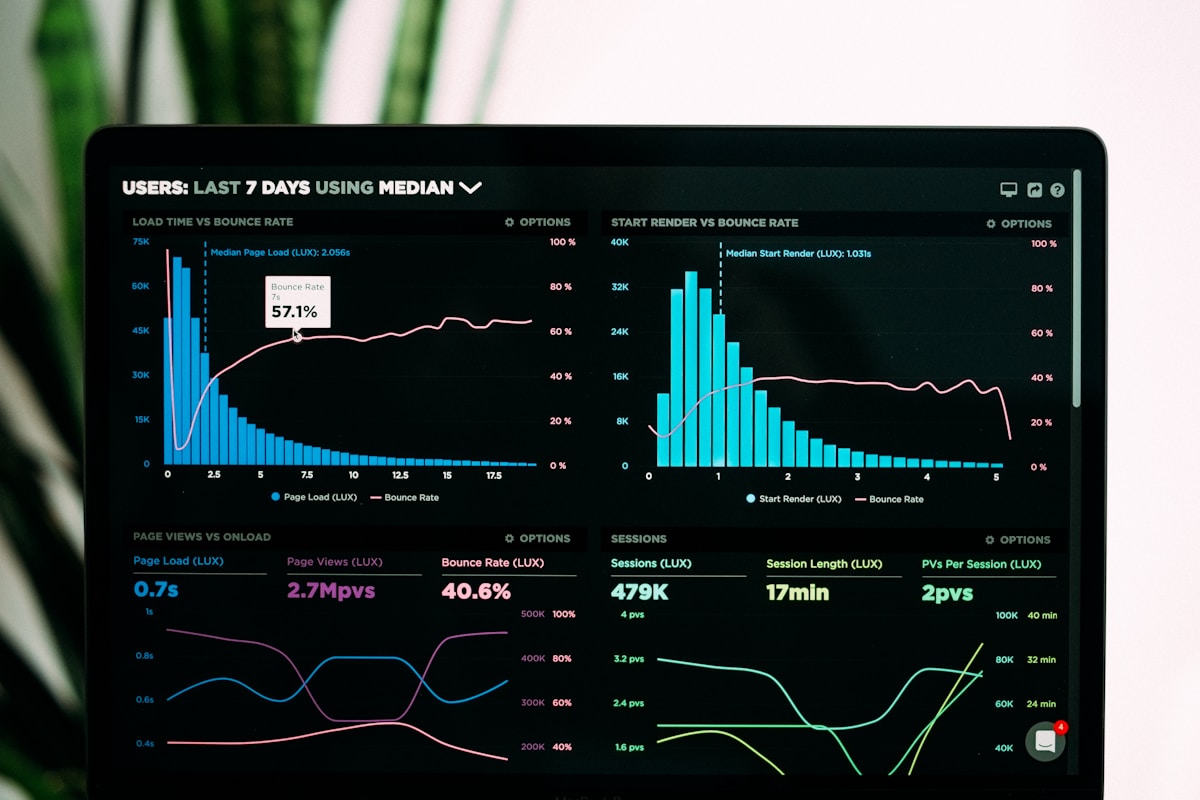
The Rise of AI Agent Marketplaces: Platforms Reshaping Enterprise Automation
AI agent marketplaces are emerging as the new frontier in enterprise automation, enabling businesses to discover, deploy, and manage specialized AI agents for every business function.

AI Agent Security, Performance & Enterprise Deployment: The Deep Dive
we explored the fundamental philosophies behind OpenClaw, Manus AI, and Claude Code. Now it's time for the uncomfortable conversations — the ones every CTO and security lead needs to have before production deployment.
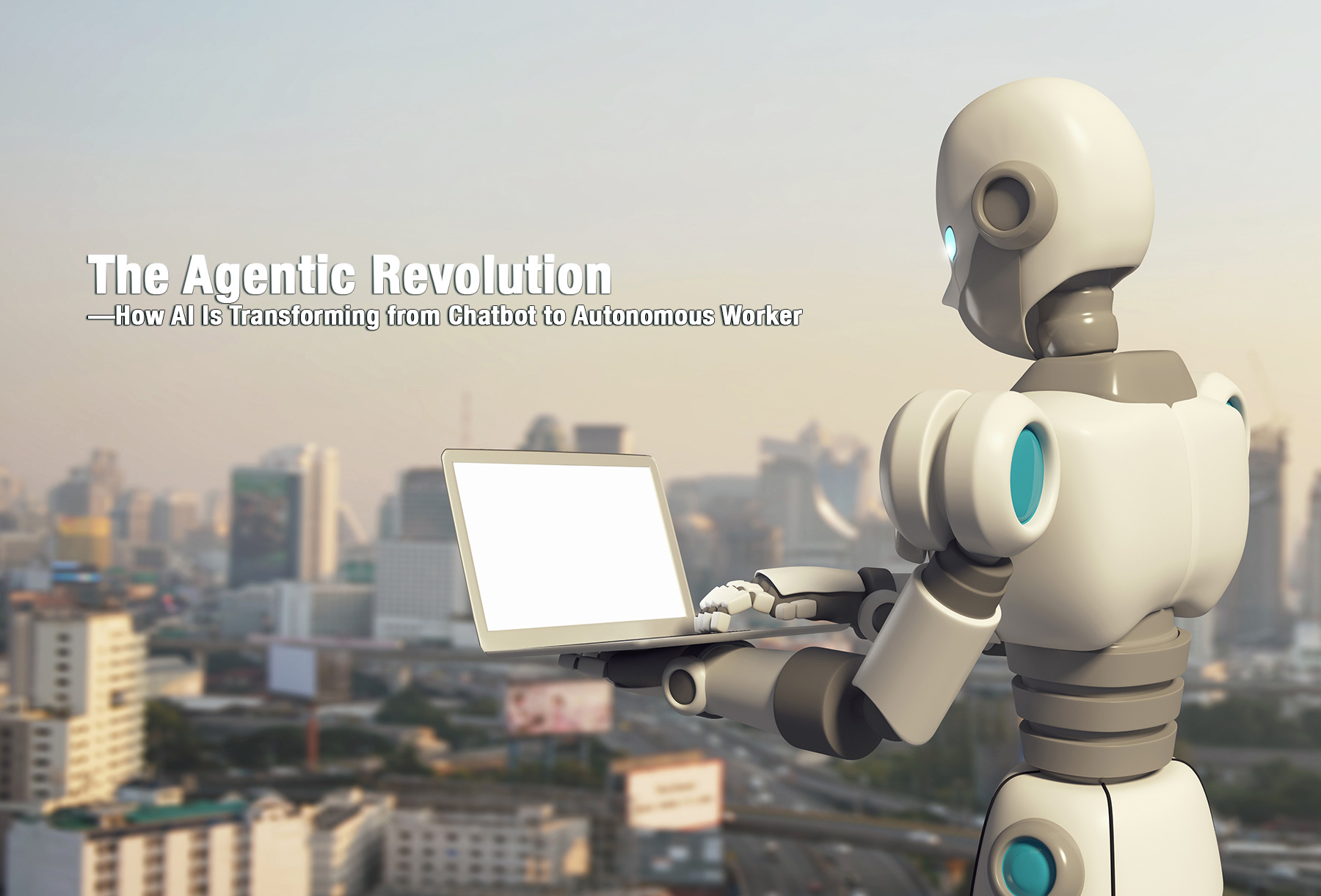
The Agentic Revolution—How AI Is Transforming from Chatbot to Autonomous Worker
AI agents are moving beyond simple chat interactions to autonomously executing complex tasks, marking a fundamental shift in how humans work with artificial intelligence