
OpenClaw Goes Viral: How an Open-Source Agent Platform Disrupted the AI Industry
OpenClaw, the viral self-hosted AI agent platform, has transformed computing and raised security concerns as deployments hit 40,000+ instances worldwide.
In what may be the most significant open-source development in the AI industry this year, OpenClaw has transformed from a niche developer tool into a viral platform with over 40,000 internet-exposed instances. The self-hosted AI agent, which enables users to run autonomous AI locally on their own hardware, has fundamentally challenged the assumptions of the AI industry about how AI should be delivered and controlled. With Nvidia building guardrails for the platform and major enterprises deploying it in production, OpenClaw represents a paradigm shift toward local, agentic AI that could reshape the entire computing landscape. However, this rapid growth has also raised significant security concerns, with nearly 35% of deployed instances showing vulnerabilities.
The Rise of OpenClaw
From Developer Tool to Viral Phenomenon
OpenClaw launched in November 2025 as a project designed to let users run AI agents locally on their own machines. Unlike traditional AI services that require sending data to cloud APIs, OpenClaw runs entirely on local hardware, giving users complete control over their data and AI capabilities. The platform quickly gained traction among developers who valued the privacy and customization it offered.
But it was a trademark dispute with Anthropic in January 2026 that transformed OpenClaw from a developer tool into a cultural phenomenon. When Anthropic raised concerns about the name (originally referencing the company's "Claw" API), the project was forced to rebrand—twice in four days—first to "Moltbot" and then to "OpenClaw." Each rebrand generated fresh waves of tech press coverage, driving massive attention to the platform. By the time the trademark issues were resolved, OpenClaw had become a household name in the tech community.
The viral growth continued through February and March 2026, accelerated by the platform's demonstrated capabilities and the growing desire among users to escape the dependency on centralized AI services. The number of deployed instances grew exponentially, reaching over 40,000 by February 2026, according to SecurityScorecard.
The Technology Behind OpenClaw
OpenClaw's core innovation is its ability to run autonomous AI agents locally. Where traditional AI chatbots respond to individual prompts, OpenClaw can be given complex tasks and work toward completing them autonomously, using tools, making decisions, and adapting as it goes.
The platform uses what's been called the "MolT stack" (a reference to its original development name)—a combination of language models, tools, and orchestration capabilities that enable genuine task automation. Users can connect OpenClaw to their data, applications, and services, creating AI assistants tailored to their specific needs.
This local-first approach addresses several concerns that have grown as AI adoption has increased. Privacy is perhaps the most significant: when AI runs locally, user data never leaves their own infrastructure. There's no risk of it being used to train models or accessed by third parties. Control is another: local AI can't be changed or disabled by the provider. And cost can be lower for high-volume users, who avoid the per-query pricing of cloud APIs.
Industry Impact
Nvidia's Embrace
Perhaps the most surprising development has been Nvidia's embrace of OpenClaw. At GTC 2026, the company's annual developer conference, Nvidia announced tools specifically designed to make OpenClaw safer and more enterprise-ready. This represents a remarkable validation of the platform's significance—if Nvidia is building guardrails for it, the company clearly believes OpenClaw is here to stay.
The partnership makes strategic sense for both parties. Nvidia benefits from increased demand for its GPUs, which are ideal for running local AI agents. OpenClaw users need powerful hardware, and Nvidia's products are the obvious choice. Meanwhile, Nvidia gains influence over how the platform develops, potentially shaping it in ways that address the security concerns that have emerged.
Enterprise Adoption
Beyond individual users, OpenClaw has found significant adoption in enterprise environments. The platform has been deployed by Fortune 500 companies for tasks ranging from customer service automation to internal knowledge management. At GTC 2026, multiple companies confirmed production deployments of agentic systems built on OpenClaw.
This enterprise adoption is particularly notable because it suggests the platform has reached a level of reliability and capability that businesses trust for real-world applications. Early AI agent experiments often failed in production, but OpenClaw has evidently crossed a threshold that makes it viable for business-critical use cases.
Disruption of Traditional AI Providers
The rise of OpenClaw poses a challenge to companies like OpenAI, Anthropic, and Google that have built their businesses on centralized AI services. If users can run capable AI agents locally, the value proposition of cloud-based AI services diminishes. Why pay per query for AI when you can run it locally once and use it unlimited times?
This isn't to say that cloud AI is doomed—there's still significant value in the massive compute resources that only large companies can provide. But OpenClaw has created a new category of competition that didn't exist a year ago, and established AI providers are clearly watching the platform's growth with concern.
Security Concerns
Vulnerability Findings
The rapid growth of OpenClaw has not been without problems. Security researchers have identified significant vulnerabilities in many deployments. According to a February 2026 report from SecurityScorecard, 35.4% of the 40,214 internet-exposed OpenClaw instances were flagged as vulnerable at the time of analysis.
These vulnerabilities can stem from various sources: outdated software, misconfigured deployments, or inherent security weaknesses in the platform itself. Many users running OpenClaw may lack the security expertise to properly configure and maintain their installations, creating potential entry points for attackers.
The security challenge is particularly acute because OpenClaw agents often have access to sensitive data and systems. Unlike a chatbot that simply answers questions, an autonomous agent can take actions—sending emails, accessing files, making purchases. If compromised, a vulnerable OpenClaw instance could be used for data theft, unauthorized transactions, or other harmful activities.
Industry Response
Nvidia's guardrails are one response to these concerns. By building security features directly into the platform and providing best-practice configurations, the partnership aims to reduce the vulnerability rate without limiting OpenClaw's capabilities.
Security researchers are also contributing, identifying vulnerabilities and working with the OpenClaw community to address them. The open-source nature of the platform means that security issues can be discovered and fixed by anyone, which is both a strength and a challenge—fixes are available quickly, but so are exploit techniques.
For enterprise users, the recommendation is clear: don't deploy OpenClaw without proper security architecture, monitoring, and maintenance. The platform's capabilities are impressive, but they require corresponding security measures to use safely.
Looking Forward
The Agentic AI Trend
OpenClaw's viral success reflects a broader shift in the AI industry toward agentic systems. Rather than chatbots that respond to prompts, the next generation of AI is designed to take autonomous action toward goals. OpenClaw has been at the forefront of this shift, demonstrating what's possible when AI is given agency rather than just reactivity.
This trend is likely to accelerate. As more companies see what OpenClaw can do, they'll want similar capabilities for their own operations. And as the technology improves, agents will become capable of handling an even wider range of tasks.
Computing Paradigm Shift
Some analysts see OpenClaw as the beginning of a fundamental shift in computing. The traditional model—where users interact with centralized services via thin clients—is being challenged by a model where intelligence runs locally on powerful devices. This parallels the shift from mainframes to personal computers, but in reverse: instead of computing power moving to the cloud, AI capability is moving to the edge.
Whether this shift reaches the scale of the PC revolution remains to be seen, but the momentum behind local AI is undeniable. Companies that don't adapt to this new reality may find themselves on the wrong side of a technological transition.
Conclusion
OpenClaw's journey from developer tool to viral platform represents one of the most significant stories in AI this year. With over 40,000 deployments, Nvidia's validation, and enterprise adoption going mainstream, the platform has demonstrated that there's substantial demand for local, agentic AI. At the same time, the security challenges highlighted by the vulnerability research show that the industry still has work to do before such platforms can be deployed safely at scale. The next few months will be critical as the OpenClaw ecosystem matures and the broader implications for the AI industry become clearer.
Related Articles

AI Agent Security, Performance & Enterprise Deployment: The Deep Dive
we explored the fundamental philosophies behind OpenClaw, Manus AI, and Claude Code. Now it's time for the uncomfortable conversations — the ones every CTO and security lead needs to have before production deployment.

AI Agents: The Autonomous Future of Artificial Intelligence
Exploring AI agents—autonomous systems that can plan, execute, and adapt—revolutionizing how we interact with artificial intelligence.
Enterprise Integrations & Scaling: OpenClaw at Scale
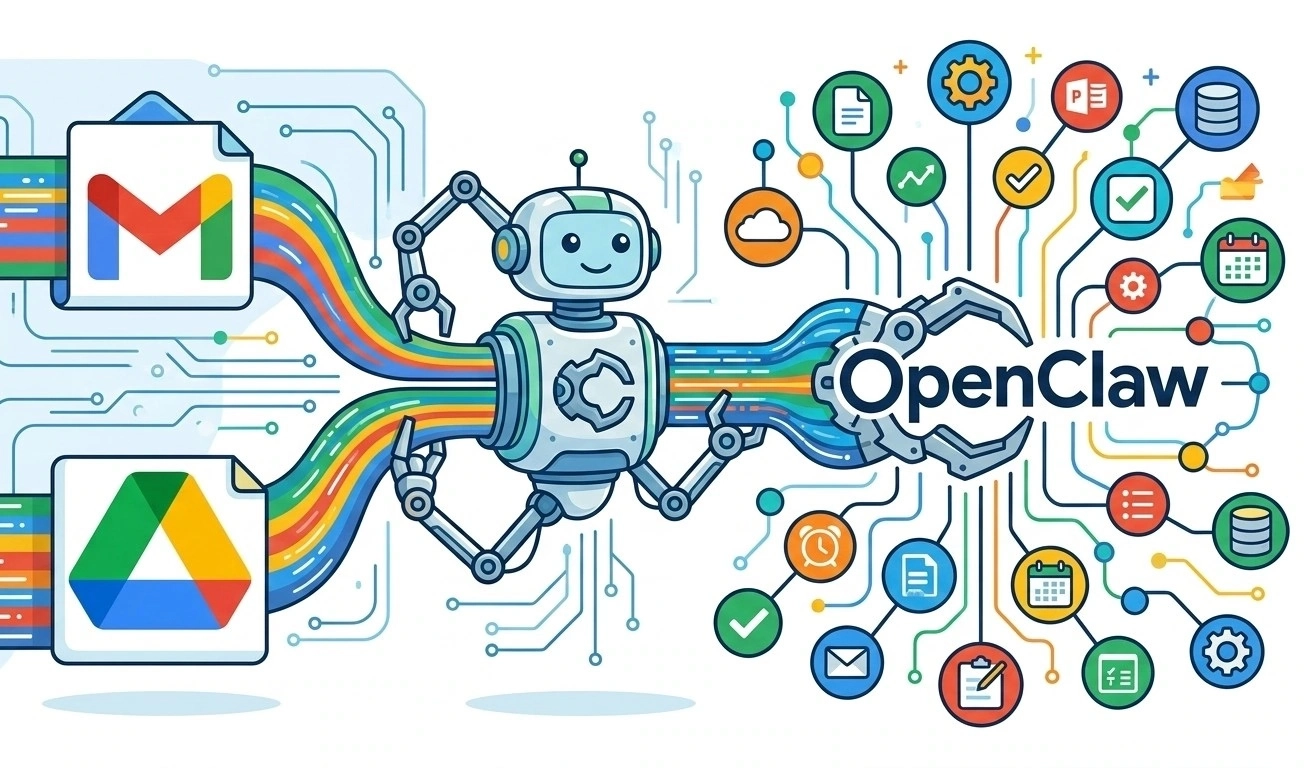
Enterprise-grade OpenClaw integration guide covering Notion, GitHub, Google Workspace, Microsoft Teams, and more. Learn OAuth setup, authentication patterns, multi-team architectures, and scaling strategies for production deployments.