
Jensen Huang at GTC 2026: Every SaaS Company Will Become an AaaS Company
NVIDIA CEO Jensen Huang predicts that every SaaS company will transform into an Agent-as-a-Service company, marking a fundamental shift in the AI era.
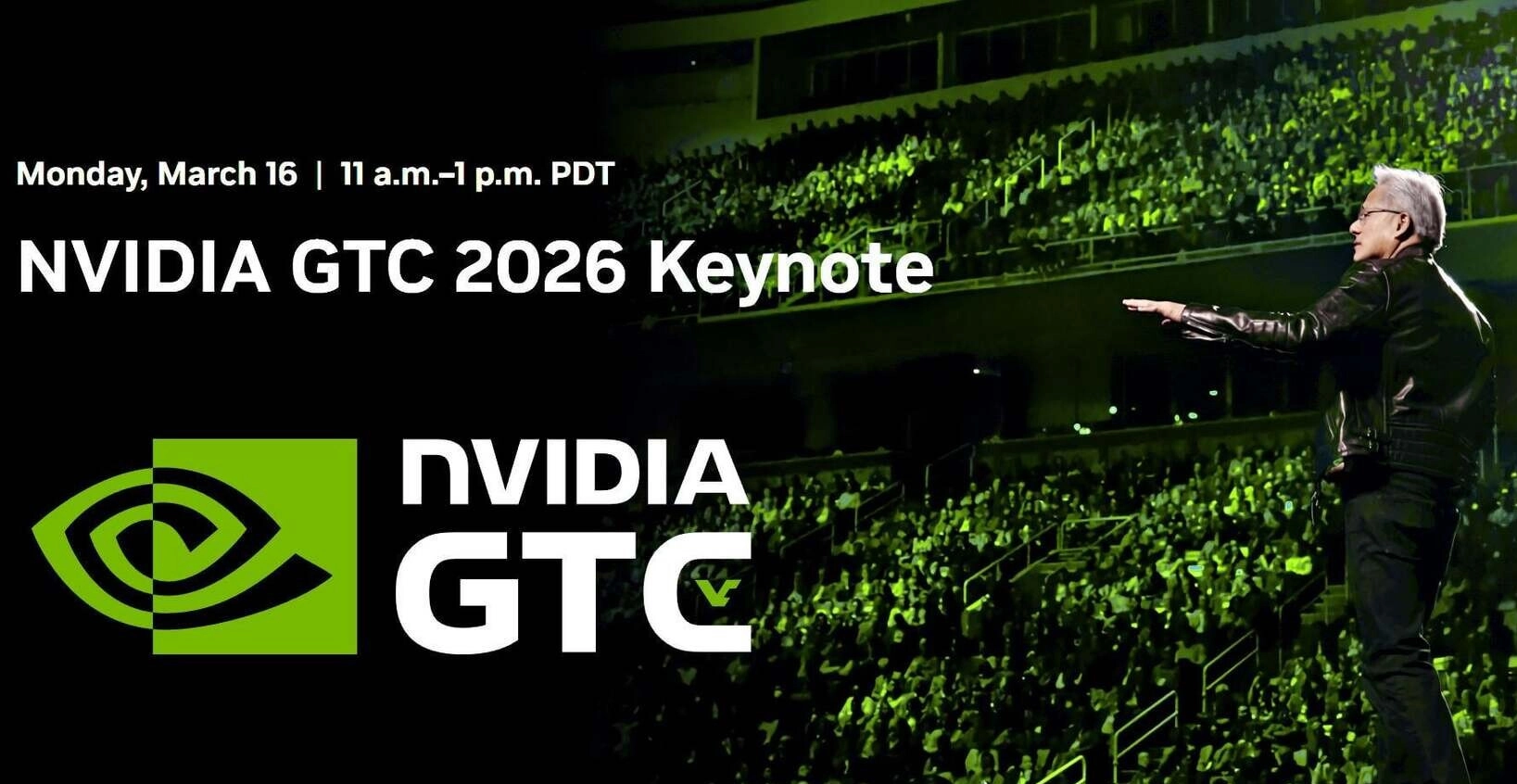
At NVIDIA's GTC 2026 keynote, CEO Jensen Huang made a bold prediction that is reshaping the entire software industry: every SaaS company will become an AaaS (Agent-as-a-Service) company. This vision marks a fundamental shift in how businesses will operate in the AI era. This article explores the implications of this transformation, NVIDIA's strategic announcements, and what it means for businesses worldwide.
Introduction
The technology industry is witnessing another paradigm shift. At NVIDIA's GTC 2026 keynote in San Jose, CEO Jensen Huang declared that we have reached the "agentic AI inflection point" — a moment when AI agents transition from experimental tools to core business infrastructure.
"The era of deductive reasoning has arrived. AI is no longer just about generating content — it's about thinking, reasoning, and acting on behalf of users."
This statement represents more than marketing rhetoric. It signals a fundamental transformation in how software businesses will operate, compete, and deliver value to customers.
The Agentic AI Inflection Point
What Is Agentic AI?
Unlike traditional SaaS applications that require human input, AI agents can autonomously reason, plan, and execute complex tasks. Key characteristics include:
- Autonomous Action: Agents act without constant human guidance
- Proactive Behavior: Instead of reactive responses, agents anticipate needs
- Dynamic Workflows: Adaptive processes that change based on context
- Minimal Oversight: Human involvement only for critical decisions
Why Now?
Several factors have converged to make 2026 the pivotal year for agentic AI:
- Advanced Reasoning Models: Large language models now possess sophisticated reasoning capabilities
- Tool Integration: Agents can interact with external systems and APIs
- Enterprise Readiness: Security and governance solutions have matured
- Infrastructure: NVIDIA's AI infrastructure supports massive agent deployments
From SaaS to AaaS: Understanding the Shift
The transition from Software-as-a-Service (SaaS) to Agent-as-a-Service represents the most significant change in enterprise software since cloud computing.
| Aspect | Traditional SaaS | Agent-as-a-Service (AaaS) |
|---|---|---|
| Initiation | Human initiates actions | AI agents act autonomously |
| Response Type | Reactive responses | Proactive task completion |
| Workflow | Fixed workflows | Dynamic, adaptive processes |
| Human Involvement | Human-in-the-loop | Human oversight only |
| Value Delivery | Provides tools | Delivers outcomes |
Real-World Examples
Consider a customer service scenario:
- SaaS Approach: A chatbot responds to user queries with pre-defined answers
- AaaS Approach: An agent proactively identifies issues, resolves them, follows up, and learns from interactions
The difference is not incremental — it is transformational.
NVIDIA's $1 Trillion Revenue Forecast
Huang raised NVIDIA's revenue forecast to $1 trillion by 2027, driven by massive demand for AI inference infrastructure. This forecast reflects the company's confidence in the AI agent revolution.
Key drivers include:
- Data Center Expansion: Massive investment in AI inference infrastructure
- AI Agent Deployment: Enterprises deploying agents at scale
- New AI Architectures: Revolutionary approaches like the "lobster" architecture
- Global Adoption: Every industry embracing agentic AI
This forecast signals that the agent economy is not coming — it is already here.
OpenClaw and NemoClaw: NVIDIA's Agent Strategy
At GTC 2026, NVIDIA unveiled two major announcements that define its agent strategy.
OpenClaw: The Open Agent Framework
NVIDIA announced deep investment in OpenClaw, positioning it as the next fundamental infrastructure layer — potentially as transformative as Linux was for operating systems.
Huang emphasized that OpenClaw will enable every company to deploy AI agents at scale. Key features include:
- Open architecture for agent development
- Cross-platform deployment capabilities
- Enterprise-grade reliability
- Community-driven innovation
"OpenClaw represents the next Linux moment — an open platform that will power the agentic future."
NemoClaw: Enterprise Security for Agents
Alongside OpenClaw, NVIDIA introduced NemoClaw — a security layer specifically designed for enterprise AI agents.
This addresses a critical gap in the agent ecosystem: enterprises need secure, governance-compliant AI agents that can access sensitive data and systems. NemoClaw provides:
- Data Protection: Encryption and access controls
- Compliance: Regulatory framework support
- Monitoring: Real-time agent activity tracking
- Governance: Policy enforcement at scale
Implications for Business Leaders
For business leaders, Huang's vision presents a clear imperative:
Immediate Actions
- Start Experimenting Now: The technology is mature enough for production deployment
- Reevaluate Software Stack: Traditional SaaS tools may be replaced by agentic alternatives
- Invest in AI Infrastructure: Inference computing will dominate capital expenditure
- Address Security Early: Agent security is essential for enterprise adoption
Strategic Considerations
- Competitive Advantage: Early adopters will gain significant moats
- Cost Structure: Agents can dramatically reduce operational costs
- Customer Experience: Proactive, personalized service at scale
- Talent Implications: Shift from execution to oversight roles
Challenges and Concerns
The transition to AaaS is not without challenges:
Technical Challenges
- Reliability: Ensuring agents act correctly in all scenarios
- Integration: Connecting agents with existing systems
- Performance: Managing inference costs at scale
Organizational Challenges
- Change Management: Adapting business processes for agentic operations
- Skills Gap: Training workforce for agent oversight
- Cultural Shift: Accepting autonomous AI decision-making
Ethical Concerns
- Accountability: Who is responsible for agent actions?
- Transparency: How do we understand agent decisions?
- Job Displacement: What happens to roles agents can perform?
The Future Is Agentic
Jensen Huang's GTC 2026 keynote outlined a future where AI agents are not just tools but active participants in business operations. The transition from SaaS to AaaS is not a question of "if" but "when."
Companies that recognize this shift early and invest in agentic AI infrastructure will define the next era of enterprise computing. Those that do not may find themselves on the wrong side of history — just like those who dismissed the cloud revolution.
Conclusion
The agentic AI era is here. Jensen Huang has spoken: every SaaS company will become an AaaS company. The question is not whether this transformation will happen, but how quickly your organization can adapt.
The companies that thrive will be those that embrace agents not as replacements for human workers, but as partners in achieving more — more innovation, more productivity, more value creation.
The future belongs to the agentic.
Related Topics: NVIDIA GTC 2026, AI Agents, Agent-as-a-Service, Jensen Huang, OpenClaw, NemoClaw, AI Inference, Enterprise AI
Related Articles

AI Agent Security, Performance & Enterprise Deployment: The Deep Dive
we explored the fundamental philosophies behind OpenClaw, Manus AI, and Claude Code. Now it's time for the uncomfortable conversations — the ones every CTO and security lead needs to have before production deployment.

AI Agents: The Autonomous Future of Artificial Intelligence
Exploring AI agents—autonomous systems that can plan, execute, and adapt—revolutionizing how we interact with artificial intelligence.
Enterprise Integrations & Scaling: OpenClaw at Scale
Enterprise-grade OpenClaw integration guide covering Notion, GitHub, Google Workspace, Microsoft Teams, and more. Learn OAuth setup, authentication patterns, multi-team architectures, and scaling strategies for production deployments.