
Microsoft Copilot's Multi-Model Integration: A New Era of AI Workflows
Microsoft unveils groundbreaking Copilot features allowing users to utilize multiple AI models simultaneously, marking a shift toward model diversity in enterprise AI.
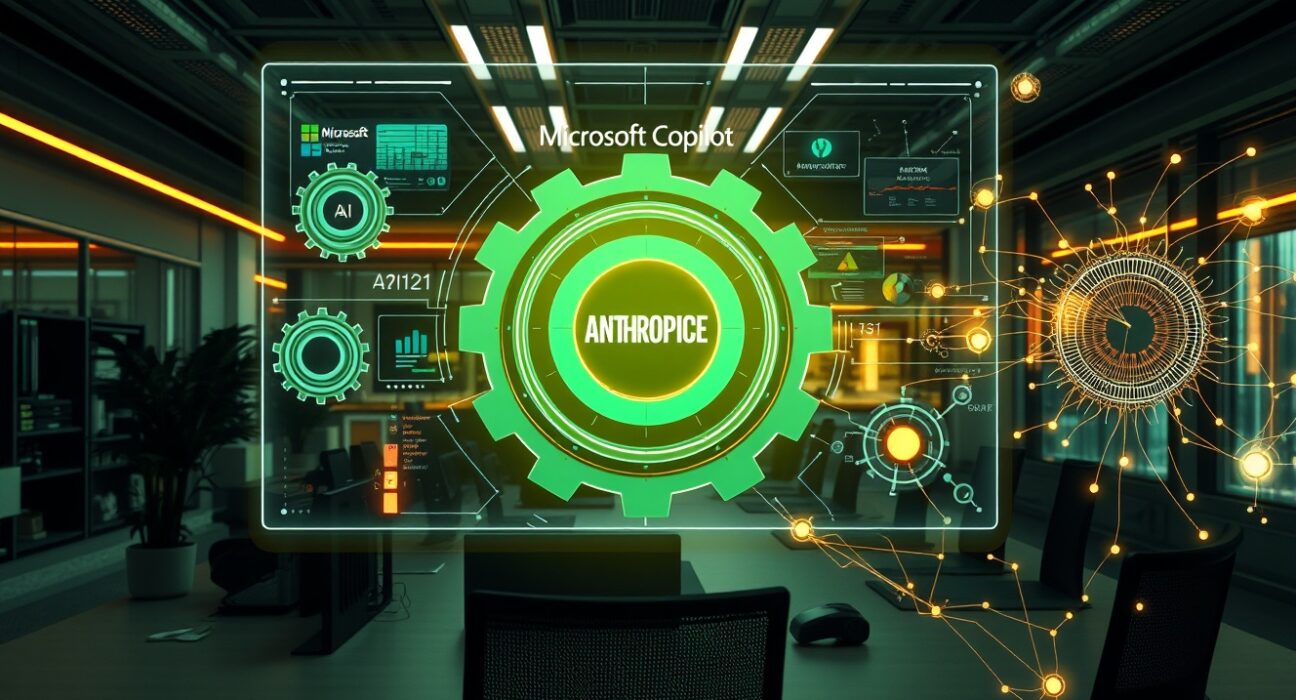
Microsoft has unveiled new features in its Copilot research assistant that allow users to utilize multiple AI models simultaneously within the same workflow. This represents a fundamental shift in how enterprises approach AI integration—moving from single-model dependence to a model-diverse approach that leverages the unique strengths of different AI systems. This article examines Microsoft's multi-model strategy, the technical innovations enabling simultaneous model operation, and what this means for the future of enterprise AI.
Introduction
The AI landscape has evolved significantly from the early days of single-model chatbots. Today, organizations have access to a diverse ecosystem of AI models, each excelling in different domains. OpenAI's GPT models excel at general reasoning, Anthropic's Claude demonstrates exceptional coding capabilities, Google's Gemini offers strong multimodal performance, and open-source models like Qwen and DeepSeek provide cost-effective alternatives for specific use cases.
Until recently, enterprises had to choose: which single model would power their AI initiatives? This choice was always a compromise—any single model represents a trade-off between capabilities, cost, speed, and specialization.
Microsoft's new Copilot features change this equation. By enabling multiple AI models to work simultaneously within the same workflow, Microsoft is pioneering a new approach to enterprise AI—one that leverages model diversity rather than requiring selection among single options.
This article explores Microsoft's multi-model Copilot strategy, the technical foundations enabling this approach, and the implications for enterprise AI implementation.
The Multi-Model Approach
What Microsoft Announced
In March 2026, Microsoft unveiled new capabilities in Copilot that represent a significant evolution in the assistant's architecture. The key innovation: users can now utilize multiple AI models within the same workflow, leveraging the unique strengths of different models for different tasks.
This means that a single Copilot session could:
- Use GPT-5 for initial reasoning and planning
- Switch to Claude for specialized coding tasks
- Leverage Gemini's multimodal capabilities for image analysis
- Utilize smaller models for simple queries where speed matters
The system intelligently routes requests to the appropriate model based on the task requirements, optimizing for capability, speed, cost, or whatever criteria the user specifies.
Why Multi-Model Matters
The multi-model approach addresses fundamental limitations of single-model systems:
Optimization trade-offs: Every model represents a trade-off between capability and cost. Smaller models are faster and cheaper but less capable; larger models are more capable but slower and more expensive. Multi-model systems can use the right tool for each job rather than compromising with one model for everything.
Specialization: Different models excel at different tasks. Claude's coding capabilities may outperform GPT for programming tasks; Gemini's multimodal processing may be superior for visual analysis. Multi-model systems can leverage each model's strengths.
Redundancy and reliability: Using multiple models provides redundancy—if one model experiences issues, others can continue functioning. This is particularly important for enterprise workflows that require reliability.
Cost optimization: Simple queries don't need expensive frontier models; complex reasoning requires them. Multi-model systems can route simple queries to cost-effective models while reserving expensive models for complex tasks.
Technical Implementation
How It Works
The technical implementation of multi-model workflows involves several key components:
Model orchestration layer: A new component in Copilot that manages routing between models based on task analysis. This layer evaluates each user request and determines which model is best suited for the task.
Context preservation: When switching between models, the system maintains context so that each subsequent model has the information it needs. This is technically challenging—different models have different context windows and processing approaches.
Result synthesis: When multiple models contribute to a single workflow, their outputs must be synthesized into coherent results. This requires intelligent merging of potentially conflicting outputs.
Performance optimization: The system optimizes for latency by pre-warming models that are likely to be needed based on workflow patterns.
Integration Architecture
Microsoft's multi-model Copilot integrates with:
- OpenAI models: GPT-5 and earlier versions
- Anthropic models: Claude 4.6 and earlier
- Google models: Gemini family
- Open-source models: Including Qwen and DeepSeek variants
- Microsoft's own models: Including specialized models for Microsoft 365 integration
This integration is made possible by Microsoft's position as a major cloud provider with relationships across the AI industry. Azure's infrastructure provides the compute necessary to run multiple models simultaneously.
Enterprise Implications
The Case for Multi-Model
Enterprises should consider multi-model approaches because:
Cost efficiency: By using smaller models for simple tasks, enterprises can significantly reduce AI costs while maintaining access to frontier capabilities for complex tasks.
Capability optimization: Different tasks require different capabilities. Multi-model systems enable enterprises to use the best model for each task rather than compromising with a single model.
Vendor flexibility: Multi-model approaches reduce dependency on any single AI provider, mitigating risk from vendor lock-in or service disruptions.
Future-proofing: The AI model landscape continues to evolve rapidly. Multi-model architectures can incorporate new models as they emerge without requiring fundamental redesign.
Implementation Considerations
Enterprises implementing multi-model strategies should consider:
Orchestration complexity: Managing multiple models adds complexity that must be handled by the system, not end users.
Cost tracking: Using multiple models makes cost tracking more challenging—enterprises need robust systems to understand where AI spend is going.
Security and compliance: Different models may have different security profiles and compliance certifications. Multi-model systems must maintain consistent security across all models.
Performance monitoring: Tracking performance across multiple models requires sophisticated monitoring systems.
The Competitive Landscape
Other Multi-Model Approaches
Microsoft is not alone in pursuing multi-model strategies:
OpenRouter: Provides a unified API for accessing multiple models, enabling developers to switch between models easily.
LangChain: Supports integration with multiple models, allowing developers to build applications that leverage different models.
Anthropic's Model Context Protocol: While focused on context rather than multi-model operation, MCP enables sophisticated model interactions.
Google's model garden: Offers access to multiple models through Google Cloud, though with less orchestration than Microsoft's approach.
Microsoft's Differentiation
Microsoft's approach is differentiated by:
Deep Office integration: Copilot is deeply integrated with Microsoft 365, providing multi-model capabilities within the productivity tools enterprises already use.
Enterprise-grade infrastructure: Azure provides the reliability, security, and compliance features enterprises require.
End-to-end experience: Microsoft controls the full stack from models through to user interface, enabling optimizations that more fragmented approaches cannot match.
Looking Forward
Evolution of Multi-Model AI
The multi-model approach is likely to evolve significantly:
More models: The number of available models will continue to grow, requiring increasingly sophisticated routing algorithms.
Dynamic model selection: Systems will become better at selecting models in real-time based on task requirements.
Specialized agents: Rather than just models, future systems will route between specialized agents, each optimized for specific workflows.
Cross-model learning: Future systems may enable models to learn from each other's outputs, improving overall system performance.
Implications for AI Strategy
Organizations developing AI strategies should consider:
Model diversity: Rather than selecting a single AI provider, strategy should incorporate multiple models.
Orchestration capabilities: Building or acquiring orchestration capabilities will become essential.
Cost management: Multi-model approaches require sophisticated cost tracking and optimization.
Human oversight: Even with multi-model capabilities, human oversight remains essential for quality and compliance.
Conclusion
Microsoft's introduction of multi-model capabilities in Copilot represents a significant evolution in enterprise AI. By enabling multiple AI models to work simultaneously within the same workflow, Microsoft is addressing fundamental limitations of single-model approaches—optimization trade-offs, specialization constraints, and vendor dependency.
The multi-model approach is not without challenges—orchestration complexity, cost tracking, and security considerations require careful attention. However, the benefits are substantial: more capable AI systems, better cost optimization, and reduced vendor risk.
As the AI landscape continues to evolve, the multi-model approach is likely to become standard practice. Organizations that build multi-model capabilities now will be better positioned to leverage the diverse and rapidly improving landscape of AI models.
The era of single-model AI is ending. The era of multi-model AI has begun.
Related Articles

The Rise of AI Agent Marketplaces: Platforms Reshaping Enterprise Automation
AI agent marketplaces are emerging as the new frontier in enterprise automation, enabling businesses to discover, deploy, and manage specialized AI agents for every business function.

AI Agent Security, Performance & Enterprise Deployment: The Deep Dive
we explored the fundamental philosophies behind OpenClaw, Manus AI, and Claude Code. Now it's time for the uncomfortable conversations — the ones every CTO and security lead needs to have before production deployment.
The Agentic Revolution—How AI Is Transforming from Chatbot to Autonomous Worker
AI agents are moving beyond simple chat interactions to autonomously executing complex tasks, marking a fundamental shift in how humans work with artificial intelligence