
Claude Helps NASA Perseverance Rover Complete First AI-Planned Drive on Mars
NASA achieves historic milestone as Anthropic's Claude AI models plan routes for Perseverance rover on Mars, marking the first time AI has autonomously navigated another planet.
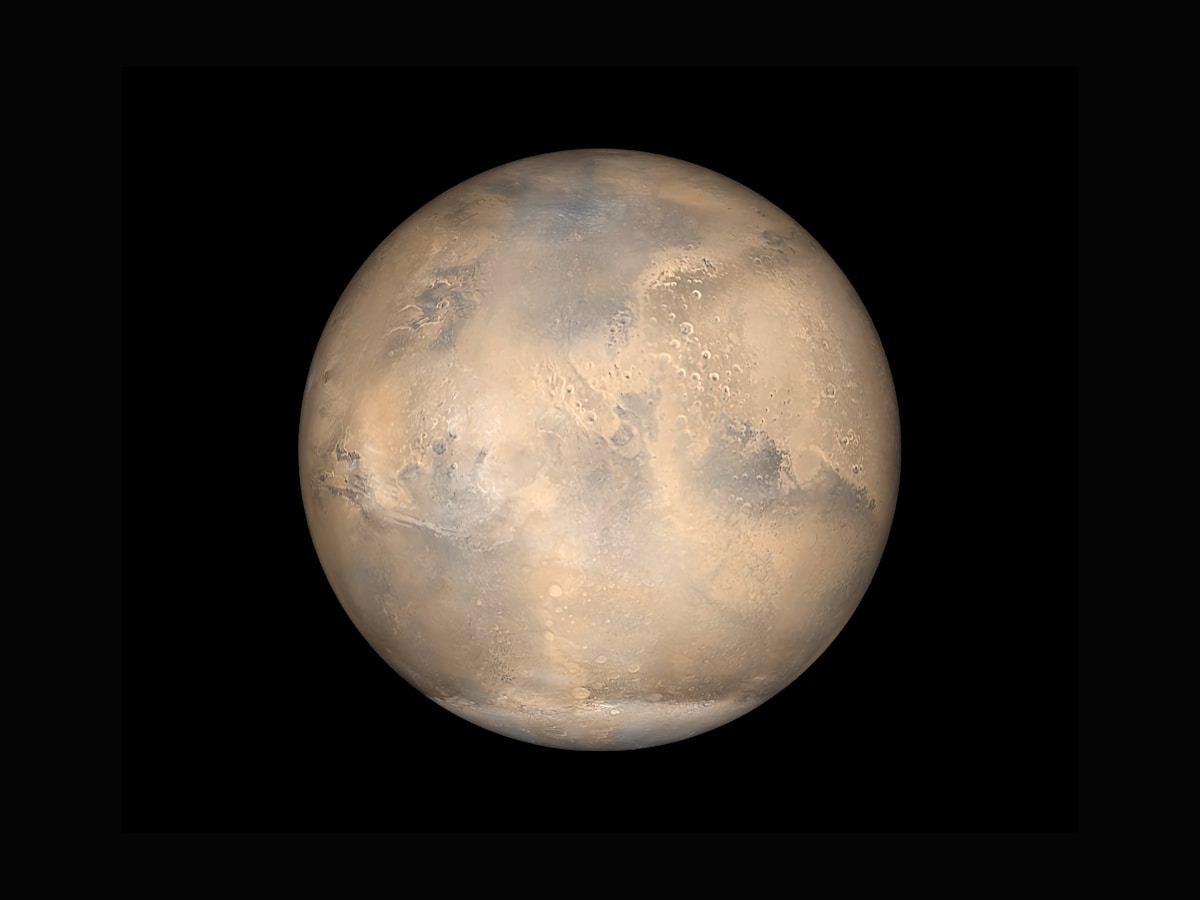
In a groundbreaking achievement for artificial intelligence in space exploration, NASA's Perseverance rover has completed the first drives on Mars that were planned entirely by AI. Using Anthropic's Claude family of AI models, NASA's Jet Propulsion Laboratory (JPL) successfully used generative AI to select waypoints for the rover, marking a historic milestone in autonomous space navigation. This achievement opens new possibilities for deep space exploration where communication delays make real-time human control impossible.
Introduction
On January 8 and 10, 2026, NASA's Perseverance rover completed its first AI-planned drives on Mars, traversing a combined distance of over 400 meters across the Martian surface. This achievement, led by NASA's Jet Propulsion Laboratory in Southern California, represents the first time that artificial intelligence has been used to autonomously navigate another planet.
The AI system, developed in partnership with Anthropic, used Claude models to analyze terrain data and select optimal waypoints for the rover's journey. This development marks a significant leap forward in space exploration capabilities, potentially enabling future missions to explore distant worlds with minimal human intervention.
The Technology Behind AI-Driven Mars Exploration
How Claude Plans Rover Routes
The traditional process of planning rover drives on Mars involves a team of human experts on Earth analyzing images and terrain data to select safe routes. This process can take days or even weeks, given the distance between Earth and Mars and the need for careful safety analysis.
The AI system using Claude models represents a fundamental shift in this workflow:
- Terrain Analysis: The AI processes images from the rover's cameras, analyzing the Martian terrain for obstacles, slope angles, and ground conditions
- Waypoint Selection: Based on the analysis, the AI identifies optimal waypoints that balance safety with efficiency
- Risk Assessment: The system evaluates potential hazards including rocks, sand traps, and steep inclines
- Path Optimization: The AI calculates the most efficient route between waypoints
Technical Capabilities
The Claude models demonstrated remarkable capability in understanding the complex constraints involved in rover navigation:
| Capability | Description |
|---|---|
| Obstacle Detection | Identifies rocks, craters, and terrain hazards |
| Slope Analysis | Evaluates terrain steepness for safe traversal |
| Surface Assessment | Determines ground stability for rover wheels |
| Route Optimization | Calculates efficient paths between destinations |
| Safety Prioritization | Prioritizes rover safety over speed |
Historical Context: AI in Space Missions
Previous AI Implementations
This achievement builds on years of incremental AI development in space exploration:
- Curiosity Rover (2012): Used basic autonomous driving aids but required human route planning
- Ingenuity Helicopter (2021): Demonstrated autonomous flight on Mars with pre-planned routes
- Perseverance Rover (2021): Initial autonomous driving capabilities using traditional algorithms
The Claude Difference
The use of Claude represents a significant advancement over previous AI approaches. Unlike rule-based systems, Claude can reason about complex scenarios, understand context, and make nuanced decisions that balance multiple competing priorities.
Implications for Future Space Exploration
Deep Space Missions
The successful implementation of AI navigation on Mars has profound implications for future deep space missions. At current distances, a radio signal can take between 4 and 24 minutes to travel from Earth to Mars, making real-time human control impossible.
AI-powered navigation could enable:
- Autonomous Scientific Operations: Rovers could independently identify and investigate interesting features
- Extended Mission Durations: Reduced dependence on Earth-based planning teams
- Increased Exploration Range: Rovers could cover more ground without waiting for human direction
- Emergency Response: AI could react to unexpected hazards faster than Earth-based teams
Future Missions
NASA has already indicated that AI navigation will be a key capability for future missions, including:
- Mars Sample Return missions
- Exploration of icy moons like Europa and Enceladus
- Potential human missions to Mars
Scientific Discoveries
Recent Findings
The Perseverance rover, now operating with AI assistance, continues to make significant scientific discoveries. In April 2026, the rover discovered unusual pale rocks on Mars containing unexpected minerals, including kaolinite, which hints at ancient warm, wet Mars conditions and suggests the planet may once have been habitable for life.
AI-Assisted Science
Beyond navigation, AI is increasingly assisting with scientific analysis on Mars. The rover uses AI to:
- Identify scientifically interesting targets for investigation
- Optimize data collection sequences
- Analyze rock compositions in real-time
- Detect changes in the Martian environment
Conclusion
The successful use of Claude AI to plan Perseverance rover drives on Mars represents a historic achievement in artificial intelligence and space exploration. This milestone demonstrates that AI can reliably perform complex navigation tasks on other planets, opening new possibilities for autonomous exploration of our solar system.
As AI capabilities continue to advance, we can expect to see increasingly sophisticated autonomous systems supporting space missions. The combination of AI and human creativity may well be the key to unlocking the secrets of the cosmos, from understanding the history of Mars to eventually exploring distant worlds where human presence is impossible.
This achievement also represents a significant validation of AI capabilities in critical real-world applications. When an AI system can safely navigate a multi-billion-dollar rover across millions of miles of space, it demonstrates a level of reliability and capability that has profound implications for AI applications on Earth.
Related Articles

The Rise of AI Agent Marketplaces: Platforms Reshaping Enterprise Automation
AI agent marketplaces are emerging as the new frontier in enterprise automation, enabling businesses to discover, deploy, and manage specialized AI agents for every business function.

AI Agent Security, Performance & Enterprise Deployment: The Deep Dive
we explored the fundamental philosophies behind OpenClaw, Manus AI, and Claude Code. Now it's time for the uncomfortable conversations — the ones every CTO and security lead needs to have before production deployment.

The Agentic Revolution—How AI Is Transforming from Chatbot to Autonomous Worker
AI agents are moving beyond simple chat interactions to autonomously executing complex tasks, marking a fundamental shift in how humans work with artificial intelligence