
AI in Manufacturing: Industrial Automation and Predictive Maintenance
How artificial intelligence is revolutionizing manufacturing through predictive maintenance, quality control, and smart factory systems.
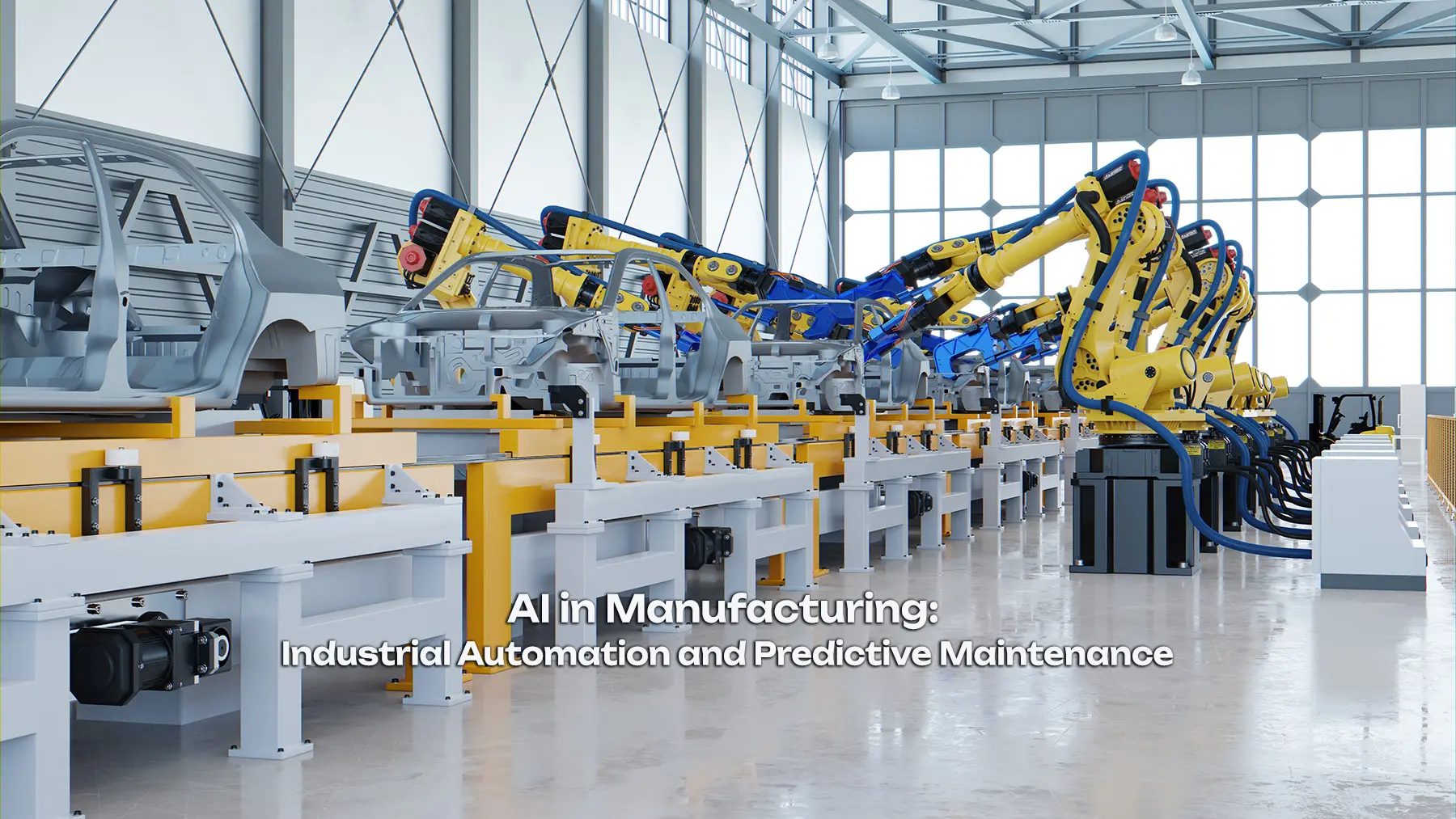
Manufacturing stands on the cusp of a fourth industrial revolution, driven by artificial intelligence. From predictive maintenance that prevents failures before they occur to quality control that exceeds human capabilities, AI transforms how factories operate. This article explores AI's transformation of manufacturing.
Introduction
Factories have evolved from manual operations to increasingly automated systems. AI represents the next leap, enabling machines that optimize themselves, predict failures, and ensure quality without constant human intervention.
By 2026, AI-powered factories operate across industries, from automotive to electronics. These systems analyze sensor data, predict maintenance needs, and optimize production in real-time. The result: higher quality, lower costs, and unprecedented efficiency.
Predictive Maintenance
How Predictive Maintenance Works
Predictive maintenance uses AI to predict equipment failures before they occur. Unlike traditional maintenance schedules, predictive systems respond to actual equipment condition.
| Maintenance Approach | Reactive | Preventive | Predictive |
|---|---|---|---|
| Downtime | High | Moderate | Low |
| Cost | High | Moderate | Low |
| Failure Prevention | Poor | Moderate | Excellent |
| Parts Inventory | High | Moderate | Low |
Sensor Integration
Predictive maintenance relies on sensor data:
- Vibration analysis
- Temperature monitoring
- Current draw
- Acoustic signatures
Failure Prediction Models
Machine learning models predict failures:
- Remaining useful life estimation
- Failure mode identification
- Maintenance timing optimization
- Spare parts forecasting
Quality Control with AI
Computer Vision for Inspection
AI-powered computer vision exceeds human inspection capabilities:
- Defect detection rates
- Consistency across shifts
- Speed of inspection
- Documentation automation
Statistical Process Control
AI enhances statistical process control:
- Real-time variance monitoring
- Process optimization
- Root cause analysis
- Capability assessment
Quality Prediction
AI predicts quality before production completes:
- In-process quality estimation
- Final product prediction
- Scrap reduction
Smart Factory Systems
Factory Optimization
AI optimizes entire factories:
- Production scheduling
- Resource allocation
- Energy management
- Layout optimization
Digital Twins
AI-powered digital twins model factory operations:
- Simulation capabilities
- What-if analysis
- Training environments
- Performance prediction
Supply Chain Integration
AI connects factories with supply chains:
- Demand forecasting
- Inventory optimization
- Logistics coordination
Industrial Robotics
Collaborative Robots
AI enables collaborative robots that work alongside humans:
- Safe interaction
- Learning from demonstration
- Adaptive behavior
- Flexible deployment
Robot Vision
AI-powered robot vision enables:
- Part recognition
- Quality inspection
- Adaptive grasping
- Path planning
Fleet Management
AI manages robot fleets:
- Task allocation
- Performance optimization
- Maintenance scheduling
Implementation Considerations
Data Infrastructure
AI manufacturing requires data infrastructure:
- Sensor networks
- Data storage
- Connectivity
- Integration
Skills Development
Manufacturing teams need new skills:
- Data analysis
- AI system management
- Integration skills
- Continuous improvement
Security Concerns
Manufacturing AI raises security concerns:
- Operational technology security
- Intellectual property protection
- Supply chain security
The Future of AI Manufacturing
Fully Autonomous Factories
Future factories will operate increasingly autonomously:
- Self-optimizing production
- Automated quality control
- Self-healing systems
Sustainable Manufacturing
AI enables sustainable manufacturing:
- Energy optimization
- Waste reduction
- Circular economy integration
Conclusion
AI has transformed manufacturing from schedule-driven to data-driven and predictive. The factories that succeed will be those that effectively integrate AI while maintaining the human expertise that has always driven manufacturing excellence. The result: higher quality, lower costs, and more sustainable production.
Related Articles

The Great AI Divergence: OpenAI's Losses vs Anthropic's Rise
As OpenAI projects $14 billion in losses for 2026, Anthropic quietly closes the revenue gap—revealing two very different business models in the AI race.
The Great AI Spending Race: OpenAI Burns $14B as Anthropic Closes the Revenue Gap
OpenAI's aggressive spending meets Anthropic's surprising efficiency as the AI race enters a new phase of sustainable growth and strategic differentiation.
NVIDIA's $4 Trillion Empire: How Blackwell and Rubin Are Reshaping the AI Infrastructure Landscape
NVIDIA's market cap surpasses $4 trillion as Blackwell and Rubin architectures drive unprecedented AI compute demand, with the company projecting $1 trillion in sales potential.