
AI Copilots in Professional Tools: Beyond Chatbots to Intelligent Collaboration
How AI assistants are transforming professional software from word processors to design tools, legal platforms, and financial systems, and what the next wave of intelligent professional tools looks like.
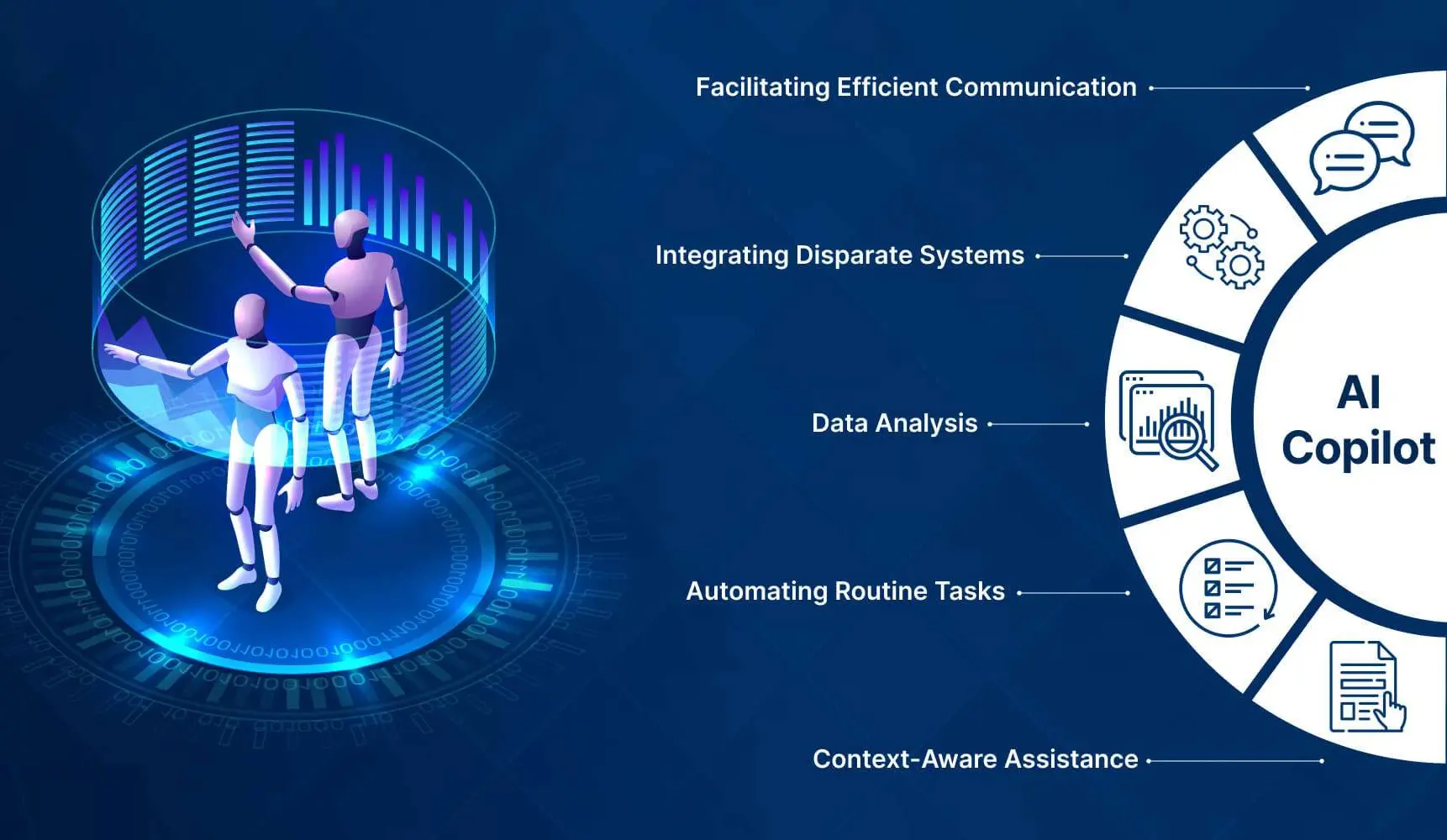
The concept of the AI copilot — an intelligent assistant integrated directly into professional software — has moved from marketing slogan to production reality. Major software vendors across every professional domain are embedding AI capabilities into their platforms, from writing assistance in word processors to design generation in creative tools, legal research in practice management systems, and financial analysis in enterprise software. This article examines the current state of AI copilots across professional domains, the technical approaches powering these systems, the emerging patterns of human-AI collaboration, and the challenges of making AI copilots genuinely useful rather than merely novel.
Introduction
The software industry has long promised tools that would make professionals more productive. Spreadsheets eliminated the need for manual calculation. Word processors replaced typewriters. Collaboration tools enabled distributed teamwork. Each wave of productivity software changed how professionals work, but the fundamental unit of work remained the individual human using software as a tool.
AI copilots represent a qualitatively different promise: not just a more powerful tool, but an active participant in the work itself. The shift is subtle but profound. Traditional software does what users tell it to do. AI copilots offer to understand what users are trying to accomplish and contribute to achieving it.
This distinction plays out differently across professional domains, with each area developing its own patterns of human-AI collaboration shaped by the specific nature of the work, the requirements for accuracy and accountability, and the cultural norms of the profession.
The Copilot Landscape by Domain
AI copilots are appearing across professional software, but their implementation and impact vary dramatically by domain.
Document Production and Writing
The earliest and most visible AI copilots appeared in writing tools, and they have matured significantly:
Microsoft Copilot in Office: Integrated into Word, Excel, PowerPoint, and Outlook, Microsoft Copilot can draft documents from brief descriptions, summarize lengthy content, generate presentations from data, and draft email responses. The tight integration with Microsoft 365 data — documents, emails, calendars, chats — enables contextually relevant assistance.
Google Workspace AI: Google's Duet AI provides similar capabilities within Docs, Sheets, and Gmail, with particular strength in natural language queries over spreadsheet data.
Specialized Writing Tools: Beyond general productivity suites, specialized writing tools are embedding AI for specific purposes: legal brief drafting, academic paper assistance, marketing copy generation, and technical documentation.
| Capability | Word Processors | Email Clients | Specialized Tools |
|---|---|---|---|
| Draft Generation | ✅ Full document from outline | ✅ Email from brief | ✅ Domain-specific templates |
| Editing and Refinement | ✅ Tone, clarity, length adjustments | ✅ Professional polish | ✅ Style compliance |
| Research Integration | Limited | Minimal | Strong domain databases |
| Workflow Integration | Document-centric | Communication-centric | Process-centric |
Creative and Design Tools
AI copilots in creative tools face unique challenges. Creative work involves not just technical execution but aesthetic judgment, brand consistency, and the expression of human intent.
Adobe Firefly and Creative Cloud: Adobe has integrated generative AI throughout its Creative Cloud suite. Firefly enables text-to-image generation, intelligent editing, and automatic style matching. The broader Adobe AI assistant can guide users through complex workflows, suggest techniques, and automate repetitive tasks.
Figma AI: Design platform Figma has added AI capabilities for generating UI components, suggesting layouts, and automating design system compliance. The integration with design files and component libraries enables contextually relevant suggestions.
Video Editing: AI copilots in video editing tools can identify key moments, suggest cuts, generate captions, and even create rough cuts from raw footage. Tools like Descript and Adobe Premiere Pro are pioneering these capabilities.
Legal Technology
Legal work presents particularly demanding requirements for AI copilots. Accuracy is paramount, accountability is essential, and the domain involves complex reasoning over large document collections.
Legal Research: AI copilots can search case law, statutes, and secondary sources more effectively than traditional keyword search. They can synthesize information from multiple sources, identify relevant precedents, and highlight arguments favorable or unfavorable to a position.
Contract Analysis: AI-powered contract review tools can identify unusual provisions, compare agreements to standard templates, flag potential risks, and extract key terms for summary.
Brief and Document Drafting: Legal AI copilots can draft initial versions of contracts, briefs, memos, and correspondence that lawyers then refine and finalize. The best tools understand legal conventions, citation formats, and jurisdiction-specific requirements.
Financial Services
Financial professionals rely on AI copilots for analysis, reporting, and decision support:
Financial Analysis: AI copilots in spreadsheet applications and financial platforms can explain spreadsheet formulas, generate financial models from descriptions, and provide narrative summaries of data.
Report Generation: From earnings reports to investment memos, AI copilots can generate initial drafts from financial data, reducing the time spent on routine report production.
Risk Analysis: AI systems can analyze documents, news, and market data to identify risks and opportunities, presenting findings in accessible formats for human decision-makers.
Emerging Patterns of Human-AI Collaboration
Across domains, several patterns of human-AI collaboration are emerging as particularly effective:
The Orchestrator Pattern
Rather than AI performing tasks independently, the most effective copilots position the human as an orchestrator who directs, reviews, and refines AI contributions. The AI handles execution while the human focuses on direction and quality assurance.
This pattern works well when:
- Tasks have subjective quality dimensions that AI cannot fully evaluate
- Accountability requires human oversight
- Tasks involve creative judgment or aesthetic decisions
The Amplifier Pattern
AI amplifies the impact of human expertise by automating routine aspects of work. A lawyer uses AI to draft initial contracts, then focuses their expertise on negotiation and strategy. A designer uses AI to generate layout options, then applies their creative judgment to select and refine the best approach.
This pattern maximizes the value of scarce expertise by handling routine work that would otherwise consume professionals' time.
The Expert Pattern
In specialized domains, AI copilots serve as expert advisors who provide knowledge that the human may lack. A generalist uses AI with deep domain expertise to handle specialized tasks, effectively extending their capabilities beyond their personal knowledge base.
This pattern is particularly valuable in fields like legal and financial services, where specialists command premium rates but their time is consumed by tasks that could be handled by knowledgeable AI.
Challenges and Limitations
Despite significant progress, AI copilots face substantial challenges that limit their effectiveness in professional contexts.
Accuracy and Hallucination
AI systems can generate plausible-sounding but incorrect information — a serious problem in domains where accuracy matters. Legal citations may reference non-existent cases. Financial calculations may apply incorrect formulas. Professional communications may contain factual errors.
Addressing this challenge requires:
- Domain-specific validation and grounding
- Clear confidence indicators for AI outputs
- Human review processes for consequential content
- Continuous improvement based on error feedback
Accountability Gaps
When an AI copilot produces an error, who is responsible? The software vendor, the professional using it, or the organization that deployed it? This question remains legally and professionally unclear.
Professional bodies are beginning to develop guidance on AI use, but the regulatory framework is lagging behind technology deployment. Until accountability is clearly established, professionals bear risk when relying on AI assistance.
Trust Calibration
Users of AI copilots face a fundamental calibration challenge: trusting AI enough to benefit from its assistance while remaining skeptical enough to catch its errors. Research suggests this calibration is difficult — users tend to either over-trust or under-trust AI systems, rarely hitting the appropriate middle ground.
Effective AI copilot design addresses this through transparency about capabilities and limitations, clear confidence indicators, and interfaces that encourage engagement rather than passive acceptance.
The Future of Professional AI
The trajectory of AI copilots points toward increasingly capable and integrated systems:
Deeper Integration: Future copilots will understand not just the current document or task but the full context of a professional's work — their projects, their clients, their communication history, and their patterns of collaboration.
Proactive Assistance: Rather than waiting for user requests, future copilots may anticipate needs and offer assistance before being asked — flagging potential issues, suggesting next steps, and surfacing relevant information.
Multi-Agent Collaboration: Complex professional tasks may involve multiple specialized AI agents — one for research, one for drafting, one for review — collaborating under human direction.
Conclusion
AI copilots are transforming professional software from passive tools into active collaborators. The transformation is uneven across domains and uneven in quality, but the direction is clear: the future of professional software is intelligent, adaptive, and conversational.
The most successful implementations will be those that genuinely augment human expertise rather than replacing judgment with automation. The goal is not a world where AI does the work of professionals, but a world where professionals, empowered by AI, can accomplish far more than either could alone.
For professionals, adapting to this new landscape means developing new skills — not just knowing how to use AI tools, but knowing when to trust them, when to override them, and how to maintain the judgment and accountability that define professional expertise. The copilot metaphor is apt: in aviation, the copilot is not the pilot — but a well-trained copilot makes the entire crew more effective.
Related Articles

How AI Systems Manage Memory and Context Across Long Conversations
An in-depth exploration of how AI systems handle memory and context management—from context windows and token budgets to memory architectures and retrieval mechanisms used in production deployments.
Model Versioning and Experiment Tracking: Organizing ML Development at Scale
A practical guide to managing ML experiments and model versions using tools like MLflow, Weights & Biases, and DVC. Covers experiment tracking, model registry patterns, and scaling strategies for teams.

AI Model Quantization Techniques: From Research to Edge Deployment
A practical exploration of model quantization methods for edge AI deployment, comparing INT8, FP16, and INT4 approaches with accuracy tradeoffs and tool recommendations.