
NVIDIA Blackwell Architecture: The Engine Behind the AI Factory Era
NVIDIA's Blackwell architecture is transforming AI infrastructure with 3x faster training and nearly 2x performance per dollar compared to previous generation. The GB200 NVL72 delivers 30X faster inference for trillion-parameter LLMs.
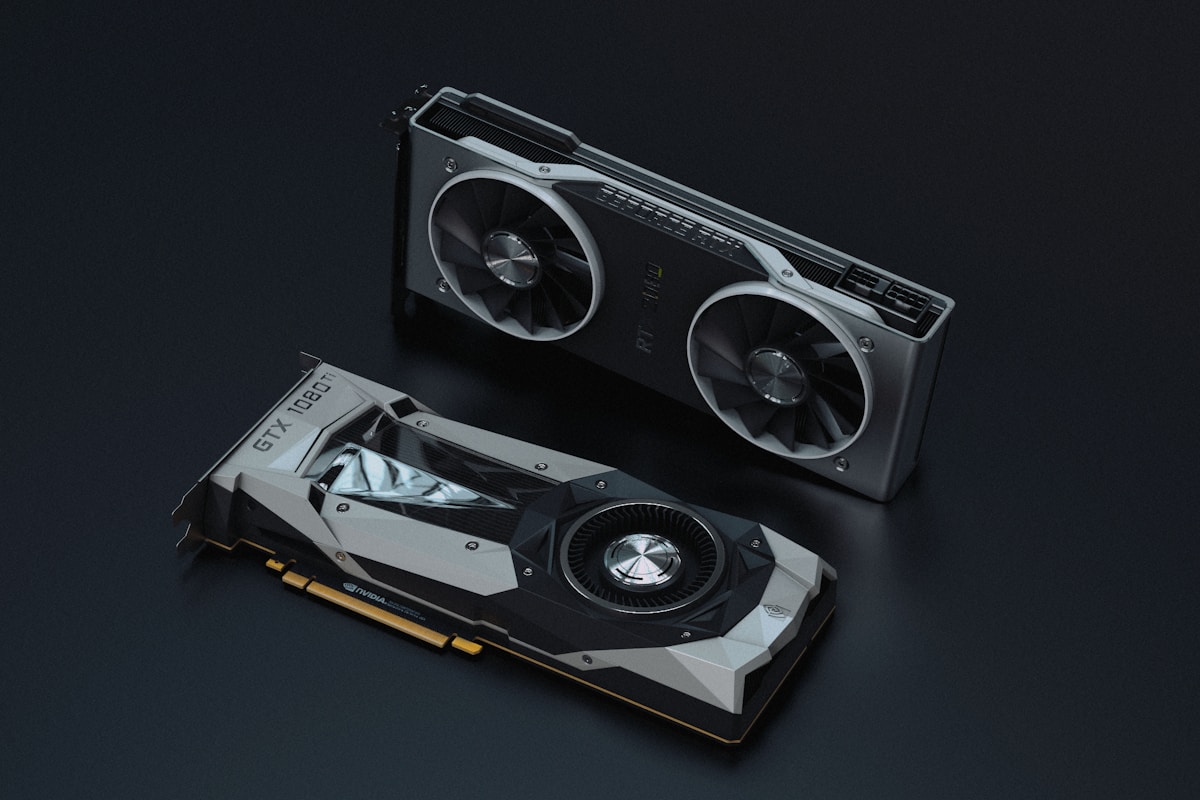
NVIDIA's Blackwell architecture represents a fundamental shift in AI infrastructure, marking the transition from traditional data centers to "AI factories." With 3x faster training speed and nearly 2x training performance per dollar compared to the previous generation, Blackwell is enabling organizations to train larger models more efficiently than ever before. This article examines the technical innovations behind Blackwell, its performance characteristics, and implications for the AI industry in 2026.
Introduction
The AI industry is experiencing a fundamental transformation in how compute infrastructure is designed and deployed. At the center of this shift is NVIDIA's Blackwell architecture, a platform specifically engineered for the demands of modern AI workloads—including training frontier models with trillions of parameters and serving those models at scale.
The numbers are striking: Blackwell enables 3x faster training and nearly 2x training performance per dollar compared to Hopper. The flagship GB200 NVL72 delivers 30X faster real-time inference for trillion-parameter large language models. These aren't incremental improvements—they represent a qualitative shift in what's possible.
Blackwell Architecture: Technical Deep Dive
Key Innovations
The Blackwell architecture introduces several significant technical innovations:
| Feature | Description | Impact |
|---|---|---|
| NVFP4 Precision | 4-bit floating point for AI | 2x efficiency gain |
| 72-GPU NVLink Domain | Massive GPU interconnect | Single massive GPU |
| Second-Generation Transformer Engine | Dynamic precision and sparsity | Optimized for LLMs |
| Confidential Computing | Hardware-based security | Enterprise-grade protection |
The GB200 NVL72: Flagship Platform
The GB200 NVL72 represents the most powerful AI training platform ever built. Key specifications:
- 72 Blackwell GPUs operating as a single unified system
- Liquid-cooled for sustained maximum performance
- 30X faster inference for trillion-parameter LLMs
- NVLink domain provides 1.8 TB/s of interconnect bandwidth
Blackwell Ultra: The Next Evolution
The recently announced Blackwell Ultra builds on the original architecture with enhanced capabilities:
- Higher sustained throughput
- Better memory efficiency
- Faster large-batch pre-training
- Optimized for reinforcement learning post-training
- Low-batch, high-interactivity inference
Performance Analysis
Training Performance
NVIDIA's benchmarks using the Llama 3.1 405B model demonstrate Blackwell's capabilities:
| Metric | H100 (Hopper) | Blackwell | Improvement |
|---|---|---|---|
| FP8 Training Throughput | 3,958 TFLOPS | 9,000 TFLOPS | 2.27x |
| Memory Bandwidth | 3.35 TB/s | 8 TB/s | 2.4x |
| Training Speed | Baseline | 3x faster | 3x |
| Performance per Dollar | Baseline | ~2x | 1.98x |
Inference Performance
For inference workloads, Blackwell delivers even more dramatic improvements:
- 30X faster real-time inference for trillion-parameter LLMs
- Support for next-generation models with well over a trillion parameters
- Energy efficiency improvements reduce operational costs
The AI Factory Paradigm
From Data Centers to AI Factories
Blackwell represents NVIDIA's vision for a new category of infrastructure: the AI factory. Unlike traditional data centers that primarily store and process data, AI factories are purpose-built for:
- Continuous model training - Iterative improvement of AI models
- Massive inference scale - Serving AI predictions at internet scale
- Synthetic data generation - Creating training data for physical AI
- Physical AI training - Training robots and autonomous systems
Physical AI and Robotics
A key application of Blackwell's capabilities is physical AI—enabling companies to generate synthetic, photorealistic videos in real time for training robots and autonomous vehicles at scale. This represents a significant expansion of AI beyond language models into the physical world.
Infrastructure Requirements
Scale-Out Networking
Blackwell Ultra systems integrate with advanced networking:
- NVIDIA Quantum-X800 InfiniBand platforms
- 800 Gb/s data throughput per GPU
- NVIDIA ConnectX-8 SuperNIC
- Reduced latency and jitter for optimal performance
Memory and Storage
The architecture supports next-generation memory and storage:
- HBM3e memory for high-bandwidth workloads
- NVMe storage for high-speed data access
- Grace CPU integration for optimized data movement
Market Impact and Adoption
Pricing and Accessibility
While Blackwell represents premium technology, the performance-per-dollar improvements make it more accessible:
| GPU | Price | Relative Value |
|---|---|---|
| B200 | ~$30,000 | 4x H100 throughput, 2.4x memory |
| H100 | $18,000-$22,000 | Previous generation baseline |
The 4x throughput improvement at roughly 2x the price delivers substantial value for organizations training large models.
Industry Adoption
Major cloud providers and enterprises are rapidly adopting Blackwell:
- Oracle Cloud - AI factory deployments
- Microsoft Azure - Large-scale AI infrastructure
- Google Cloud - Advanced AI workloads
- Amazon Web Services - EC2 instances with Blackwell
Looking Ahead: 2026 and Beyond
Future Developments
The trajectory suggests continued rapid advancement:
- Larger models - Support for models well beyond a trillion parameters
- More efficient training - Further optimization of training workflows
- Expanded applications - Physical AI, robotics, autonomous systems
- Broader accessibility - More organizations able to leverage frontier AI
The Compute Imperative
As AI models continue to grow in capability and complexity, the compute requirements increase exponentially. Blackwell addresses this imperative, but the industry continues to push the boundaries of what's possible.
Conclusion
NVIDIA's Blackwell architecture represents more than a generational improvement in GPU technology—it marks the emergence of AI factories as a distinct category of infrastructure. With 3x faster training, nearly 2x performance per dollar, and 30X faster inference for the largest models, Blackwell enables organizations to pursue AI strategies that were previously impractical.
The implications extend beyond technical performance. As AI becomes capable of more complex reasoning and physical world interaction, the infrastructure supporting it must evolve accordingly. Blackwell provides that foundation, enabling the next phase of AI development.
Related Articles

AMD MI450 Accelerator: The Chip Challenging Nvidia's AI Dominance
AMD's MI450 accelerator is set to launch in the second half of 2026 with a massive 6GW deal from Meta, marking a significant challenge to Nvidia's market leadership in AI computing.
AI Chips: Arm's $15 Billion Bet: The AGI Chip That Could Reshape Data Centers
Arm announces a new AGI-focused CPU targeting $15 billion in annual revenue by 2031, with the CPU total addressable market projected to reach $100 billion.
Brain-Inspired AI Chips: 2000x Energy Efficiency Breakthrough
Loughborough University researchers develop revolutionary chip using material physics that could transform AI energy consumption