
NVIDIA Blackwell Dominance: 80% Market Share and the AI Chip Race
NVIDIA maintains iron grip on AI accelerator market with 80% share while Blackwell architecture powers the AI factory era
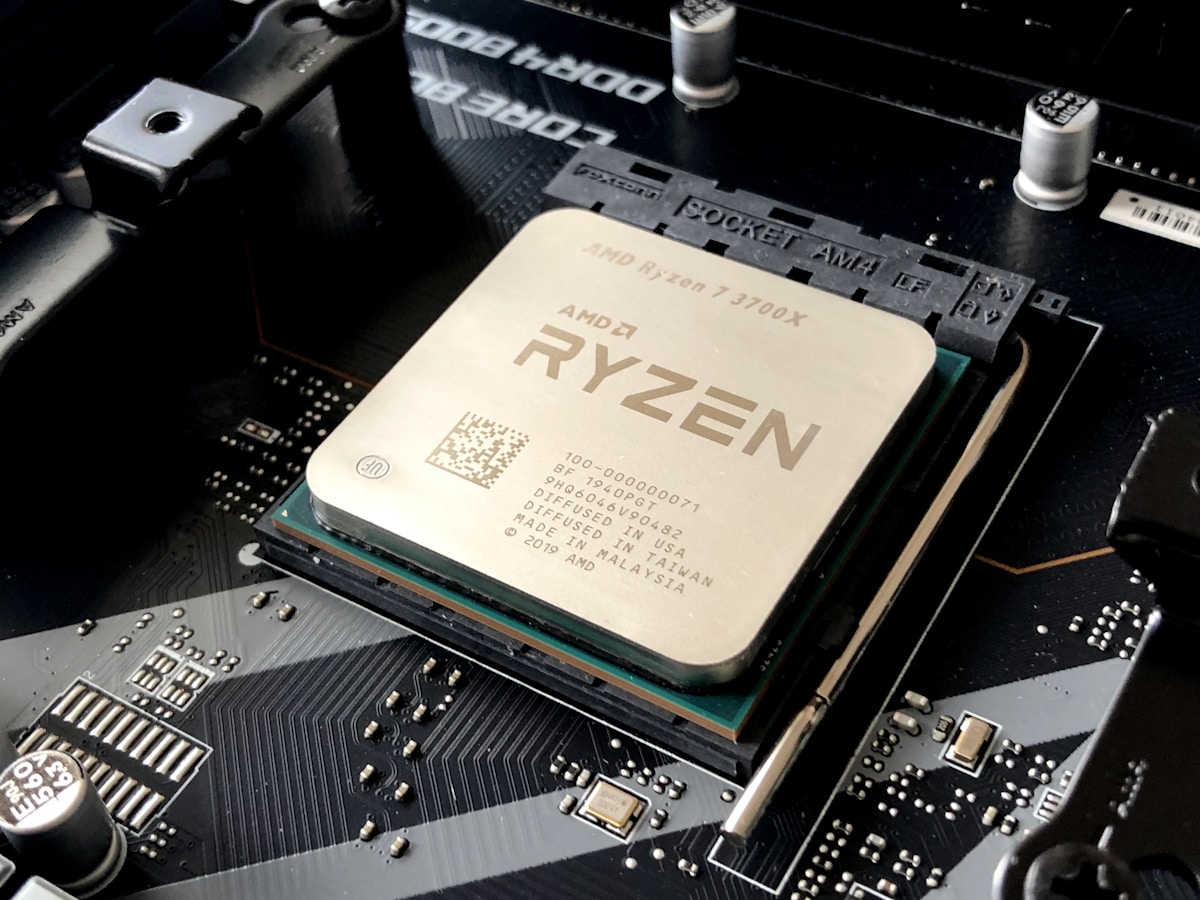
NVIDIA continues to dominate the AI accelerator market with an estimated 80% share in 2026, as the Blackwell architecture powers the next generation of AI computing. The company's data center revenue has grown 75% year-over-year, establishing NVIDIA as the essential infrastructure provider for the global AI revolution.
Introduction
The AI chip market in 2026 looks remarkably like the previous two years: NVIDIA at the center, competitors scrambling for the remaining 20%, and the industry essentially waiting for NVIDIA's next move. This dominance shows no signs of weakening as the Blackwell architecture establishes itself as the default choice for AI training and inference at scale.
The numbers tell the story clearly. In Q3 2023 alone, NVIDIA sold 500,000 H100 accelerators—a figure that was staggering at the time and has only been exceeded by subsequent generations. The company has now grown into a $2+ trillion market capitalization, trailing only Microsoft and Apple among US publicly traded companies.
Blackwell Architecture Deep Dive
Technical Specifications
The Blackwell architecture represents a massive leap in AI computing capability:
| Specification | Value | Comparison to Hopper |
|---|---|---|
| Transistors | 208 billion | 2x Hopper |
| Die Count | 2 (chiplet design) | Single die |
| Interconnect | 10 TB/s chip-to-chip | New design |
| Memory | HBM3e | Upgraded |
| TDP | Up to 1000W | Higher |
The Chiplet Approach
Blackwell's design uses two reticle-limited dies connected via a high-speed interconnect:
- Each die approaches the maximum physically manufacturable size
- 10 TB/s bandwidth between dies enables unified memory operation
- Manufacturing yields improved through chiplet approach
- Cost efficiency higher than single large die
Performance Metrics
| Metric | Blackwell (B100) | Hopper (H100) |
|---|---|---|
| FP16 TFLOPS | ~2,000 | 989 |
| Training TFLOPS | ~4,000 | 1,980 |
| Inference Performance | 3-5x improvement | Baseline |
| Training Time Reduction | 4x faster | N/A |
Market Dynamics
80% Market Share
The AI accelerator market in 2026:
| Vendor | Estimated Share | Key Products |
|---|---|---|
| NVIDIA | 80% | Blackwell, H100, H200 |
| AMD | 12% | MI300X, MI350 |
| Intel | 5% | Gaudi 3 |
| Others | 3% | Custom silicon |
Competitive Response
AMD: The MI350 series aims to close the gap but faces challenges:
- Software ecosystem significantly behind CUDA
- Enterprise adoption slow despite competitive pricing
- Estimated 12% share, up from 8% in 2025
Intel: Gaudi 3 positioning as value alternative:
- Lower price point attractive to cost-conscious buyers
- Performance approximately 50% of NVIDIA equivalent
- Limited availability and supply chain constraints
Custom Silicon: Hyperscalers developing own chips:
- Google TPU v5
- Amazon Trainium/Inferentia
- Microsoft Maia
- Combined share < 5%
Data Center Revenue Explosion
NVIDIA's Financial Performance
The AI infrastructure boom continues to fuel NVIDIA's growth:
| Quarter | Data Center Revenue | YoY Growth |
|---|---|---|
| Q1 2025 | $18.4 billion | +87% |
| Q2 2025 | $22.2 billion | +91% |
| Q3 2025 | $24.3 billion | +78% |
| Q4 2025 | $28.0 billion | +65% |
Full year 2025: approximately $93 billion in data center revenue, 75% year-over-year growth.
GPU Pricing Economics
The market for AI compute has matured significantly:
| Component | 2024 Price | 2026 Price | Trend |
|---|---|---|---|
| H100 (80GB) | $30,000-40,000 | $25,000-32,000 | Declining |
| H200 | $35,000-45,000 | $28,000-38,000 | Declining |
| B100 | New | $35,000-45,000 | Stable |
| Cloud (8xH100/hour) | $30-40 | $24-32 | Declining |
The AI Factory Era
What Are AI Factories?
NVIDIA's vision for the next generation of computing infrastructure:
- Massive Scale: Data centers with 100K+ GPUs
- Centralized Training: Single models trained on entire datasets
- Continuous Learning: Models updated in real-time
- Specialized Infrastructure: Purpose-built for AI workloads
Blackwell's Role
Blackwell is architected specifically for AI factory workloads:
- Multi-trillion parameter support: Enables future model scaling
- Higher FP8 performance: Optimized for inference
- Advanced networking: Quantum InfiniBand for massive clusters
- Energy efficiency: Improved performance per watt vs. Hopper
Supply Chain and Availability
Current State
| Product | Lead Time | Supply Status |
|---|---|---|
| H100 | 8-12 weeks | Adequate |
| H200 | 12-16 weeks | Constrained |
| B100 | 16-20 weeks | Very constrained |
| B200 | Not yet shipping | Limited |
Manufacturing
TSMC remains the sole manufacturer:
- 4NP process (custom variant of 4nm)
- Advanced packaging (CoWoS) capacity limiting factor
- Estimated 2026 Blackwell production: 2-3 million B300-equivalent units
Future Roadmap
Rubin Architecture
NVIDIA has already announced the next generation:
- Expected: Q4 2026 or Q1 2027
- Continuation of chiplet approach
- Further performance improvements expected
- Will likely use TSMC 3nm process
Industry Implications
The competitive gap shows no signs of narrowing:
- AMD and Intel remain 2-3 generations behind
- Custom silicon from hyperscalers not competitive for general training
- NVIDIA's software moat (CUDA, TensorRT, etc.) remains unmatched
Conclusion
NVIDIA's 80% market share in AI accelerators represents more than competitive advantage—it reflects a structural lock on AI infrastructure that appears unbreakable in the near term. The Blackwell architecture's performance advantages, combined with NVIDIA's software ecosystem, create a compounding lead that competitors struggle to close.
As AI factories scale to millions of GPUs and models reach trillions of parameters, NVIDIA's position as the essential infrastructure provider only strengthens. The question is not whether NVIDIA will dominate, but how quickly the industry can develop alternatives to reduce dependency on a single vendor.
For now, Blackwell represents the state of the art in AI computing, and the world's AI workloads flow through NVIDIA's silicon.
Related Articles

AMD MI450 Accelerator: The Chip Challenging Nvidia's AI Dominance
AMD's MI450 accelerator is set to launch in the second half of 2026 with a massive 6GW deal from Meta, marking a significant challenge to Nvidia's market leadership in AI computing.
AI Chips: Arm's $15 Billion Bet: The AGI Chip That Could Reshape Data Centers
Arm announces a new AGI-focused CPU targeting $15 billion in annual revenue by 2031, with the CPU total addressable market projected to reach $100 billion.
Brain-Inspired AI Chips: 2000x Energy Efficiency Breakthrough
Loughborough University researchers develop revolutionary chip using material physics that could transform AI energy consumption