
Neuromorphic Computing Breakthrough: Brain-Inspired AI Challenges Supercomputers
Neuromorphic computers modeled after the human brain can now solve complex physics equations previously requiring energy-hungry supercomputers, marking a paradigm shift in computing.
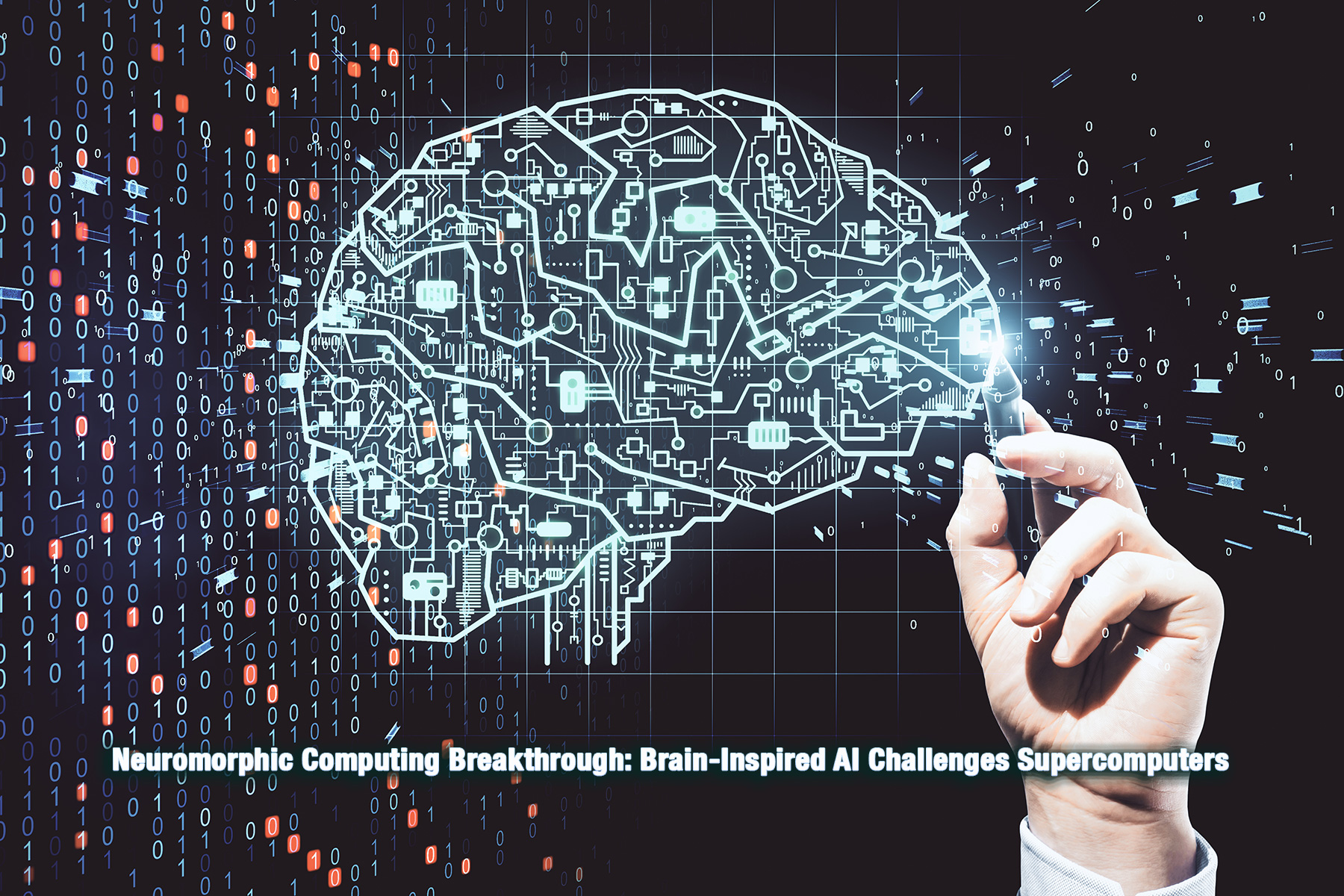
A groundbreaking development in computing has emerged from the intersection of neuroscience and artificial intelligence: neuromorphic computers modeled after the human brain can now solve the complex equations behind physics simulations—something once thought possible only with energy-hungry supercomputers. This breakthrough represents a paradigm shift in computing, promising dramatic improvements in energy efficiency while maintaining the computational power needed for advanced AI and scientific applications.
Introduction
For decades, the pursuit of more powerful computing has followed a familiar path: cramming more transistors onto silicon chips, decreasing feature sizes, and increasing clock speeds. This approach, known as Moore's Law, has driven the digital revolution but is approaching fundamental physical limits.
Meanwhile, the human brain—a computational system that outperforms the most advanced supercomputers on many tasks while consuming only about 20 watts of power—has remained an inspiration but largely unattainable goal. Until now.
Recent breakthroughs in neuromorphic computing have demonstrated that brain-inspired architectures can solve complex physics simulations that previously required massive supercomputers consuming megawatts of power. This development has profound implications for AI, scientific computing, and the future of computing itself.
This article explores the neuromorphic computing breakthrough, its technical foundations, applications, and what it means for the future of AI and computing.
Understanding Neuromorphic Computing
What Are Neuromorphic Systems?
Neuromorphic computing refers to computer systems designed to mimic the architecture and functioning of biological neural networks. Unlike traditional computers that use separate processing and memory units (the von Neumann architecture), neuromorphic systems integrate processing and memory in ways that more closely resemble the structure of biological brains.
Key characteristics of neuromorphic systems include:
Spiking neural networks: Instead of continuous signals, neurons communicate through discrete "spikes," similar to biological neurons.
Massive parallelism: Unlike traditional CPUs that process instructions sequentially, neuromorphic systems can process information across millions of neurons simultaneously.
Event-driven processing: Neuromorphic systems respond to changes in input rather than processing continuously, enabling dramatic power savings.
In-memory computing: By combining processing and memory, neuromorphic systems avoid the energy costs of moving data between separate processing and memory units.
The Brain Analogy
The brain contains approximately 86 billion neurons, each connected to thousands of other neurons through synapses. This massive, highly interconnected network processes information with remarkable efficiency. The brain's power consumption is approximately 20 watts—roughly equivalent to a dim light bulb—yet it performs computations that would require megawatts from traditional supercomputers.
The key insight behind neuromorphic computing is that this efficiency comes not from the individual components but from the architecture. By mimicking brain architecture, we can achieve similar efficiency in artificial systems.
The Breakthrough
Solving Physics Equations
The recent breakthrough involves neuromorphic systems successfully solving the complex equations behind physics simulations. These simulations—used for everything from climate modeling to aircraft design to astrophysics—traditionally require massive supercomputers with thousands of processors consuming megawatts of power.
The new neuromorphic approach achieves comparable results while consuming a fraction of the power. This is not merely an incremental improvement—it represents a fundamentally different computing paradigm.
How It Works
The technical details of the breakthrough involve several innovations:
Analog/digital hybrid processing: By combining analog circuits (which are highly energy-efficient) with digital control systems (which provide precision and programmability), neuromorphic systems achieve both efficiency and accuracy.
Reduced precision computing: Brain-inspired systems can operate effectively with lower precision than traditional computers require. The brain's "fuzzy" processing is actually an advantage for many tasks.
Sparse computation: Rather than processing everything all the time, neuromorphic systems activate only the neurons relevant to the current computation, dramatically reducing energy consumption.
Learning-based approaches: Rather than explicit programming, neuromorphic systems can learn to solve problems through training, similar to how the brain learns.
Implications for AI
Energy Efficiency
The energy implications of this breakthrough are staggering. AI systems currently consume significant amounts of energy:
- Training a single large language model can consume as much electricity as hundreds of US homes use in a year
- AI data centers are projected to consume significant portions of global electricity by 2030
- The carbon footprint of AI training has raised significant environmental concerns
Neuromorphic systems offer a path to dramatically reduce these energy requirements while maintaining computational capability. If neuromorphic approaches can scale, they could fundamentally change the economics of AI.
New Capabilities
Beyond efficiency, neuromorphic systems offer capabilities that traditional computers cannot match:
Real-time processing: The event-driven nature of neuromorphic systems enables real-time processing of sensory data—exactly what brains do for vision, hearing, and other senses.
Continuous learning: Neuromorphic systems can learn continuously, adapting to new information without the retraining requirements of traditional AI systems.
Robustness: The distributed nature of neuromorphic systems makes them more robust to failures than traditional computing architectures.
Applications
Scientific Computing
The physics simulation breakthrough has immediate applications in scientific computing:
Climate modeling: More accurate and energy-efficient climate simulations could improve predictions and policy decisions.
Materials science: Simulating molecular interactions for new materials development could accelerate discovery.
Astrophysics: Simulating cosmic phenomena could reveal new insights into the universe's workings.
Fluid dynamics: Applications in aerospace, automotive, and energy industries could benefit from more efficient simulations.
AI and Machine Learning
Neuromorphic computing is particularly relevant for AI applications:
Edge AI: The efficiency of neuromorphic systems makes them ideal for devices that need AI capabilities without cloud connectivity.
Autonomous systems: Robotics, drones, and autonomous vehicles could benefit from brain-like processing that operates in real-time with low power.
Continuous learning: Applications that need to learn and adapt continuously—without periodic retraining—can leverage neuromorphic approaches.
Sensor processing: Processing data from cameras, microphones, and other sensors can be done more efficiently with neuromorphic systems.
Brain-Computer Interfaces
The synergy between neuromorphic computing and brain-computer interfaces is particularly promising:
Prosthetics: Neural interfaces that communicate with neuromorphic systems could provide more natural control of prosthetic limbs.
Medical devices: Pacemakers, hearing aids, and other medical devices could leverage brain-like processing for better performance.
Research tools: Understanding the brain through brain-like systems creates a virtuous cycle of discovery.
Challenges and Limitations
Current Constraints
Despite the breakthrough, neuromorphic computing faces significant challenges:
Programming complexity: Writing code for neuromorphic systems requires different approaches than traditional programming.
Scale limitations: Current neuromorphic systems have far fewer neurons than the human brain—millions vs. billions.
Precision concerns: Some applications require the precision that neuromorphic systems struggle to match.
Manufacturing: Scaling production of neuromorphic chips requires specialized manufacturing capabilities.
The Path Forward
The development trajectory for neuromorphic computing involves:
Increasing scale: More neurons and synapses per chip through advanced manufacturing.
Better tools: Development of programming frameworks and development environments.
Hybrid systems: Combining neuromorphic processors with traditional processors for optimal performance.
Standardization: Establishing common interfaces and architectures for interoperability.
Competitive Landscape
Key Players
Several organizations are pursuing neuromorphic computing:
Intel: Loihi chips and research programs exploring neuromorphic applications
IBM: TrueNorth chip development and research initiatives
University research groups: Various academic institutions pushing the boundaries of neuromorphic science
Startups: Emerging companies developing commercial neuromorphic products
The recent breakthrough suggests that the field is moving from research curiosity to practical application, likely accelerating investment and development.
Investment Trends
The success of neuromorphic approaches is attracting increased investment:
- Government programs are funding neuromorphic research for defense and scientific applications
- Private investment in neuromorphic startups is growing
- Major technology companies are expanding internal neuromorphic efforts
This investment will likely accelerate the timeline for practical neuromorphic computing.
The Future of Computing
Beyond Moore's Law
Moore's Law—the observation that the number of transistors on integrated circuits doubles approximately every two years—is slowing as physical limits approach. Neuromorphic computing offers an alternative path to continued computational progress—not through more transistors but through fundamentally different architectures.
This represents a shift from "more of the same" to "different is better." For certain problems, brain-inspired computing offers advantages that cannot be achieved through traditional approaches.
Convergence
The future likely involves convergence of multiple computing paradigms:
Traditional computing: For tasks where precision and established tools matter
Neuromorphic computing: For efficiency, real-time processing, and brain-like tasks
Quantum computing: For specific problems where quantum effects provide advantages
AI accelerators: Specialized hardware for specific AI workloads
The best computing solutions will likely combine these approaches based on the specific requirements of each task.
Conclusion
The breakthrough in neuromorphic computing—demonstrating that brain-inspired systems can solve complex physics equations that previously required massive supercomputers—represents a fundamental shift in what's possible with computing. This is not merely an incremental improvement but a new paradigm that offers dramatic improvements in energy efficiency while maintaining computational power.
The implications extend beyond scientific computing to AI, edge computing, autonomous systems, and beyond. As neuromorphic systems scale and mature, they promise to reshape the computing landscape in ways that could match the impact of the original digital revolution.
The era of brain-inspired computing has arrived. The question is not whether it will matter, but how quickly it will transform the technology landscape—and which organizations will lead the charge.
Related Articles

AMD MI450 Accelerator: The Chip Challenging Nvidia's AI Dominance
AMD's MI450 accelerator is set to launch in the second half of 2026 with a massive 6GW deal from Meta, marking a significant challenge to Nvidia's market leadership in AI computing.
AI Chips: Arm's $15 Billion Bet: The AGI Chip That Could Reshape Data Centers
Arm announces a new AGI-focused CPU targeting $15 billion in annual revenue by 2031, with the CPU total addressable market projected to reach $100 billion.
Brain-Inspired AI Chips: 2000x Energy Efficiency Breakthrough
Loughborough University researchers develop revolutionary chip using material physics that could transform AI energy consumption