
Neuromorphic Computing Breakthrough Enables Brain-Inspired AI at Scale
Neuromorphic computers modeled after the human brain can now solve complex physics simulations previously requiring energy-hungry supercomputers. This breakthrough could fundamentally change AI's computational foundation.
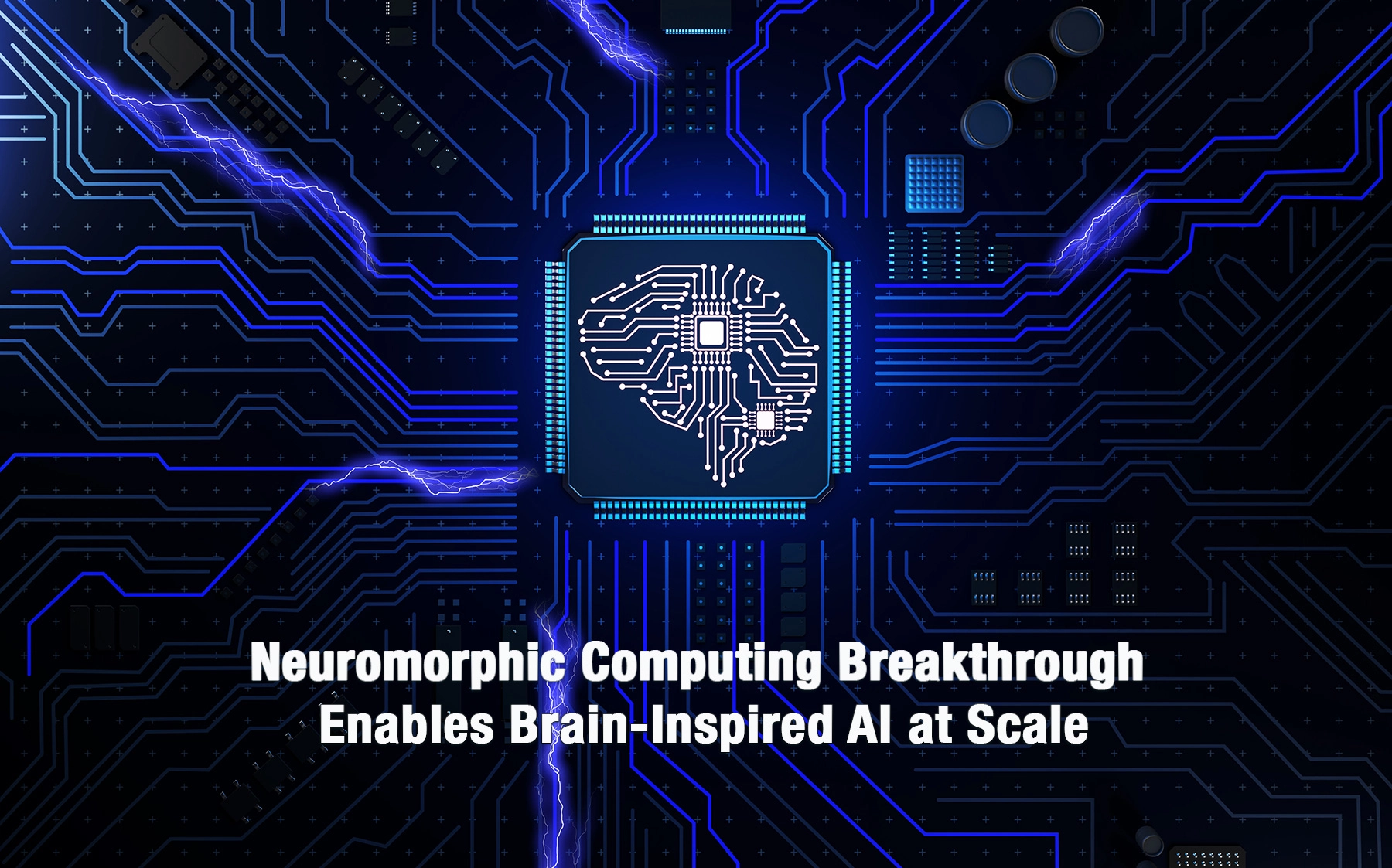
A significant breakthrough in neuromorphic computing has demonstrated that brain-inspired computer architectures can solve complex physics simulation equations that previously required energy-intensive supercomputers. This development carries profound implications for the future of AI computation, suggesting that the computational foundations of artificial intelligence may fundamentally shift toward more efficient, brain-like architectures. The research represents a convergence of neuroscience-inspired design and practical computing capability that could reshape AI's technological trajectory.
Introduction
For decades, the quest to build computers that mimic the brain's efficiency has remained a research goal with limited practical application. Traditional von Neumann architecture computers—separating processing and memory—have dominated computing, despite their fundamental inefficiency compared to biological neural systems. The energy consumption of modern AI training runs, requiring megawatts of power in massive data centers, starkly contrasts with the brain's remarkable efficiency operating on roughly 20 watts.
Recent research announced in April 2026 demonstrates that neuromorphic computers—architectures modeled after biological neural networks—can now solve the complex equations behind physics simulations. This capability was previously thought achievable only with energy-hungry supercomputers, representing a fundamental proof point for brain-inspired computing at scale.
Understanding Neuromorphic Computing
Architectural Principles
Neuromorphic computing architectures fundamentally differ from traditional computers in their approach to information processing. Where conventional computers separate processing units from memory storage, neuromorphic systems integrate processing and memory in structures that directly mimic neural networks. Artificial neurons and synapses perform computation in the same locations where information is stored.
This architectural shift creates several advantages: dramatically reduced energy consumption through elimination of data movement between processor and memory, parallel processing capabilities that naturally handle the distributed nature of complex calculations, and event-driven processing that only activates when relevant signals occur.
The Brain Model
The brain processes information through networks of neurons connected by synapses—approximately 86 billion neurons with hundreds of trillions of synaptic connections. This architecture enables massive parallelism and extraordinary energy efficiency. The brain's total power consumption is roughly equivalent to a dim lightbulb while performing computations that would require supercomputers for artificial systems.
Neuromorphic chips attempt to replicate these architectural principles in silicon. Companies like Intel with their Loihi chips and IBM with their TrueNorth architecture have developed neuromorphic processors that implement spiking neural networks—the same basic communication mechanism used by biological neurons.
The Physics Simulation Breakthrough
The Problem
Physics simulations—from climate modeling to material science to astrophysics—require solving complex differential equations across vast numbers of variables. These calculations have traditionally demanded massive computational resources, with supercomputer facilities consuming megawatts of power for complex simulations that run for weeks or months.
The computational challenge stems from the interconnected nature of physical systems: every variable potentially affects every other variable, requiring iterative solutions that cannot be easily parallelized using traditional computer architectures.
Neuromorphic Solution
The breakthrough demonstrated that neuromorphic computers can solve these complex equations more efficiently than traditional supercomputers. The key insight was mapping the interconnected physics equations onto neuromorphic architecture's parallel processing capabilities in ways that leverage the brain-inspired design's natural strengths.
This is not merely incremental improvement—the demonstration showed fundamentally new computational capabilities rather than simply faster execution of existing algorithms. Physics simulations that would have required the largest supercomputers can now run on neuromorphic systems with a fraction of the energy consumption.
Implications for AI
Energy Efficiency
The most immediate implication for AI is energy efficiency. Current large language model training runs consume enormous amounts of energy—some estimates suggest training a single state-of-the-art model produces carbon emissions equivalent to hundreds of transcontinental flights. The energy costs of AI development represent both economic and environmental concerns.
Neuromorphic computing offers a pathway to dramatically reduce these energy requirements. If the physics simulation capabilities translate to AI training and inference workloads, the energy consumption of AI systems could drop by orders of magnitude. This efficiency improvement would enable larger models, more training runs, and broader AI deployment without the energy constraints that currently limit development.
New Computing Paradigms
Beyond efficiency, neuromorphic computing enables new computational approaches that are poorly suited to traditional architectures. Real-time processing of sensory data, adaptive learning in dynamic environments, and probabilistic reasoning all align with neuromorphic strengths.
AI systems built on neuromorphic foundations might exhibit different characteristics than current systems—perhaps more adaptive, more energy-efficient, and better suited to continuous learning in real-world environments. This represents a potential paradigm shift in AI development rather than simply faster execution of current approaches.
Current State and Development Trajectory
Commercial Systems
Several companies have developed neuromorphic processors that are moving from research labs to commercial availability. Intel's Loihi 2 processor represents the latest generation of neuromorphic chips, with research demonstrations showing capabilities in learning, optimization, and sensory processing.
The current generation of commercial neuromorphic systems remains limited compared to traditional supercomputers in raw computational capacity. The breakthrough in physics simulations demonstrates capability that was theoretically possible but previously unproven—the practical demonstration opens pathways to broader application development.
Research Directions
Research efforts are focusing on several key areas: scaling neuromorphic systems to handle larger problems, developing software frameworks that leverage neuromorphic capabilities, and integrating neuromorphic processors with traditional computing systems for hybrid architectures.
The goal is not to replace traditional computers entirely but to develop specialized neuromorphic accelerators that can handle specific workloads where their architecture provides advantages. This hybrid approach would combine the general-purpose capabilities of traditional processors with the specialized efficiency of neuromorphic systems.
Challenges and Limitations
Manufacturing Complexity
Manufacturing neuromorphic chips presents significant challenges. The specialized architectures require different manufacturing processes than standard processors, and the yield of functional chips remains lower than conventional designs. Scaling production to meet potential demand will require significant manufacturing investment.
Software Development
The neuromorphic software ecosystem remains nascent. Developing applications for neuromorphic systems requires different programming approaches than traditional computing—algorithms must be designed to leverage the event-driven, parallel nature of neuromorphic processing. The development tools and frameworks that would enable broader adoption are still under development.
Integration Challenges
Integrating neuromorphic systems into existing computing infrastructure presents practical challenges. Organizations have invested heavily in traditional computing infrastructure and expertise; transitioning to neuromorphic approaches requires not just new hardware but new skills, new development approaches, and new operational practices.
Looking Forward
Near-Term Applications
In the near term, neuromorphic computing is likely to find application in areas where its advantages are most pronounced: edge computing where energy efficiency matters, real-time sensor processing, and applications requiring continuous adaptation to changing conditions.
The robotics sector represents a promising application area. Humanoid robots and autonomous systems require efficient, real-time processing that aligns well with neuromorphic capabilities. The combination of energy-efficient computation with physical AI creates possibilities for more capable and practical robotic systems.
Long-Term Transformation
Looking further ahead, neuromorphic computing could fundamentally transform AI's computational foundation. As the technology matures and scales, it may become the dominant architecture for AI systems—not replacing traditional computers entirely but enabling AI capabilities that are impractical with current approaches.
The physics simulation breakthrough demonstrates that this transformation is not merely theoretical possibility but emerging practical reality. The question is not whether neuromorphic computing will matter for AI, but how quickly the technology will move from research demonstrations to production deployment.
For organizations considering their long-term computing strategies, neuromorphic computing represents a technology to monitor closely. The efficiency advantages and specialized capabilities may become decisive for AI applications where current approaches face fundamental limitations.
Related Articles

AMD MI450 Accelerator: The Chip Challenging Nvidia's AI Dominance
AMD's MI450 accelerator is set to launch in the second half of 2026 with a massive 6GW deal from Meta, marking a significant challenge to Nvidia's market leadership in AI computing.
AI Chips: Arm's $15 Billion Bet: The AGI Chip That Could Reshape Data Centers
Arm announces a new AGI-focused CPU targeting $15 billion in annual revenue by 2031, with the CPU total addressable market projected to reach $100 billion.
Brain-Inspired AI Chips: 2000x Energy Efficiency Breakthrough
Loughborough University researchers develop revolutionary chip using material physics that could transform AI energy consumption