
Energy: AI Data Centers Driving Massive Natural Gas Infrastructure Buildout
AI companies are constructing enormous natural gas power plants to meet the exploding energy demands of data centers, raising environmental and climate concerns.
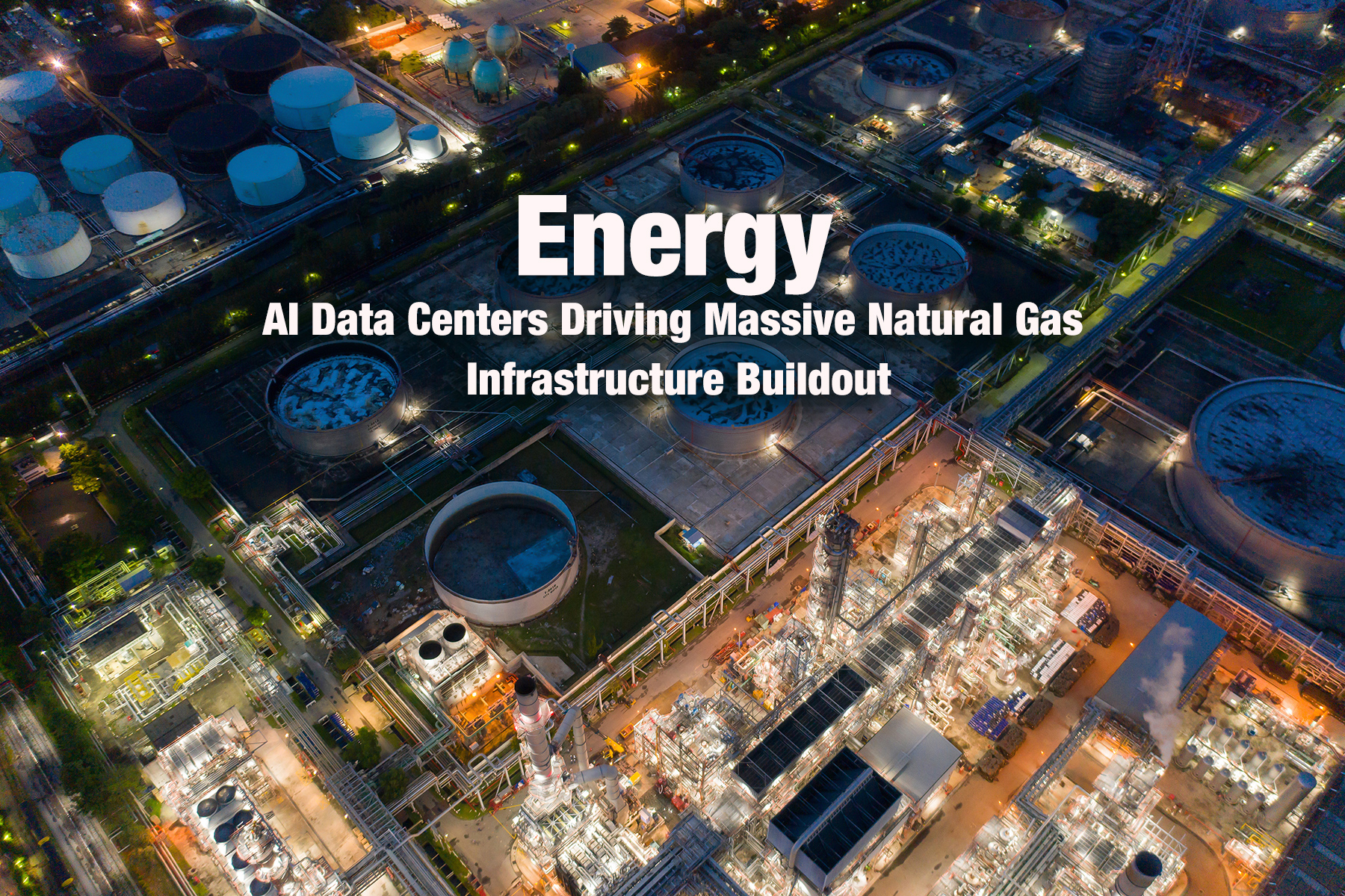
The artificial intelligence revolution is creating an unprecedented energy demand that is reshaping the American energy landscape. Major AI companies are investing billions in new natural gas power plants to fuel their expanding data center operations, raising urgent questions about the environmental implications of this infrastructure boom.
Introduction
Behind the remarkable capabilities of modern AI systems lies a hidden cost that is increasingly difficult to ignore: massive energy consumption. As AI companies race to build more powerful models and expand their infrastructure, the electrical demands of data centers have grown to levels that existing power grids simply cannot support.
This has led to an unprecedented buildout of natural gas infrastructure across the United States, with AI companies directly investing in new power plants to ensure reliable energy supply for their operations. While this approach solves immediate energy needs, it raises profound questions about climate change, environmental justice, and the long-term sustainability of AI growth.
The Scale of AI Energy Demand
Data Center Electricity Consumption
The energy requirements of modern AI data centers are staggering:
| Metric | Traditional Data Center | AI Data Center |
|---|---|---|
| Power Capacity | 10-20 MW | 100-500 MW |
| Annual Electricity | 87,000-175,000 MWh | 875,000-4,380,000 MWh |
| Cooling Systems | Standard HVAC | Advanced liquid cooling |
| GPU Count | N/A | 100,000+ H100 GPUs |
Why AI Needs More Energy
Several factors contribute to the heightened energy demands:
- Training computations: Training a single large language model can consume as much electricity as 100 U.S. homes use in a year
- Inference operations: Each AI query requires computational resources that add up across millions of users
- Cooling requirements: High-density GPU clusters require sophisticated cooling systems
- 24/7 operations: AI data centers operate continuously, unlike traditional data centers
The Natural Gas Solution
Companies Building Gas Plants
Multiple AI companies are directly investing in natural gas infrastructure:
- Meta: Planning multiple large gas plants to power data centers
- Microsoft: Partnering on gas-fired generation for Azure AI workloads
- Google: Building gas plants for data center expansion
- OpenAI: Supporting new gas generation in Oklahoma and other locations
- Amazon: Significant investment in gas-powered facilities
Infrastructure Scale
The natural gas buildout is massive in scale:
| Company | Planned Capacity | Location Focus |
|---|---|---|
| Meta | 4+ GW | Arizona, Texas, Louisiana |
| Microsoft | 2+ GW | Virginia, California, Iowa |
| 3+ GW | Multiple states | |
| Amazon | 5+ GW | Nationwide |
This infrastructure is comparable to the power needs of entire cities. Meta's planned natural gas capacity alone could power over 4 million homes.
Environmental Concerns
Carbon Emissions Impact
The environmental implications are significant:
- Annual emissions: New gas plants could add millions of tons of CO2 annually
- Methane leaks: Natural gas infrastructure is a significant methane source
- Lifecycle emissions: Full lifecycle including production and transport
- Climate alignment: Conflicts with corporate climate commitments
Local Environmental Impacts
Beyond global climate concerns, local impacts include:
- Air quality: NOx and particulate matter emissions
- Water usage: Cooling systems consume significant water
- Noise pollution: Continuous compressor operations
- Land use: Large footprint for power plants and pipelines
Community Resistance
Growing Opposition
Communities near proposed data center and power plant locations are pushing back:
- NIMBY concerns: "Not in my backyard" sentiment is growing
- Property values: Residents worry about impacts on home values
- Health concerns: Air quality and noise health impacts
- Infrastructure strain: Local roads, water, and services stressed
Public Sentiment
A recent survey reveals significant public concern:
| Concern Level | Percentage |
|---|---|
| Very concerned about data center energy use | 45% |
| Somewhat concerned | 30% |
| Neutral | 15% |
| Not concerned | 10% |
The Amazon Warehouse Comparison
Perhaps most telling is a finding that people would rather have an Amazon warehouse in their backyard than a data center. This reflects growing awareness of the environmental and community impacts of data center infrastructure.
Alternative Energy Solutions
Renewable Energy Potential
While gas is the current solution, alternatives are emerging:
| Energy Source | Current Share | Potential |
|---|---|---|
| Solar | 15% of new capacity | High |
| Wind | 10% of new capacity | High |
| Nuclear | 5% of new capacity | Medium |
| Battery Storage | 8% of new capacity | Growing |
Challenges with Renewables
Renewable energy faces challenges for AI data centers:
- Intermittency: Solar and wind don't provide 24/7 power
- Grid integration: Existing grid infrastructure can't handle rapid scaling
- Transmission: New transmission lines face permitting delays
- Cost: Still more expensive than natural gas in most regions
Nuclear Power Revival
Nuclear power is emerging as a potential solution:
- Carbon-free: Zero direct carbon emissions
- Reliable: 24/7 baseload power
- Small modular reactors: New designs could be built faster
- Microsoft and others: Exploring nuclear for data centers
Industry Response
Corporate Climate Commitments
AI companies have made ambitious climate pledges:
- Carbon negative: Some have committed to net-negative emissions
- 100% renewable: Many pledge 100% renewable energy
- Science-based targets: Aligned with Paris Agreement goals
These commitments are increasingly difficult to reconcile with massive gas plant investments.
Efficiency Improvements
Companies are also investing in efficiency:
- Better chips: More efficient GPUs and AI accelerators
- Improved cooling: Liquid cooling reduces energy needs
- Workload optimization: Better scheduling of AI computations
- Model efficiency: Smaller, more efficient models
Policy Implications
Regulatory Scrutiny
Policymakers are taking notice:
- State legislation: Multiple states considering data center regulations
- Permitting reform: Push to speed up energy infrastructure permits
- Environmental reviews: More stringent environmental impact requirements
- Energy reporting: New requirements for data center energy use
Federal Actions
The federal government is also engaging:
- Tax incentives: Clean energy tax credits being expanded
- Grid modernization: Federal support for grid improvements
- Research funding: Investment in energy-efficient computing
- Standards development: Efficiency standards for AI systems
The Path Forward
Potential Solutions
Solving the AI energy challenge will require multiple approaches:
- Diversified energy mix: Combining gas, nuclear, and renewables
- Location strategy: Building data centers where energy is cleaner
- Grid investment: Modernizing electrical infrastructure
- Efficiency focus: Prioritizing energy-efficient AI development
Industry Responsibility
AI companies bear significant responsibility to:
- Invest in alternatives: Fund renewable and nuclear energy
- Be transparent: Disclose energy use and environmental impacts
- Engage communities: Work with local stakeholders
- Innovate: Develop more efficient AI systems
Conclusion
The massive buildout of natural gas infrastructure to power AI data centers represents one of the most significant energy policy challenges of the decade. While this approach meets immediate energy needs, it conflicts with climate goals and raises legitimate concerns about environmental justice and community impacts.
The AI industry must recognize that sustainable growth requires sustainable energy solutions. The path forward will require genuine commitment to renewable energy, nuclear power, and dramatic improvements in efficiency—not just symbolic climate pledges that are undermined by massive fossil fuel investments.
The choices made in the next few years will determine whether the AI revolution is built on a foundation of clean energy or perpetuates our dependence on fossil fuels. The stakes could not be higher.
Related Articles

AMD MI450 Accelerator: The Chip Challenging Nvidia's AI Dominance
AMD's MI450 accelerator is set to launch in the second half of 2026 with a massive 6GW deal from Meta, marking a significant challenge to Nvidia's market leadership in AI computing.

AI Chips: Arm's $15 Billion Bet: The AGI Chip That Could Reshape Data Centers
Arm announces a new AGI-focused CPU targeting $15 billion in annual revenue by 2031, with the CPU total addressable market projected to reach $100 billion.

Brain-Inspired AI Chips: 2000x Energy Efficiency Breakthrough
Loughborough University researchers develop revolutionary chip using material physics that could transform AI energy consumption