The 'Model Avalanche' - When 12 AI Models Launched in One Week
Between March 10-16, 2026, six major AI companies launched twelve distinct models in what engineers are calling the 'model avalanche.' OpenAI, Google, xAI, Anthropic, Mistral, and Cursor all shipped within an unprecedented seven-day window. Here's what it means for the industry.

The AI industry has always moved fast, but nothing prepared it for March 10-16, 2026. In a single week, six major AI companies—OpenAI, Google, xAI, Anthropic, Mistral, and Cursor—launched twelve distinct models in what engineers are already calling the "model avalanche." It represents the most concentrated release of AI capability in history, and it signals a fundamental shift in how the industry competes.
Introduction
Previously, AI companies released models on their own timelines, with months or quarters between significant releases. The "model avalanche" broke that pattern entirely. The compressed timeline reveals something important: the AI race has reached escape velocity.
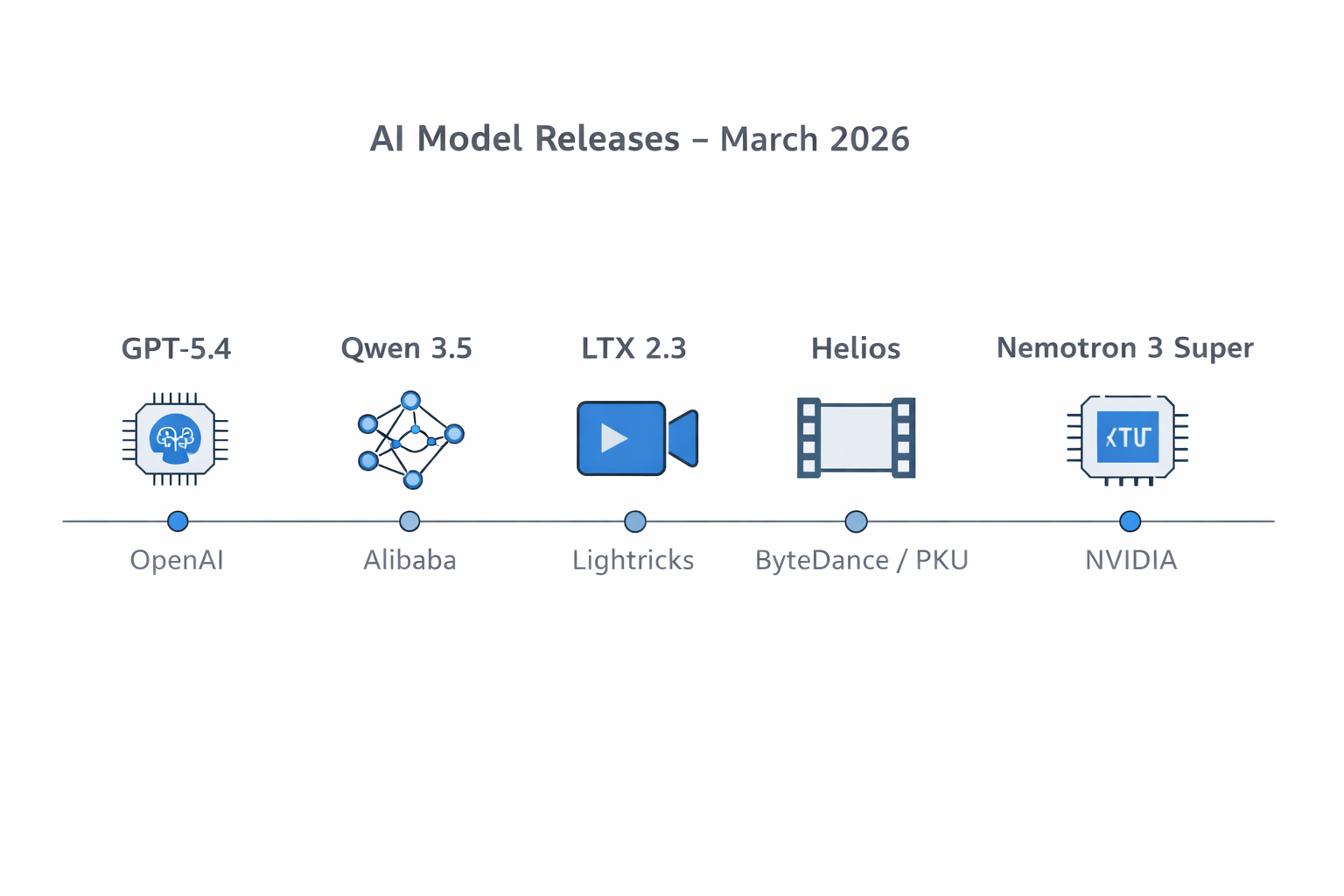
The Models
OpenAI
OpenAI continued its aggressive release schedule, with at least one new model during the window. The company's strategy remains clear: push capabilities faster than anyone can catch up.
Google shipped multiple Gemini updates during the period, including improvements to the Pro tier and new capabilities for the Ultra tier.
xAI
Elon Musk's xAI continued its independent trajectory, with Grok receiving significant updates that positioned it as the "anti-woke" alternative in the AI market.
Anthropic
Anthropic maintained its release cadence, with updates to both Claude Sonnet and Claude Opus.
Mistral
The French AI startup continued its open-weight strategy, releasing models that researchers could examine and modify.
Cursor
Cursor, the AI-powered coding environment, shipped model updates that further separated it from traditional IDEs.
Why Now?
Timing
The releases clustered around key conference windows—every company wanted to establish "first mover" status for their latest capabilities before the ICLR 2026 conference.
Competitive Pressure
The pressure to ship is immense. Every company fears falling behind. The cost of missing a release window is potential market share.
Customer Demand
Enterprise customers are consolidating around platforms. Companies that don't ship frequently risk being forgotten.
The Implications
Developer Selection
With twelve models to choose from, developers face a new problem: which model to use for which task? The answer requires expertise that not everyone has.
Benchmark Fatigue
Every model release comes with new benchmark scores. But with so many models, benchmarks have lost their meaning. Most users can't distinguish between models that score 77% vs. 78% on ARC-AGI-2.
Price Competition
When twelve models are competing for the same customers, price becomes decisive. We're already seeing aggressive pricing across the industry.
The Winners
Developers
Developers benefit from choice and competition. More models mean more options for more use cases.
Enterprise
Enterprises can negotiate better deals as vendors compete for their business.
The Industry
The "model avalanche" reveals an industry that has reached product-market fit. Companies are shipping because customers are buying.
The Losers
Laggards
Companies that can't ship at this pace risk being irrelevant. The gap between leaders and followers is widening.
Open Source
Ironically, the "model avalanche" has been dominated by closed models. Open source alternatives struggle to keep pace.
Users
Too much choice creates decision paralysis. Not everyone wants to evaluate twelve models to find the right one.
Looking Forward
The "model avalanche" isn't a blip—it's likely the new normal. The industry has entered a phase where shipping fast matters more than shipping perfect.
What comes next? Perhaps weekly model updates. Perhaps AI that improves itself. The only certainty is more speed.
Conclusion
Twelve models in seven days represents a changing of the guard. The AI industry is no longer about research breakthroughs—it's about execution velocity.
The companies that can ship fastest, cheapest, and most reliably will win. Everything else is noise.